













Synthesis, surface morphology, and photoluminescence properties of anatase iron-doped titanium dioxide nano-crystalline films
Literature Information
Publication Date
2011-06-21
DOI
10.1039/C0CP02924F
Impact Factor
3.676
Authors
Jinzhong Zhang, Xiangui Chen, Yude Shen, Yawei Li, Zhigao Hu, Junhao Chu
View Original
Abstract
Iron (Fe)-doped (0 to 4%) TiO2 nano-crystalline (nc) films with the grain size of about 25 nm have been deposited on n-type Si (100) substrates by a facile nonhydrolytic sol–gel processing. X-ray diffraction measurements prove that the films are polycrystalline and present the pure anatase phase. X-ray photoelectron spectroscopy spectra indicate that the chemical valent state of Fe element is +3 and the Fe3+ ions replace the Ti4+ sites. The Fe dopant effects on the surface morphology, microstructure, and dielectric functions of the nc-Fe/TiO2 films have been studied by atomic force microscope, ultraviolet Raman scattering and spectroscopic ellipsometry. With increasing Fe composition, the intensity of Raman-active mode B1g increases, while that of the A1g phonon mode decreases. The dielectric functions have been uniquely extracted by fitting ellipsometric spectra with the Adachi's dielectric function model and a four-phase layered model. It is found that the real part of dielectric functions in the transparent region and the optical band gap slightly decrease with the Fe composition due to the introduction of acceptor level Fet2g. Finally, the composition and temperature dependence of the surface and lattice defects in the Fe/TiO2 films have been investigated by photoluminescence spectra in detail. At room temperature, the emission intensities decrease with increasing Fe compositions since the Fe incorporation could prolong the radiative lifetime and/or shorten the non-radiative lifetime. By analyzing the low temperature photoluminescence spectra, the intensities and positions of five emission peaks and shoulder structure can be unambiguously assigned. The phenomena could be reasonably explained by the physical mechanisms such as oxygen vacancies, localized excitons, self-trapped excitons, and indirect transitions, which are strongly related to the electronic band structure perturbed by the Fe doping.
Related Literature
Density functional theory and its applications
Michael J. G. Peach
2014-06-16
Editorial
DOI: 10.1039/C4CP90074J
Observation of nondispersing classical-like molecular rotation
Aleksey Korobenko, Valery Milner
2014-11-14
Paper
DOI: 10.1039/C4CP04434G
The derivative discontinuity of the exchange–correlation functional
Paula Mori-Sánchez, Aron J. Cohen
2014-06-02
Perspective
DOI: 10.1039/C4CP01170H
How morphology and surface crystal texture affect thermal stability of a metallic nanoparticle: the case of silver nanobelts and pentagonal silver nanowires
Geoffrey Rivers
2014-10-31
Paper
DOI: 10.1039/C4CP04129A
Polarization dressed multi-order fluorescence of Pr3+:Y2SiO5
Ruimin Wang, Chengjun Lei, Changbiao Li, Huayan Lan, Huaibin Zheng, Yanpeng Zhang
2014-06-17
Paper
DOI: 10.1039/C4CP02001D
Assignment of the 13C NMR spectrum by correlation to dipolar coupled proton-pairs and estimation of order parameters of a thiophene based liquid crystal
K. V. Ramanathan
2014-11-21
Paper
DOI: 10.1039/C4CP04782F
Surface conformations of an anti-ricin aptamer and its affinity for ricin determined by atomic force microscopy and surface plasmon resonance
B. Wang, Z. Lou, B. Park, Y. Kwon, H. Zhang, B. Xu
2014-08-11
Paper
DOI: 10.1039/C4CP03190C
Arresting consecutive steps of a photochromic reaction: studies of β-thioxoketones combining laser photolysis with NMR detection
Mariusz Pietrzak, Jacek Dobkowski, Alexandr Gorski, Sylwester Gawinkowski, Michał Kijak, Roman Luboradzki, Poul Erik Hansen, Jacek Waluk
2014-03-28
Paper
DOI: 10.1039/C4CP00530A
The dynamic crossover in dielectric relaxation behavior of ice Ih
Ivan Popov, Alexander Puzenko, Airat Khamzin, Yuri Feldman
2014-11-19
Paper
DOI: 10.1039/C4CP04271A
You might also like
Compound Q&A
What are the main uses of 1H-Indazole-6-carbonitrile (CAS: 141290-59-7)?
1H-Indazole-6-carbonitrile finds applications in pharmaceuticals, where it serve...
141290-59-71H-Indazole-6-carbon...
Compound Q&A
How should waste containing Dioctyl (2E)-2-butenedioate (CAS: 2997-85-5) be handled?
Waste containing Dioctyl (2E)-2-butenedioate (CAS: 2997-85-5) should be collecte...
2997-85-5Dioctyl (2E)-2-buten...
Compound Q&A
What industries use Sodium [(1,2-benzoxazol-3-ylmethyl)sulfonyl]azanide (CAS: 68291-98-5)?
Sodium [(1,2-benzoxazol-3-ylmethyl)sulfonyl]azanide is primarily used in pharmac...
68291-98-5Sodium [(1,2-benzoxa...
Compound Q&A
Are there alternatives to Dimethyl 4-(4,4,5,5-tetramethyl-1,3,2-dioxaborolan-2-yl)-2,6-pyridinedicarboxylate (CAS: 741709-66-0) in synthesis?
Dimethyl 4-(4,4,5,5-tetramethyl-1,3,2-dioxaborolan-2-yl)-2,6-pyridinedicarboxyla...
741709-66-0Dimethyl 4-(4,4,5,5-...
Compound Q&A
How should waste containing 2-Fluoro-6-hydrazinopyridine (CAS: 80714-39-2) be handled?
Waste containing 2-Fluoro-6-hydrazinopyridine (CAS: 80714-39-2) should be manage...
80714-39-22-Fluoro-6-hydrazino...
Compound Q&A
What is 6-Formyl-2-pyridinecarboxylic acid (CAS: 499214-11-8)?
6-Formyl-2-pyridinecarboxylic acid is an organic compound with the molecular for...
499214-11-86-Formyl-2-pyridinec...
Compound Q&A
What is the market or research trend for 3-(3,4-dimethoxyphenyl)-2,5-dimethyl-N-(2-morpholin-4-ylethyl)pyrazolo[1,5-a]pyrimidin-7-amine (CAS: 900874-91-1)?
Research trends for this compound indicate a focus on its potential applications...
900874-91-13-(3,4-dimethoxyphen...
Compound Q&A
How is 9H-Tribenzo[b,d,f]azepine (CAS: 29875-73-8) typically synthesized?
9H-Tribenzo[b,d,f]azepine is typically synthesized via a multi-step process invo...
29875-73-89H-Tribenzo[b,d,f]az...
Compound Q&A
How is 1-Cyclopropyl-7-ethoxy-6-fluoro-8-methoxy-4-oxo-1,4-dihydro-3-quinolinecarboxylic acid (CAS: 1797982-51-4) typically synthesized?
1-Cyclopropyl-7-ethoxy-6-fluoro-8-methoxy-4-oxo-1,4-dihydro-3-quinolinecarboxyli...
1797982-51-41-Cyclopropyl-7-etho...
Compound Q&A
How should waste containing Methyl 3-oxo-1,2,3,4-tetrahydro-6-quinoxalinecarboxylate (CAS: 671820-52-3) be handled?
Waste containing Methyl 3-oxo-1,2,3,4-tetrahydro-6-quinoxalinecarboxylate (CAS: ...
671820-52-3Methyl 3-oxo-1,2,3,4...
Source Journal
Physical Chemistry Chemical Physics

CiteScore:
5.5
Self-citation Rate:
10.3%
Articles per Year:
3036
Physical Chemistry Chemical Physics (PCCP) is an international journal co-owned by 19 physical chemistry and physics societies from around the world. This journal publishes original, cutting-edge research in physical chemistry, chemical physics and biophysical chemistry. To be suitable for publication in PCCP, articles must include significant innovation and/or insight into physical chemistry; this is the most important criterion that reviewers and Editors will judge against when evaluating submissions. The journal has a broad scope and welcomes contributions spanning experiment, theory, computation and data science. Topical coverage includes spectroscopy, dynamics, kinetics, statistical mechanics, thermodynamics, electrochemistry, catalysis, surface science, quantum mechanics, quantum computing and machine learning. Interdisciplinary research areas such as polymers and soft matter, materials, nanoscience, energy, surfaces/interfaces, and biophysical chemistry are welcomed if they demonstrate significant innovation and/or insight into physical chemistry. Joined experimental/theoretical studies are particularly appreciated when complementary and based on up-to-date approaches.
Recommended Compounds

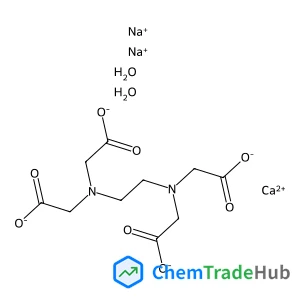
EthylenediaminetetraaceticacidcalciumDisodiumsalthydrate
CAS Number:
23411-34-9
Molecular Formula:
C10H16CaN2Na2O10
![N-[(9H-Fluoren-9-ylmethoxy)carbonyl]serine structure](https://static.chemtradehub.com/structs/737/73724-45-5-b0dc.webp "N-[(9H-Fluoren-9-ylmethoxy)carbonyl]serine structure")
Recommended Suppliers




Disclaimer
This page provides academic journal information for reference and research purposes only. We are not affiliated with any journal publishers and do not handle publication submissions. For publication-related inquiries, please contact the respective journal publishers directly.
If you notice any inaccuracies in the information displayed, please contact us at support@chemtradehub.com. We will promptly review and address your concerns.