












Assignment of the 13C NMR spectrum by correlation to dipolar coupled proton-pairs and estimation of order parameters of a thiophene based liquid crystal
Literature Information
Publication Date
2014-11-21
DOI
10.1039/C4CP04782F
Impact Factor
3.676
Authors
K. V. Ramanathan
View Original
Abstract
Materials with widely varying molecular topologies and exhibiting liquid crystalline properties have attracted considerable attention in recent years. 13C NMR spectroscopy is a convenient method for studying such novel systems. In this approach the assignment of the spectrum is the first step which is a non-trivial problem. Towards this end, we propose here a method that enables the carbon skeleton of the different sub-units of the molecule to be traced unambiguously. The proposed method uses a heteronuclear correlation experiment to detect pairs of nearby carbons with attached protons in the liquid crystalline core through correlation of the carbon chemical shifts to the double-quantum coherences of protons generated through the dipolar coupling between them. Supplemented by experiments that identify non-protonated carbons, the method leads to a complete assignment of the spectrum. We initially apply this method for assigning the 13C spectrum of the liquid crystal 4-n-pentyl-4′-cyanobiphenyl oriented in the magnetic field. We then utilize the method to assign the aromatic carbon signals of a thiophene based liquid crystal thereby enabling the local order-parameters of the molecule to be estimated and the mutual orientation of the different sub-units to be obtained.
Related Literature
Structural isomerization in DNA: the formation of cruciform structures in supercoiled DNA molecules
Review Article
DOI: 10.1039/CS9891800053
Self-assembly of [Cu3I2]- or [CuI]n-based (n = 2, 4, and ∞) coordination polymers from unsymmetrical bis(pyridyl) and in situ ligands: syntheses, structures, and properties
Zhao-Peng Deng, Xian-Fa Zhang, Li-Hua Huo, Hui Zhao, Shan Gao
2013-11-01
Paper
DOI: 10.1039/C3CE41774C
Correction: Laser cleavable probes for in situ multiplexed glycan detection by single cell mass spectrometry
Xi Huang, Huihui Liu, Jiyun Wang, Caiqiao Xiong
2020-01-09
Correction
DOI: 10.1039/C9SC90270H
A well-designed three-dimensional ternary hierarchical co-axial ZnO@ZnS heteroarchitecture decorated electrospun carbon hollow tube nanofibrous mat: improved ultraviolet-light photocatalytic performance
Zahed Shami, Naser Sharifi-Sanjani
2013-10-29
Paper
DOI: 10.1039/C3CE41513A
Ethynyl hydrogen bonds and iodoethynyl halogen bonds: a case of synthon mimicry
Christer B. Aakeröy, Dhanushi Welideniya, John Desper
2016-10-25
Communication
DOI: 10.1039/C6CE02201D
Robert Robinson Lecture. Retrosynthetic thinking—essentials and examples
Review Article
DOI: 10.1039/CS9881700111
Robert Robinson Lecture. Post-B12 problems in corrin synthesis
Review Article
DOI: 10.1039/CS9760500377
You might also like
Compound Q&A
What are the main uses of 1H-Indazole-6-carbonitrile (CAS: 141290-59-7)?
1H-Indazole-6-carbonitrile finds applications in pharmaceuticals, where it serve...
141290-59-71H-Indazole-6-carbon...
Compound Q&A
How should waste containing Dioctyl (2E)-2-butenedioate (CAS: 2997-85-5) be handled?
Waste containing Dioctyl (2E)-2-butenedioate (CAS: 2997-85-5) should be collecte...
2997-85-5Dioctyl (2E)-2-buten...
Compound Q&A
What industries use Sodium [(1,2-benzoxazol-3-ylmethyl)sulfonyl]azanide (CAS: 68291-98-5)?
Sodium [(1,2-benzoxazol-3-ylmethyl)sulfonyl]azanide is primarily used in pharmac...
68291-98-5Sodium [(1,2-benzoxa...
Compound Q&A
Are there alternatives to Dimethyl 4-(4,4,5,5-tetramethyl-1,3,2-dioxaborolan-2-yl)-2,6-pyridinedicarboxylate (CAS: 741709-66-0) in synthesis?
Dimethyl 4-(4,4,5,5-tetramethyl-1,3,2-dioxaborolan-2-yl)-2,6-pyridinedicarboxyla...
741709-66-0Dimethyl 4-(4,4,5,5-...
Compound Q&A
How should waste containing 2-Fluoro-6-hydrazinopyridine (CAS: 80714-39-2) be handled?
Waste containing 2-Fluoro-6-hydrazinopyridine (CAS: 80714-39-2) should be manage...
80714-39-22-Fluoro-6-hydrazino...
Compound Q&A
What is 6-Formyl-2-pyridinecarboxylic acid (CAS: 499214-11-8)?
6-Formyl-2-pyridinecarboxylic acid is an organic compound with the molecular for...
499214-11-86-Formyl-2-pyridinec...
Compound Q&A
What is the market or research trend for 3-(3,4-dimethoxyphenyl)-2,5-dimethyl-N-(2-morpholin-4-ylethyl)pyrazolo[1,5-a]pyrimidin-7-amine (CAS: 900874-91-1)?
Research trends for this compound indicate a focus on its potential applications...
900874-91-13-(3,4-dimethoxyphen...
Compound Q&A
How is 9H-Tribenzo[b,d,f]azepine (CAS: 29875-73-8) typically synthesized?
9H-Tribenzo[b,d,f]azepine is typically synthesized via a multi-step process invo...
29875-73-89H-Tribenzo[b,d,f]az...
Compound Q&A
How is 1-Cyclopropyl-7-ethoxy-6-fluoro-8-methoxy-4-oxo-1,4-dihydro-3-quinolinecarboxylic acid (CAS: 1797982-51-4) typically synthesized?
1-Cyclopropyl-7-ethoxy-6-fluoro-8-methoxy-4-oxo-1,4-dihydro-3-quinolinecarboxyli...
1797982-51-41-Cyclopropyl-7-etho...
Compound Q&A
How should waste containing Methyl 3-oxo-1,2,3,4-tetrahydro-6-quinoxalinecarboxylate (CAS: 671820-52-3) be handled?
Waste containing Methyl 3-oxo-1,2,3,4-tetrahydro-6-quinoxalinecarboxylate (CAS: ...
671820-52-3Methyl 3-oxo-1,2,3,4...
Source Journal
Physical Chemistry Chemical Physics

CiteScore:
5.5
Self-citation Rate:
10.3%
Articles per Year:
3036
Physical Chemistry Chemical Physics (PCCP) is an international journal co-owned by 19 physical chemistry and physics societies from around the world. This journal publishes original, cutting-edge research in physical chemistry, chemical physics and biophysical chemistry. To be suitable for publication in PCCP, articles must include significant innovation and/or insight into physical chemistry; this is the most important criterion that reviewers and Editors will judge against when evaluating submissions. The journal has a broad scope and welcomes contributions spanning experiment, theory, computation and data science. Topical coverage includes spectroscopy, dynamics, kinetics, statistical mechanics, thermodynamics, electrochemistry, catalysis, surface science, quantum mechanics, quantum computing and machine learning. Interdisciplinary research areas such as polymers and soft matter, materials, nanoscience, energy, surfaces/interfaces, and biophysical chemistry are welcomed if they demonstrate significant innovation and/or insight into physical chemistry. Joined experimental/theoretical studies are particularly appreciated when complementary and based on up-to-date approaches.
Recommended Compounds
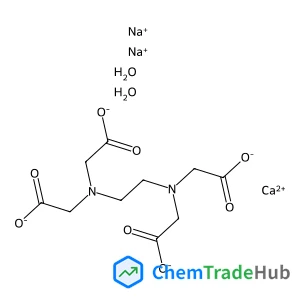
EthylenediaminetetraaceticacidcalciumDisodiumsalthydrate
CAS Number:
23411-34-9
Molecular Formula:
C10H16CaN2Na2O10
Recommended Suppliers




Disclaimer
This page provides academic journal information for reference and research purposes only. We are not affiliated with any journal publishers and do not handle publication submissions. For publication-related inquiries, please contact the respective journal publishers directly.
If you notice any inaccuracies in the information displayed, please contact us at support@chemtradehub.com. We will promptly review and address your concerns.