












The dynamic crossover in dielectric relaxation behavior of ice Ih
Literature Information
Publication Date
2014-11-19
DOI
10.1039/C4CP04271A
Impact Factor
3.676
Authors
Ivan Popov, Alexander Puzenko, Airat Khamzin, Yuri Feldman
View Original
Abstract
The main mechanism of the dielectric relaxation process of ordinary hexagonal ice (ice Ih) and its temperature dependence remains unclear. The most interesting and as yet unexplained feature of ice is the presence of the dynamical crossover in relaxation time behavior around Tc = 230 ± 3 K. Since there are no phase transitions in the ice at this temperature (first or second order), we cannot correlate the origin of this crossover with any structural change. Here we present a model according to which the temperature of the crossover is defined by the polarization mechanism. The dielectric relaxation driven by the diffusion of L–D orientational Bjerrum defects (at high temperature, T > Tc) is transformed into a dielectric relaxation dominated by the diffusion of intrinsic ionic H3O+/OH− defects (at low temperature, T < Tc). In the framework of the model, we propose an analytical equation for the complex dielectric permittivity that takes into account the contribution of both types of defects.
Related Literature
Quantum dot-based Baijiu fluorescent identification sensor array jointly verified by multivariate analysis and radial basis function neural network
Jiawei Li, Pan Li, Changjun Hou, Danqun Huo, Yixia Yang
2019-09-02
Paper
DOI: 10.1039/C9AY01577A
Biomimetic synthesis of nudicaulins I and II, yellow pigments from the Iceland poppy Papaver nudicaule
Rory Devlin, Jonathan Sperry
2019-10-21
Communication
DOI: 10.1039/C9CC07943B
Gold nanoparticle etching induced by an enzymatic-like reaction for the colorimetric detection of hydrogen peroxide and glucose
2019-08-21
Paper
DOI: 10.1039/C9AY01599J
High-throughput amperometric determination of tetracycline residues in milk and quality control of pharmaceutical formulations: flow-injection versus batch-injection analysis
Lucas V. Faria, Ana P. Lima, Fausto M. Araújo, Thalles P. Lisboa, Maria A. C. Matos, Rodrigo A. A. Munoz, Renato C. Matos
2019-10-02
Paper
DOI: 10.1039/C9AY01759C
Comparison of SEC and AF4 analytical tools for size estimation of typhoid Vi polysaccharides
Elisa Jean, Marie Paillagot, Alexia Renoud, Alice Raillard, Joseph Paladino, Marc Le Borgne
2019-09-05
Technical Note
DOI: 10.1039/C9AY00145J
Introducing deep eutectic solvents as biorenewable media for Au(i)-catalysed cycloisomerisation of γ-alkynoic acids: an unprecedented catalytic system
María J. Rodríguez-Álvarez, Cristian Vidal, Josefina Díez, Joaquín García-Álvarez
2014-09-02
Communication
DOI: 10.1039/C4CC05904B
Mono-6-thio-β-cyclodextrin-functionalized AuNP/two-dimensional TiO2 nanosheet nanocomposite for the electrochemical determination of trace methyl parathion in water
Xuan-Hua Li, Jian Zhang, Gan Wei
2019-09-06
Paper
DOI: 10.1039/C9AY01338E
You might also like
Compound Q&A
What are the main uses of 1H-Indazole-6-carbonitrile (CAS: 141290-59-7)?
1H-Indazole-6-carbonitrile finds applications in pharmaceuticals, where it serve...
141290-59-71H-Indazole-6-carbon...
Compound Q&A
How should waste containing Dioctyl (2E)-2-butenedioate (CAS: 2997-85-5) be handled?
Waste containing Dioctyl (2E)-2-butenedioate (CAS: 2997-85-5) should be collecte...
2997-85-5Dioctyl (2E)-2-buten...
Compound Q&A
What industries use Sodium [(1,2-benzoxazol-3-ylmethyl)sulfonyl]azanide (CAS: 68291-98-5)?
Sodium [(1,2-benzoxazol-3-ylmethyl)sulfonyl]azanide is primarily used in pharmac...
68291-98-5Sodium [(1,2-benzoxa...
Compound Q&A
Are there alternatives to Dimethyl 4-(4,4,5,5-tetramethyl-1,3,2-dioxaborolan-2-yl)-2,6-pyridinedicarboxylate (CAS: 741709-66-0) in synthesis?
Dimethyl 4-(4,4,5,5-tetramethyl-1,3,2-dioxaborolan-2-yl)-2,6-pyridinedicarboxyla...
741709-66-0Dimethyl 4-(4,4,5,5-...
Compound Q&A
How should waste containing 2-Fluoro-6-hydrazinopyridine (CAS: 80714-39-2) be handled?
Waste containing 2-Fluoro-6-hydrazinopyridine (CAS: 80714-39-2) should be manage...
80714-39-22-Fluoro-6-hydrazino...
Compound Q&A
What is 6-Formyl-2-pyridinecarboxylic acid (CAS: 499214-11-8)?
6-Formyl-2-pyridinecarboxylic acid is an organic compound with the molecular for...
499214-11-86-Formyl-2-pyridinec...
Compound Q&A
What is the market or research trend for 3-(3,4-dimethoxyphenyl)-2,5-dimethyl-N-(2-morpholin-4-ylethyl)pyrazolo[1,5-a]pyrimidin-7-amine (CAS: 900874-91-1)?
Research trends for this compound indicate a focus on its potential applications...
900874-91-13-(3,4-dimethoxyphen...
Compound Q&A
How is 9H-Tribenzo[b,d,f]azepine (CAS: 29875-73-8) typically synthesized?
9H-Tribenzo[b,d,f]azepine is typically synthesized via a multi-step process invo...
29875-73-89H-Tribenzo[b,d,f]az...
Compound Q&A
How is 1-Cyclopropyl-7-ethoxy-6-fluoro-8-methoxy-4-oxo-1,4-dihydro-3-quinolinecarboxylic acid (CAS: 1797982-51-4) typically synthesized?
1-Cyclopropyl-7-ethoxy-6-fluoro-8-methoxy-4-oxo-1,4-dihydro-3-quinolinecarboxyli...
1797982-51-41-Cyclopropyl-7-etho...
Compound Q&A
How should waste containing Methyl 3-oxo-1,2,3,4-tetrahydro-6-quinoxalinecarboxylate (CAS: 671820-52-3) be handled?
Waste containing Methyl 3-oxo-1,2,3,4-tetrahydro-6-quinoxalinecarboxylate (CAS: ...
671820-52-3Methyl 3-oxo-1,2,3,4...
Source Journal
Physical Chemistry Chemical Physics

CiteScore:
5.5
Self-citation Rate:
10.3%
Articles per Year:
3036
Physical Chemistry Chemical Physics (PCCP) is an international journal co-owned by 19 physical chemistry and physics societies from around the world. This journal publishes original, cutting-edge research in physical chemistry, chemical physics and biophysical chemistry. To be suitable for publication in PCCP, articles must include significant innovation and/or insight into physical chemistry; this is the most important criterion that reviewers and Editors will judge against when evaluating submissions. The journal has a broad scope and welcomes contributions spanning experiment, theory, computation and data science. Topical coverage includes spectroscopy, dynamics, kinetics, statistical mechanics, thermodynamics, electrochemistry, catalysis, surface science, quantum mechanics, quantum computing and machine learning. Interdisciplinary research areas such as polymers and soft matter, materials, nanoscience, energy, surfaces/interfaces, and biophysical chemistry are welcomed if they demonstrate significant innovation and/or insight into physical chemistry. Joined experimental/theoretical studies are particularly appreciated when complementary and based on up-to-date approaches.
Recommended Compounds
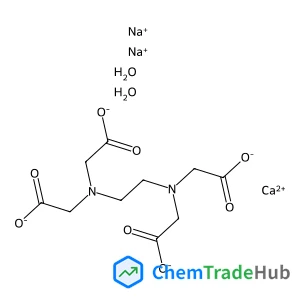
EthylenediaminetetraaceticacidcalciumDisodiumsalthydrate
CAS Number:
23411-34-9
Molecular Formula:
C10H16CaN2Na2O10
Recommended Suppliers





Disclaimer
This page provides academic journal information for reference and research purposes only. We are not affiliated with any journal publishers and do not handle publication submissions. For publication-related inquiries, please contact the respective journal publishers directly.
If you notice any inaccuracies in the information displayed, please contact us at support@chemtradehub.com. We will promptly review and address your concerns.