












How morphology and surface crystal texture affect thermal stability of a metallic nanoparticle: the case of silver nanobelts and pentagonal silver nanowires
Literature Information
Publication Date
2014-10-31
DOI
10.1039/C4CP04129A
Impact Factor
3.676
Authors
Geoffrey Rivers
View Original
Abstract
Thermal instability of metallic nanoparticles is typically attributed to chemical attack by contaminants. However, thermodynamic stability is independent of other affecting parameters. The importance of this will be clarified when the structural change toward a more stable thermodynamic condition may be followed by a chemical reaction with the surroundings, which may cause a wrong diagnosis. In this research, molecular dynamics simulations and experimental observations were performed to investigate the effect of crystallography and surface texture on stability at high temperature using two closely related model nanoparticles: silver nanobelts and pentagonal nanowires. Previously, the instability of silver nanowires was associated with sulfidation of the wire at high temperature. However, we found that the silver nanowires are inherently unstable at high temperature, degrading due to the high-energy nature of the nanowire's predominately (100) crystallographic surface and pentagonal geometry. In contrast, the silver nanobelts resist thermal degradation up to 500 °C because of their predominately low-energy (111) crystallographic surfaces. In this case study, we successfully demonstrate that inherent thermodynamic stability driven by morphology is significant in metallic nanoparticles, and should be investigated when selecting a nanoparticle for high temperature applications. Moreover, we identify a new one-dimensional nanoparticle, the silver nanobelt, with inherent high-temperature stability.
Related Literature
Rhône-Poulenc Lecture. The origin of the specificity in the recognition of oligosaccharides by proteins
Review Article
DOI: 10.1039/CS9891800347
Shedding light on the mitochondrial matrix through a functional membrane transporter
Alberto Blázquez-Moraleja, Ines Sáenz-de-Santa María, María D. Chiara, Delia Álvarez-Fernández, Inmaculada García-Moreno, Ruth Prieto-Montero, Virginia Martínez-Martínez, Iñigo López Arbeloa, Jose Luis Chiara
2019-12-09
Edge Article
DOI: 10.1039/C9SC04852A
Recent developments in the synthesis of myo-inositol phosphates
Review Article
DOI: 10.1039/CS9891800083
Ortho esters and dialkoxycarbenium ions: reactivity, stability, structure, and new synthetic applications
Review Article
DOI: 10.1039/CS9871600075
Nyholm Lecture. New trends in chemical education and chemistry teacher education worldwide
Review Article
DOI: 10.1039/CS9881700135
Self-assembly of [Cu3I2]- or [CuI]n-based (n = 2, 4, and ∞) coordination polymers from unsymmetrical bis(pyridyl) and in situ ligands: syntheses, structures, and properties
Zhao-Peng Deng, Xian-Fa Zhang, Li-Hua Huo, Hui Zhao, Shan Gao
2013-11-01
Paper
DOI: 10.1039/C3CE41774C
Photochemistry of polyoxometallates of molybdenum and tungsten and/or vanadium
Review Article
DOI: 10.1039/CS9891800001
Three-dimensional spider-web architecture assembled from Na2Ti3O7 nanotubes as a high performance anode for a sodium-ion battery
Yuping Zhang, Lin Guo
2014-09-30
Communication
DOI: 10.1039/C4CC06451H
You might also like
Compound Q&A
What are the main uses of 1H-Indazole-6-carbonitrile (CAS: 141290-59-7)?
1H-Indazole-6-carbonitrile finds applications in pharmaceuticals, where it serve...
141290-59-71H-Indazole-6-carbon...
Compound Q&A
How should waste containing Dioctyl (2E)-2-butenedioate (CAS: 2997-85-5) be handled?
Waste containing Dioctyl (2E)-2-butenedioate (CAS: 2997-85-5) should be collecte...
2997-85-5Dioctyl (2E)-2-buten...
Compound Q&A
What industries use Sodium [(1,2-benzoxazol-3-ylmethyl)sulfonyl]azanide (CAS: 68291-98-5)?
Sodium [(1,2-benzoxazol-3-ylmethyl)sulfonyl]azanide is primarily used in pharmac...
68291-98-5Sodium [(1,2-benzoxa...
Compound Q&A
Are there alternatives to Dimethyl 4-(4,4,5,5-tetramethyl-1,3,2-dioxaborolan-2-yl)-2,6-pyridinedicarboxylate (CAS: 741709-66-0) in synthesis?
Dimethyl 4-(4,4,5,5-tetramethyl-1,3,2-dioxaborolan-2-yl)-2,6-pyridinedicarboxyla...
741709-66-0Dimethyl 4-(4,4,5,5-...
Compound Q&A
How should waste containing 2-Fluoro-6-hydrazinopyridine (CAS: 80714-39-2) be handled?
Waste containing 2-Fluoro-6-hydrazinopyridine (CAS: 80714-39-2) should be manage...
80714-39-22-Fluoro-6-hydrazino...
Compound Q&A
What is 6-Formyl-2-pyridinecarboxylic acid (CAS: 499214-11-8)?
6-Formyl-2-pyridinecarboxylic acid is an organic compound with the molecular for...
499214-11-86-Formyl-2-pyridinec...
Compound Q&A
What is the market or research trend for 3-(3,4-dimethoxyphenyl)-2,5-dimethyl-N-(2-morpholin-4-ylethyl)pyrazolo[1,5-a]pyrimidin-7-amine (CAS: 900874-91-1)?
Research trends for this compound indicate a focus on its potential applications...
900874-91-13-(3,4-dimethoxyphen...
Compound Q&A
How is 9H-Tribenzo[b,d,f]azepine (CAS: 29875-73-8) typically synthesized?
9H-Tribenzo[b,d,f]azepine is typically synthesized via a multi-step process invo...
29875-73-89H-Tribenzo[b,d,f]az...
Compound Q&A
How is 1-Cyclopropyl-7-ethoxy-6-fluoro-8-methoxy-4-oxo-1,4-dihydro-3-quinolinecarboxylic acid (CAS: 1797982-51-4) typically synthesized?
1-Cyclopropyl-7-ethoxy-6-fluoro-8-methoxy-4-oxo-1,4-dihydro-3-quinolinecarboxyli...
1797982-51-41-Cyclopropyl-7-etho...
Compound Q&A
How should waste containing Methyl 3-oxo-1,2,3,4-tetrahydro-6-quinoxalinecarboxylate (CAS: 671820-52-3) be handled?
Waste containing Methyl 3-oxo-1,2,3,4-tetrahydro-6-quinoxalinecarboxylate (CAS: ...
671820-52-3Methyl 3-oxo-1,2,3,4...
Source Journal
Physical Chemistry Chemical Physics

CiteScore:
5.5
Self-citation Rate:
10.3%
Articles per Year:
3036
Physical Chemistry Chemical Physics (PCCP) is an international journal co-owned by 19 physical chemistry and physics societies from around the world. This journal publishes original, cutting-edge research in physical chemistry, chemical physics and biophysical chemistry. To be suitable for publication in PCCP, articles must include significant innovation and/or insight into physical chemistry; this is the most important criterion that reviewers and Editors will judge against when evaluating submissions. The journal has a broad scope and welcomes contributions spanning experiment, theory, computation and data science. Topical coverage includes spectroscopy, dynamics, kinetics, statistical mechanics, thermodynamics, electrochemistry, catalysis, surface science, quantum mechanics, quantum computing and machine learning. Interdisciplinary research areas such as polymers and soft matter, materials, nanoscience, energy, surfaces/interfaces, and biophysical chemistry are welcomed if they demonstrate significant innovation and/or insight into physical chemistry. Joined experimental/theoretical studies are particularly appreciated when complementary and based on up-to-date approaches.
Recommended Compounds


Trichloro(3,3,4,4,5,5,6,6,7,7,8,8,8-tridecafluorooctyl)silane
CAS Number:
78560-45-9
Molecular Formula:
C8H4Cl3F13Si
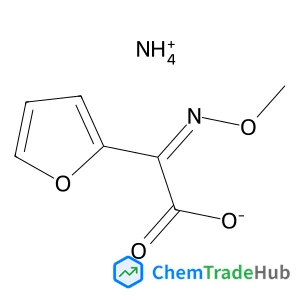
Ammonium (Z)-2-(furan-2-yl)-2-(methoxyimino)acetate
CAS Number:
97148-39-5
Molecular Formula:
C7H10N2O4

Recommended Suppliers





Disclaimer
This page provides academic journal information for reference and research purposes only. We are not affiliated with any journal publishers and do not handle publication submissions. For publication-related inquiries, please contact the respective journal publishers directly.
If you notice any inaccuracies in the information displayed, please contact us at support@chemtradehub.com. We will promptly review and address your concerns.