













The synergy between qualitative theory, quantitative calculations, and direct experiments in understanding, calculating, and measuring the energy differences between the lowest singlet and triplet states of organic diradicals
Literature Information
Publication Date
2011-05-26
DOI
10.1039/C0CP02786C
Impact Factor
3.676
Authors
W. Carl Lineberger, Weston Thatcher Borden
View Original
Abstract
This perspective describes research, carried out in the authors' labs over the past forty years, aimed at understanding, predicting, and measuring the singlet–triplet energy differences (ΔEST) in diradicals. A theory for qualitatively predicting the ground states of diradicals and the use of Negative Ion Photoelectron Spectroscopy (NIPES) for measuring ΔEST are described. The application of this theory, ab initio calculations, and NIPES to the prediction and measurement of ΔEST in a wide variety of organic diradicals is detailed. Among the diradicals that are discussed in this perspective are HN, CH3N, PhN, CH2, trimethylenemethane (TMM), oxyallyl (OXA), meta-benzoquinodimethane (MBQDM), meta-benzoquinone (MBQ), tetramethyleneethane (TME), 1,2,4,5-tetramethylenebenzene (TMB), and D8h cyclooctatetraene (COT). All of these diradicals have been studied in one and, in most cases, in both of the authors’ laboratories. The studies of OXA and D8h COT were, in fact, collaborations between the research groups of the authors. These two projects both took advantage of the ability of NIPES to provide information about transition states. Transition-state spectroscopy was used to measure the carbonyl stretching frequency in the singlet state of OXA and to establish that D8h COT violates the strictest version of Hund's rule.
Related Literature
Photodesorption of water from rutile(110): ab initio calculation of five-dimensional potential energy surfaces of ground and excited electronic states and wave packet studies
Jan Mitschker, Thorsten Klüner
2014-11-14
Paper
DOI: 10.1039/C4CP04593A
Role of oxygen impurity on the mechanical stability and atomic cohesion of Ta3N5 semiconductor photocatalyst
Jiajia Wang, Jianyong Feng, Li Zhang, Zhaosheng Li, Zhigang Zou
2014-05-15
Paper
DOI: 10.1039/C4CP00120F
Soft-template-carbonization route to highly textured mesoporous carbon–TiO2 inverse opals for efficient photocatalytic and photoelectrochemical applications
Li Na Quan, Kelsey A. Stoerzinger, Kevin J. May, Yu Jin Jang, Saji Thomas Kochuveedu
2014-03-17
Paper
DOI: 10.1039/C4CP00803K
Exploring the structure–aromaticity relationship in Hückel and Möbius N-fused pentaphyrins using DFT
M. Alonso, P. Geerlings, F . De Proft
2014-02-14
Paper
DOI: 10.1039/C3CP55509G
The dynamic crossover in dielectric relaxation behavior of ice Ih
Ivan Popov, Alexander Puzenko, Airat Khamzin, Yuri Feldman
2014-11-19
Paper
DOI: 10.1039/C4CP04271A
A fresh look at an old nano-technology: catalysis
H.-J. Freund, N. Nilius, T. Risse, S. Schauermann
2014-01-27
Perspective
DOI: 10.1039/C3CP55231D
Nanoscale spinel LiFeTiO4 for intercalation pseudocapacitive Li+ storage
Shuhua Ren, Ralf Heinzmann
2014-11-21
Paper
DOI: 10.1039/C4CP04655B
Electrochemical studies of decamethylferrocene in supercritical carbon dioxide mixtures
Jack A. Branch, David A. Cook, Philip N. Bartlett
2014-11-12
Paper
DOI: 10.1039/C4CP04545A
Infrared multiple photon dissociation spectroscopy and density functional theory (DFT) studies of protonated permethylated β-cyclodextrin–water non-covalent complexes
Sung-Sik Lee, Soojin Park, Ju-Young Kim, Hye-Rim Kim, Sungyul Lee, Han Bin Oh
2014-03-10
Paper
DOI: 10.1039/C3CP54841D
IR spectroscopy of pyridine–water structures in helium nanodroplets
Melanie Letzner, Torsten Endres, Gerhard Schwaab, Martina Havenith
2014-03-10
Paper
DOI: 10.1039/C3CP55284E
You might also like
Compound Q&A
What are the main uses of 1H-Indazole-6-carbonitrile (CAS: 141290-59-7)?
1H-Indazole-6-carbonitrile finds applications in pharmaceuticals, where it serve...
141290-59-71H-Indazole-6-carbon...
Compound Q&A
How should waste containing Dioctyl (2E)-2-butenedioate (CAS: 2997-85-5) be handled?
Waste containing Dioctyl (2E)-2-butenedioate (CAS: 2997-85-5) should be collecte...
2997-85-5Dioctyl (2E)-2-buten...
Compound Q&A
What industries use Sodium [(1,2-benzoxazol-3-ylmethyl)sulfonyl]azanide (CAS: 68291-98-5)?
Sodium [(1,2-benzoxazol-3-ylmethyl)sulfonyl]azanide is primarily used in pharmac...
68291-98-5Sodium [(1,2-benzoxa...
Compound Q&A
Are there alternatives to Dimethyl 4-(4,4,5,5-tetramethyl-1,3,2-dioxaborolan-2-yl)-2,6-pyridinedicarboxylate (CAS: 741709-66-0) in synthesis?
Dimethyl 4-(4,4,5,5-tetramethyl-1,3,2-dioxaborolan-2-yl)-2,6-pyridinedicarboxyla...
741709-66-0Dimethyl 4-(4,4,5,5-...
Compound Q&A
How should waste containing 2-Fluoro-6-hydrazinopyridine (CAS: 80714-39-2) be handled?
Waste containing 2-Fluoro-6-hydrazinopyridine (CAS: 80714-39-2) should be manage...
80714-39-22-Fluoro-6-hydrazino...
Compound Q&A
What is 6-Formyl-2-pyridinecarboxylic acid (CAS: 499214-11-8)?
6-Formyl-2-pyridinecarboxylic acid is an organic compound with the molecular for...
499214-11-86-Formyl-2-pyridinec...
Compound Q&A
What is the market or research trend for 3-(3,4-dimethoxyphenyl)-2,5-dimethyl-N-(2-morpholin-4-ylethyl)pyrazolo[1,5-a]pyrimidin-7-amine (CAS: 900874-91-1)?
Research trends for this compound indicate a focus on its potential applications...
900874-91-13-(3,4-dimethoxyphen...
Compound Q&A
How is 9H-Tribenzo[b,d,f]azepine (CAS: 29875-73-8) typically synthesized?
9H-Tribenzo[b,d,f]azepine is typically synthesized via a multi-step process invo...
29875-73-89H-Tribenzo[b,d,f]az...
Compound Q&A
How is 1-Cyclopropyl-7-ethoxy-6-fluoro-8-methoxy-4-oxo-1,4-dihydro-3-quinolinecarboxylic acid (CAS: 1797982-51-4) typically synthesized?
1-Cyclopropyl-7-ethoxy-6-fluoro-8-methoxy-4-oxo-1,4-dihydro-3-quinolinecarboxyli...
1797982-51-41-Cyclopropyl-7-etho...
Compound Q&A
How should waste containing Methyl 3-oxo-1,2,3,4-tetrahydro-6-quinoxalinecarboxylate (CAS: 671820-52-3) be handled?
Waste containing Methyl 3-oxo-1,2,3,4-tetrahydro-6-quinoxalinecarboxylate (CAS: ...
671820-52-3Methyl 3-oxo-1,2,3,4...
Source Journal
Physical Chemistry Chemical Physics

CiteScore:
5.5
Self-citation Rate:
10.3%
Articles per Year:
3036
Physical Chemistry Chemical Physics (PCCP) is an international journal co-owned by 19 physical chemistry and physics societies from around the world. This journal publishes original, cutting-edge research in physical chemistry, chemical physics and biophysical chemistry. To be suitable for publication in PCCP, articles must include significant innovation and/or insight into physical chemistry; this is the most important criterion that reviewers and Editors will judge against when evaluating submissions. The journal has a broad scope and welcomes contributions spanning experiment, theory, computation and data science. Topical coverage includes spectroscopy, dynamics, kinetics, statistical mechanics, thermodynamics, electrochemistry, catalysis, surface science, quantum mechanics, quantum computing and machine learning. Interdisciplinary research areas such as polymers and soft matter, materials, nanoscience, energy, surfaces/interfaces, and biophysical chemistry are welcomed if they demonstrate significant innovation and/or insight into physical chemistry. Joined experimental/theoretical studies are particularly appreciated when complementary and based on up-to-date approaches.
Recommended Compounds
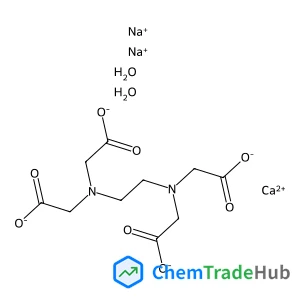
EthylenediaminetetraaceticacidcalciumDisodiumsalthydrate
CAS Number:
23411-34-9
Molecular Formula:
C10H16CaN2Na2O10

![N-[(9H-Fluoren-9-ylmethoxy)carbonyl]serine structure](https://static.chemtradehub.com/structs/737/73724-45-5-b0dc.webp "N-[(9H-Fluoren-9-ylmethoxy)carbonyl]serine structure")

Recommended Suppliers







Disclaimer
This page provides academic journal information for reference and research purposes only. We are not affiliated with any journal publishers and do not handle publication submissions. For publication-related inquiries, please contact the respective journal publishers directly.
If you notice any inaccuracies in the information displayed, please contact us at support@chemtradehub.com. We will promptly review and address your concerns.