













Soft-template-carbonization route to highly textured mesoporous carbon–TiO2 inverse opals for efficient photocatalytic and photoelectrochemical applications
Literature Information
Publication Date
2014-03-17
DOI
10.1039/C4CP00803K
Impact Factor
3.676
Authors
Li Na Quan, Kelsey A. Stoerzinger, Kevin J. May, Yu Jin Jang, Saji Thomas Kochuveedu
View Original
Abstract
Hierarchically organized mesoporous carbon–TiO2 inverse opal nanostructures were synthesized by complementary colloid and block copolymer (BCP) self-assembly, where the triblock copolymer P123 acts simultaneously as the template and the carbon source. Highly ordered mesoporous inverse opal nanostructures with a nano-textured surface morphology and multiple-length scale nanopores provide increased light-activated surface area and scattering effects, leading to enhanced photoabsorption efficiency and the transport of matter. UV-vis absorption, X-ray photoelectron spectroscopy and Mott–Schottky measurement studies show that incorporation of carbon moieties into TiO2via direct conversion of BCPs creates a new energy level above the valence band of TiO2, resulting in an effective decrease in the band gap. A significantly enhanced visible light photocatalytic activity was demonstrated for the mesoporous carbon–TiO2 inverse opals in terms of the degradation of p-nitrophenol (∼79%) and photoelectrochemical water splitting (∼0.087%).
Related Literature
Highly isoselective ring-opening polymerization of rac-O-carboxyanhydrides using a zinc alkoxide initiator
Yaqin Cui, Jinxing Jiang, Xiaobo Pan, Jincai Wu
2019-10-02
Communication
DOI: 10.1039/C9CC06108H
An electrostatic self-assembly route to prepare C-dots/gold nanoclusters for dual-emission ratiometric optical thermometry in living cells
Xiaojie Zhang, Chunxia Yin, Xun Zhang, Jiaping Zhang, Xinwai Wang, Jingwei Xin
2019-07-26
Paper
DOI: 10.1039/C9AY01115C
Fabrication of dual-template molecularly imprinted mesoporous silica for simultaneous rapid and efficient detection of bisphenol A and diethylstilbestrol in environmental water samples
Mengjie Tian, Kai Yu, Leyan Li, Yafei Wang, Liping Guo, Zulei Zhang, Yixia Lu, Lei Li
2019-08-19
Paper
DOI: 10.1039/C9AY01368G
Multidimensional scaling assisted Fourier-transform infrared spectroscopic analysis of fruit wine samples: introducing a novel analytical approach
Keshav Kumar, Anja Giehl, Ralf Schweiggert, Claus-Dieter Patz
2019-07-25
Paper
DOI: 10.1039/C9AY01425J
A new analytical method for the determination of beta-blockers and one metabolite in the influents and effluents of three urban wastewater treatment plants
Gabriel-Lucian Radu, Roxana Scutariu
2019-08-13
Paper
DOI: 10.1039/C9AY01597C
Core–shell CdSeTe/ZnS quantum dots for the detection of microRNA-155 based on the fluorescence resonance energy transfer technique via the formation of a network structure
Feng Cui, Qianying Qiu, Gang Peng, Xiaoyan Li, Xi Liu, Xiaojun Chen
2019-07-11
Paper
DOI: 10.1039/C9AY00783K
Highly efficient cyclotrimerization of isocyanates using N-heterocyclic olefins under bulk conditions
Chengkai Li, Wuchao Zhao, Jianghua He, Yuetao Zhang
2019-09-23
Communication
DOI: 10.1039/C9CC06402H
You might also like
Compound Q&A
What are the main uses of 1H-Indazole-6-carbonitrile (CAS: 141290-59-7)?
1H-Indazole-6-carbonitrile finds applications in pharmaceuticals, where it serve...
141290-59-71H-Indazole-6-carbon...
Compound Q&A
How should waste containing Dioctyl (2E)-2-butenedioate (CAS: 2997-85-5) be handled?
Waste containing Dioctyl (2E)-2-butenedioate (CAS: 2997-85-5) should be collecte...
2997-85-5Dioctyl (2E)-2-buten...
Compound Q&A
What industries use Sodium [(1,2-benzoxazol-3-ylmethyl)sulfonyl]azanide (CAS: 68291-98-5)?
Sodium [(1,2-benzoxazol-3-ylmethyl)sulfonyl]azanide is primarily used in pharmac...
68291-98-5Sodium [(1,2-benzoxa...
Compound Q&A
Are there alternatives to Dimethyl 4-(4,4,5,5-tetramethyl-1,3,2-dioxaborolan-2-yl)-2,6-pyridinedicarboxylate (CAS: 741709-66-0) in synthesis?
Dimethyl 4-(4,4,5,5-tetramethyl-1,3,2-dioxaborolan-2-yl)-2,6-pyridinedicarboxyla...
741709-66-0Dimethyl 4-(4,4,5,5-...
Compound Q&A
How should waste containing 2-Fluoro-6-hydrazinopyridine (CAS: 80714-39-2) be handled?
Waste containing 2-Fluoro-6-hydrazinopyridine (CAS: 80714-39-2) should be manage...
80714-39-22-Fluoro-6-hydrazino...
Compound Q&A
What is 6-Formyl-2-pyridinecarboxylic acid (CAS: 499214-11-8)?
6-Formyl-2-pyridinecarboxylic acid is an organic compound with the molecular for...
499214-11-86-Formyl-2-pyridinec...
Compound Q&A
What is the market or research trend for 3-(3,4-dimethoxyphenyl)-2,5-dimethyl-N-(2-morpholin-4-ylethyl)pyrazolo[1,5-a]pyrimidin-7-amine (CAS: 900874-91-1)?
Research trends for this compound indicate a focus on its potential applications...
900874-91-13-(3,4-dimethoxyphen...
Compound Q&A
How is 9H-Tribenzo[b,d,f]azepine (CAS: 29875-73-8) typically synthesized?
9H-Tribenzo[b,d,f]azepine is typically synthesized via a multi-step process invo...
29875-73-89H-Tribenzo[b,d,f]az...
Compound Q&A
How is 1-Cyclopropyl-7-ethoxy-6-fluoro-8-methoxy-4-oxo-1,4-dihydro-3-quinolinecarboxylic acid (CAS: 1797982-51-4) typically synthesized?
1-Cyclopropyl-7-ethoxy-6-fluoro-8-methoxy-4-oxo-1,4-dihydro-3-quinolinecarboxyli...
1797982-51-41-Cyclopropyl-7-etho...
Compound Q&A
How should waste containing Methyl 3-oxo-1,2,3,4-tetrahydro-6-quinoxalinecarboxylate (CAS: 671820-52-3) be handled?
Waste containing Methyl 3-oxo-1,2,3,4-tetrahydro-6-quinoxalinecarboxylate (CAS: ...
671820-52-3Methyl 3-oxo-1,2,3,4...
Source Journal
Physical Chemistry Chemical Physics

CiteScore:
5.5
Self-citation Rate:
10.3%
Articles per Year:
3036
Physical Chemistry Chemical Physics (PCCP) is an international journal co-owned by 19 physical chemistry and physics societies from around the world. This journal publishes original, cutting-edge research in physical chemistry, chemical physics and biophysical chemistry. To be suitable for publication in PCCP, articles must include significant innovation and/or insight into physical chemistry; this is the most important criterion that reviewers and Editors will judge against when evaluating submissions. The journal has a broad scope and welcomes contributions spanning experiment, theory, computation and data science. Topical coverage includes spectroscopy, dynamics, kinetics, statistical mechanics, thermodynamics, electrochemistry, catalysis, surface science, quantum mechanics, quantum computing and machine learning. Interdisciplinary research areas such as polymers and soft matter, materials, nanoscience, energy, surfaces/interfaces, and biophysical chemistry are welcomed if they demonstrate significant innovation and/or insight into physical chemistry. Joined experimental/theoretical studies are particularly appreciated when complementary and based on up-to-date approaches.
Recommended Compounds

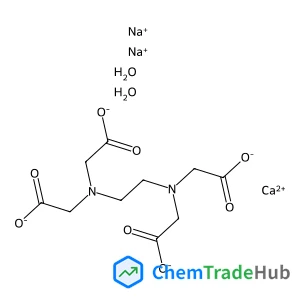
EthylenediaminetetraaceticacidcalciumDisodiumsalthydrate
CAS Number:
23411-34-9
Molecular Formula:
C10H16CaN2Na2O10

Recommended Suppliers





Disclaimer
This page provides academic journal information for reference and research purposes only. We are not affiliated with any journal publishers and do not handle publication submissions. For publication-related inquiries, please contact the respective journal publishers directly.
If you notice any inaccuracies in the information displayed, please contact us at support@chemtradehub.com. We will promptly review and address your concerns.