












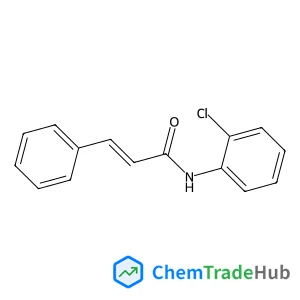
Effects of point defects on the magnetoelectronic structures of MXenes from first principles
Literature Information
Publication Date
2018-01-04
DOI
10.1039/C7CP07165E
Impact Factor
3.676
Authors
Arkamita Bandyopadhyay, Dibyajyoti Ghosh
View Original
Abstract
“MXene”, a new class of two dimensional materials, has attracted considerable research interest due to its unusual chemical bonding pattern as well as promising technological applications. Like other 2D materials, very recently, these classes of materials were also found to be prone to structural defects, thus altering the electronic and transport properties of the host. Using extensive first-principles based simulations, we investigated the structural and magnetoelectronic (i.e., magnetic and electronic) behaviour of the most probable point defects in these MXene systems, such as single vacancies and Schottky type double vacancies. Defect formation energies appeared to be strongly dependent upon local chemical bonding and the nature of reconstruction. Moreover, this layered material exhibited prominent metal to semiconductor or semiconductor to metal transition depending upon the type of the system or the defect. Moreover, a few of the defective MXenes become magnetic in nature due to the presence of unpaired electrons in the spin split d-orbitals. Thus, it is evident that intrinsic point defects in MXene can emerge as a potential tool to modulate the properties of 2D layered MXenes towards promising device applications.
Recommended Journals
Related Literature
Mechanism of photochromic transformations and photodegradation of an asymmetrical 2,3-diarylcyclopentenone
Artem B. Smolentsev, Ilya M. Magin, Vladimir V. Vyazovkin, Marina V. Parkhats, Anton V. Yadykov, Valerii Z. Shirinian
2020-02-06
Paper
DOI: 10.1039/C9CP05744G
Suppressing triplet decay in quinoidal singlet fission materials: the role of molecular planarity and rigidity
Guangchao Han, Qian Peng
2020-03-09
Paper
DOI: 10.1039/C9CP06987A
2Ch–2N square and hexagon interactions: a combined crystallographic data analysis and computational study
Yunxiang Lu, Wenxia Li, Weiwei Yang, Zhengdan Zhu, Zhijian Xu, Honglai Liu
2019-09-05
Paper
DOI: 10.1039/C9CP04562G
BOKEI: Bayesian optimization using knowledge of correlated torsions and expected improvement for conformer generation
Lucian Chan, Geoffrey R. Hutchison, Garrett M. Morris
2020-02-12
Paper
DOI: 10.1039/C9CP06688H
Dynamics of propene and propane in ZIF-8 probed by solid-state 2H NMR
Dieter Freude, Alexander G. Stepanov
2020-02-21
Paper
DOI: 10.1039/D0CP00270D
Quantitative analysis of the coupling between proton and electron transport in peptide/manganese oxide hybrid films
Misong Ju, Ouk Hyun Cho, Jaehun Lee, Mani Balamurugan, Ki Tae Nam
2020-03-10
Paper
DOI: 10.1039/C9CP05581A
Ground and excited state properties of furanoflavylium derivatives
Alfonso Alejo-Armijo, Nuno Basílio, Adilson A. Freitas, António L. Maçanita, João C. Lima, A. Jorge Parola, Fernando Pina
2019-09-13
Paper
DOI: 10.1039/C9CP04917G
Seeking minimum entropy production for a tree-like flow-field in a fuel cell
Marco Sauermoser, Signe Kjelstrup, Bruno G. Pollet, Eirik G. Flekkøy
2020-03-18
Paper
DOI: 10.1039/C9CP05394H
Correction: Surface heterogeneity and inhomogeneous broadening of vibrational line profiles
Skandar Taj, Diane Baird, Alexander Rosu-Finsen, Martin R. S. McCoustra
2019-09-18
Correction
DOI: 10.1039/C9CP90226K
Germanene/GaGeTe heterostructure: a promising electric-field induced data storage device with high carrier mobility
Liang Zhang, Jin Zhang, Pei-ji Wang, Chang-Wen Zhang
2020-02-04
Paper
DOI: 10.1039/C9CP06445A
You might also like
Compound Q&A
Is 6-(3-Fluorophenyl)picolinic acid (CAS: 887982-40-3) safe?
6-(3-Fluorophenyl)picolinic acid is generally considered safe for laboratory use...
887982-40-36-(3-Fluorophenyl)pi...
Compound Q&A
What industries use (3R)-3-Pyrrolidinol (CAS: 2799-21-5)?
(3R)-3-Pyrrolidinol is used in the pharmaceutical industry as a precursor for dr...
2799-21-5(3R)-3-Pyrrolidinol
Compound Q&A
What precautions should be taken when handling (4R,5R)-4,5-Diethoxycarbonyl-2,2-dimethyldioxolane (CAS: 59779-75-8)?
When handling (4R,5R)-4,5-Diethoxycarbonyl-2,2-dimethyldioxolane (CAS: 59779-75-...
59779-75-8(4R,5R)-4,5-Diethoxy...
Compound Q&A
How is 1-(6-Chloroimidazo[1,2-b]pyridazin-3-yl)ethanone (CAS: 90734-71-7) typically synthesized?
1-(6-Chloroimidazo[1,2-b]pyridazin-3-yl)ethanone is often synthesized via a mult...
90734-71-71-(6-Chloroimidazo[1...
Compound Q&A
What is the market or research trend for N-Ethyl-3,4-dimethylbenzylamine (CAS: 39180-83-1)?
The market for N-Ethyl-3,4-dimethylbenzylamine (CAS: 39180-83-1) remains steady,...
39180-83-1N-Ethyl-3,4-dimethyl...
Compound Q&A
What is Tert-butyl 3-(pyrrolidin-1-yl)azetidine-1-carboxylate (CAS: 1019008-21-9)?
Tert-butyl 3-(pyrrolidin-1-yl)azetidine-1-carboxylate is a chemical compound wit...
1019008-21-9Tert-butyl 3-(pyrrol...
Compound Q&A
What regulatory guidelines apply to 1-Bromo-3-chloro-2,4-dimethoxybenzene (CAS: 1228956-93-1)?
1-Bromo-3-chloro-2,4-dimethoxybenzene (CAS: 1228956-93-1) falls under the classi...
1228956-93-11-Bromo-3-chloro-2,4...
Compound Q&A
Is 8-Bromo-2-methyl-3,4-dihydroisoquinolin-1(2H)-one (CAS: 1368622-07-4) safe?
The safety of 8-Bromo-2-methyl-3,4-dihydroisoquinolin-1(2H)-one (CAS: 1368622-07...
1368622-07-48-Bromo-2-methyl-3,4...
Compound Q&A
Is Benzyl [(3S)-2,6-dioxo-3-piperidinyl]carbamate (CAS: 22785-43-9) safe?
Benzyl [(3S)-2,6-dioxo-3-piperidinyl]carbamate is generally safe when handled wi...
22785-43-9Benzyl [(3S)-2,6-dio...
Compound Q&A
How should 1-{[4-(4,4,5,5-Tetramethyl-1,3,2-dioxaborolan-2-yl)phenyl]sulfonyl}pyrrolidine (CAS: 928657-21-0) be stored?
1-{[4-(4,4,5,5-Tetramethyl-1,3,2-dioxaborolan-2-yl)phenyl]sulfonyl}pyrrolidine s...
928657-21-01-{[4-(4,4,5,5-Tetra...
Source Journal
Physical Chemistry Chemical Physics

CiteScore:
5.5
Self-citation Rate:
10.3%
Articles per Year:
3036
Physical Chemistry Chemical Physics (PCCP) is an international journal co-owned by 19 physical chemistry and physics societies from around the world. This journal publishes original, cutting-edge research in physical chemistry, chemical physics and biophysical chemistry. To be suitable for publication in PCCP, articles must include significant innovation and/or insight into physical chemistry; this is the most important criterion that reviewers and Editors will judge against when evaluating submissions. The journal has a broad scope and welcomes contributions spanning experiment, theory, computation and data science. Topical coverage includes spectroscopy, dynamics, kinetics, statistical mechanics, thermodynamics, electrochemistry, catalysis, surface science, quantum mechanics, quantum computing and machine learning. Interdisciplinary research areas such as polymers and soft matter, materials, nanoscience, energy, surfaces/interfaces, and biophysical chemistry are welcomed if they demonstrate significant innovation and/or insight into physical chemistry. Joined experimental/theoretical studies are particularly appreciated when complementary and based on up-to-date approaches.
Recommended Compounds
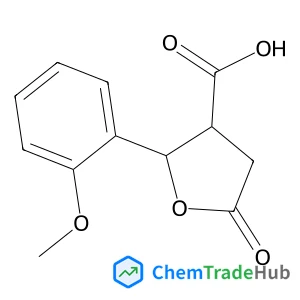
trans-2-(2-Methoxyphenyl)-5-oxotetrahydrofuran-3-carboxylic acid
CAS Number:
99226-02-5
Molecular Formula:
C12H12O5
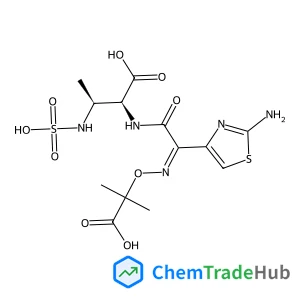
Aztreonam USP Related Compound A (Open-ring Aztreonam)
CAS Number:
87500-74-1
Molecular Formula:
C13H19N5O9S2

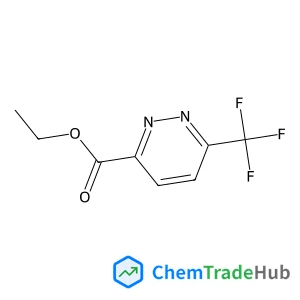
Ethyl 6-(trifluoromethyl)pyridazine-3-carboxylate
CAS Number:
1192155-06-8
Molecular Formula:
C8H7F3N2O2
Recommended Suppliers






Disclaimer
This page provides academic journal information for reference and research purposes only. We are not affiliated with any journal publishers and do not handle publication submissions. For publication-related inquiries, please contact the respective journal publishers directly.
If you notice any inaccuracies in the information displayed, please contact us at support@chemtradehub.com. We will promptly review and address your concerns.