


Capture and dissociation in the complex-forming CH+H2 → CH2+H, CH+H2 reactions
Literature Information
Publication Date
2011-01-06
DOI
10.1039/C0CP01188F
Impact Factor
3.676
Authors
Miguel González, Amaia Saracibar, Ernesto Garcia
View Original
Abstract
The rate coefficients for the capture process CH+H2 → CH3 and the reactions CH+H2 → CH2+H (abstraction), CH+H2 (exchange) have been calculated in the 200–800 K temperature range, using the quasiclassical trajectory (QCT) method and the most recent global potential energy surface. The reactions, which are of interest in combustion and in astrochemistry, proceed via the formation of long-lived CH3 collision complexes, and the three H atoms become equivalent. QCT rate coefficients for capture are in quite good agreement with experiments. However, an important zero point energy (ZPE) leakage problem occurs in the QCT calculations for the abstraction, exchange and inelastic exit channels. To account for this issue, a pragmatic but accurate approach has been applied, leading to a good agreement with experimental abstraction rate coefficients. Exchange rate coefficients have also been calculated using this approach. Finally, calculations employing QCT capture/phase space theory (PST) models have been carried out, leading to similar values for the abstraction rate coefficients as the QCT and previous quantum mechanical capture/PST methods. This suggests that QCT capture/PST models are a good alternative to the QCT method for this and similar systems.
Recommended Journals

Journal of Natural Medicines

Russian Journal of Organic Chemistry

Acta Materialia

Saudi Pharmaceutical Journal

Russian Journal of Applied Chemistry

Drug Discovery Today

Organic Process Research & Development

Russian Journal of Bioorganic Chemistry

Journal of Peptide Science

Current Opinion in Solid State & Materials Science
Related Literature
Reactivity of dicationic N-heterocyclic chalcogen carbene analogues with methane and ethene: a theoretical investigation
Tsung-Lung Li, Zheng-Feng Zhang
2021-01-07
Paper
DOI: 10.1039/D0CP06173E
New atomic-scale insights into the I/Ni(100) system: phase transitions and growth of an atomically thin NiI2 film
T. V. Pavlova, B. V. Andryushechkin
2021-01-11
Paper
DOI: 10.1039/D0CP06171A
On the physicochemical origin of nanoscale friction: the polarizability and electronegativity relationship tailoring nanotribology
Leonardo M. Leidens, Marcelo E. H. Maia da Costa, Neileth S. Figueroa, Rodrigo A. Barbieri, Fernando Alvarez, Alexandre F. Michels
2021-01-02
Paper
DOI: 10.1039/D0CP06436J
Liquid dibromomethane under pressure: a computational study
Bernadeta Jasiok, Mirosław Chorążewski, Eugene B. Postnikov, Claude Millot
2021-01-22
Paper
DOI: 10.1039/D0CP06458K
Magnetic anisotropy in YbIII complex candidates for molecular qubits: a theoretical analysis
Martín Amoza, Silvia Gómez-Coca, Eliseo Ruiz
2020-12-16
Paper
DOI: 10.1039/D0CP05422D
Hydrogen bond donor functionalized poly(ionic liquid)s for efficient synergistic conversion of CO2 to cyclic carbonates
Qian Su, Lei Liu, Ting Ying, Li Dong, Weiguo Cheng
2020-12-17
Paper
DOI: 10.1039/D0CP06041K
The spin-dependent transport properties of defected zigzag graphene nanoribbons with graphene nanobubbles
Yun Ni, Jia Li, Wei Tao, Hao Ding, Rui-Xue Li
2021-01-07
Paper
DOI: 10.1039/D0CP05640E
Conformational dynamics is critical for the allosteric inhibition of cGAS upon acetyl-mimic mutations
Jingjing Guo, Mengrong Li, Yan Zhang, Lili Xi, Fengling Cui
2021-01-06
Paper
DOI: 10.1039/D0CP05871H
Quantum spin Hall insulators and topological Rashba-splitting edge states in two-dimensional CX3 (X = Sb, Bi)
Shan-Shan Wang, Wencong Sun, Shuai Dong
2020-12-21
Paper
DOI: 10.1039/D0CP05374K
The transition from salt-in-water to water-in-salt nanostructures in water solutions of organic ionic liquids relevant for biological applications
D. Gobbo
2020-12-09
Paper
DOI: 10.1039/D0CP04959J
You might also like
Compound Q&A
How is Ethyl 4-chlorothieno[2,3-b]pyridine-5-carboxylate (CAS: 59713-58-5) typically synthesized?
Ethyl 4-chlorothieno[2,3-b]pyridine-5-carboxylate (CAS: 59713-58-5) can be synth...
59713-58-5Ethyl 4-chlorothieno...
Compound Q&A
What regulatory guidelines apply to 5-Methyl-1H-indole-3-carbaldehyde (CAS: 52562-50-2)?
5-Methyl-1H-indole-3-carbaldehyde (CAS: 52562-50-2) is subject to various regula...
52562-50-25-Methyl-1H-indole-3...
Compound Q&A
What are the physical and chemical properties of (1,3-Dimethyl-2,4-dioxo-1,2,3,4-tetrahydro-5-pyrimidinyl)boronic acid (CAS: 223418-73-3)?
(1,3-Dimethyl-2,4-dioxo-1,2,3,4-tetrahydro-5-pyrimidinyl)boronic acid is a white...
223418-73-3(1,3-Dimethyl-2,4-di...
Compound Q&A
How should waste containing Sulfocostunolide A (CAS: 1016983-51-9) be handled?
Waste containing Sulfocostunolide A (CAS: 1016983-51-9) should be handled with c...
1016983-51-9Sulfocostunolide A
Compound Q&A
What precautions should be taken when handling Murraxocin (CAS: 88478-44-8)?
When handling Murraxocin (CAS: 88478-44-8), ensure proper personal protective eq...
88478-44-8Murraxocin
Compound Q&A
What are the physical and chemical properties of Formvar (CAS: 63148-64-1)?
Formvar (CAS: 63148-64-1) is an alkyd resin characterized by a high molecular we...
63148-64-1Formvar(R)
Compound Q&A
Is (S)-4-benzyl-2-((benzyloxy)methyl)morpholine (CAS: 205242-66-6) safe?
(S)-4-benzyl-2-((benzyloxy)methyl)morpholine is generally safe when handled with...
205242-66-6(S)-4-benzyl-2-((ben...
Compound Q&A
What industries use Methyl 1-(5-bromo-2-pyrimidinyl)cyclopropanecarboxylate (CAS: 1447607-69-3)?
Methyl 1-(5-bromo-2-pyrimidinyl)cyclopropanecarboxylate (CAS: 1447607-69-3) is p...
1447607-69-3Methyl 1-(5-bromo-2-...
Compound Q&A
Is 2-Methyl-1-phenyl-1-propanamine hydrochloride (CAS: 24290-47-9) safe?
2-Methyl-1-phenyl-1-propanamine hydrochloride (CAS: 24290-47-9) is generally con...
24290-47-92-Methyl-1-phenyl-1-...
Compound Q&A
How is 3-(4-Bromophenyl)-2-methylpropanoic acid (CAS: 66735-01-1) typically synthesized?
3-(4-Bromophenyl)-2-methylpropanoic acid is synthesized through a multi-step pro...
66735-01-13-(4-Bromophenyl)-2-...
Source Journal
Physical Chemistry Chemical Physics

CiteScore:
5.5
Self-citation Rate:
10.3%
Articles per Year:
3036
Physical Chemistry Chemical Physics (PCCP) is an international journal co-owned by 19 physical chemistry and physics societies from around the world. This journal publishes original, cutting-edge research in physical chemistry, chemical physics and biophysical chemistry. To be suitable for publication in PCCP, articles must include significant innovation and/or insight into physical chemistry; this is the most important criterion that reviewers and Editors will judge against when evaluating submissions. The journal has a broad scope and welcomes contributions spanning experiment, theory, computation and data science. Topical coverage includes spectroscopy, dynamics, kinetics, statistical mechanics, thermodynamics, electrochemistry, catalysis, surface science, quantum mechanics, quantum computing and machine learning. Interdisciplinary research areas such as polymers and soft matter, materials, nanoscience, energy, surfaces/interfaces, and biophysical chemistry are welcomed if they demonstrate significant innovation and/or insight into physical chemistry. Joined experimental/theoretical studies are particularly appreciated when complementary and based on up-to-date approaches.
Recommended Compounds
![2-(Methylsulfonyl)-2,4,5,6-tetrahydropyrrolo[3,4-c]pyrazole structure](https://static.chemtradehub.com/structs/122/1226781-80-1-09d5.webp "2-(Methylsulfonyl)-2,4,5,6-tetrahydropyrrolo[3,4-c]pyrazole structure")
2-(Methylsulfonyl)-2,4,5,6-tetrahydropyrrolo[3,4-c]pyrazole
CAS Number:
1226781-80-1
Molecular Formula:
C6H9N3O2S
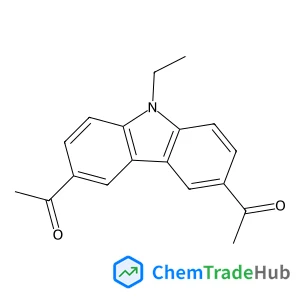
![4-[(1-Methyl-1H-pyrrol-2-yl)methylene]-1,3(2H,4H)-isoquinolinedione structure](https://static.chemtradehub.com/structs/110/1104546-89-5-a600.webp "4-[(1-Methyl-1H-pyrrol-2-yl)methylene]-1,3(2H,4H)-isoquinolinedione structure")
4-[(1-Methyl-1H-pyrrol-2-yl)methylene]-1,3(2H,4H)-isoquinolinedione
CAS Number:
1104546-89-5
Molecular Formula:
C15H12N2O2
Recommended Suppliers





Disclaimer
This page provides academic journal information for reference and research purposes only. We are not affiliated with any journal publishers and do not handle publication submissions. For publication-related inquiries, please contact the respective journal publishers directly.
If you notice any inaccuracies in the information displayed, please contact us at support@chemtradehub.com. We will promptly review and address your concerns.