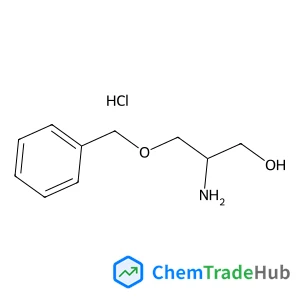
(R)-2-amino-3-(benzyloxy)propan-1-ol hydrochloride
CAS Number:
58577-95-0
Molecular Formula:
C10H16ClNO2
Leonardo M. Leidens, Marcelo E. H. Maia da Costa, Neileth S. Figueroa, Rodrigo A. Barbieri, Fernando Alvarez, Alexandre F. Michels
Friction is a ubiquitous manifestation of nature, and when it is studied at the nanoscale, complex and interesting effects arise from fundamental physical and chemical surface properties. Surprisingly, and probably due to the complexity of nanofriction studies, this aspect has not been completely discussed in prior studies. To fully consider the physicochemical influence in nanoscale friction, amorphous carbon films with different amounts of hydrogen and fluorine were prepared, chemically characterized, and evaluated via lateral force microscopy. Hydrogen and fluorine were selected because although they exhibit different physicochemical properties, both contribute to frictional force reduction. Indeed, to explain the experimental behavior, it is necessary to propose a new damping constant unifying both polarizability (physical) and electronegativity (chemical) properties. The satisfactory agreement between theory and experiments may encourage and enhance deeper discussion and new experiments that take into account the chemical peculiarities of frictional behavior relating to nanoscale elastic regimes.
B. J. Cafferty, S. C. Karunakaran, G. B. Schuster, N. V. Hud
DOI: 10.1039/C6CP03047E
N. Follain, R. Crétois, L. Lebrun, S. Marais
DOI: 10.1039/C6CP04147G
Chao Zhang, Jingyang Wang, Xiaohui Wang
DOI: 10.1039/C6CP01699E
D. Amedro, L. Vereecken, J. N. Crowley
DOI: 10.1039/C5CP90133B
Alejandro Somoza Márquez, Lipeng Chen, Kewei Sun, Yang Zhao
DOI: 10.1039/C5CP06491K
Jérôme Lasne, Alexander Rosu-Finsen, Andrew Cassidy, Martin R. S. McCoustra, David Field
DOI: 10.1039/C5CP03174E
Sheng-Jie Lu, Lian-Rui Hu, Xi-Ling Xu, Hong-Guang Xu, Hui Chen, Wei-Jun Zheng
DOI: 10.1039/C6CP00373G
Harshal P. Mungse, Raghuvir Singh, Hiroyuki Sugimura, N. Kumar, Om P. Khatri
DOI: 10.1039/C5CP02313K
Annette F. Taylor, Mark R. Tinsley, Kenneth Showalter
DOI: 10.1039/C5CP01964H
Arvin Akoopie, Ulrich F. Müller
DOI: 10.1039/C6CP00672H
1-(2,4,6-Trifluorophenyl)ethanol is an organic compound with the CAS number 1250...
1-(2,4-Dimethoxybenzyl)-4-(hydroxymethyl)-2-pyrrolidinone (CAS: 919111-34-5) is ...
(7S,15R)-6β,15-Diacetoxy-7α,20-epoxy-7-hydroxykaura-2,16-dien-1-one is a crystal...
The compound rac-ethyl (1r,4r)-4-hydroxycyclohexane-1-carboxylate, trans (CAS: 3...
The market for 2-(2,4-Difluorophenoxy)-3-nitropyridine (CAS: 175135-62-3) is cur...
The main uses of 6-Diazo-5-oxo-L-norleucine (CAS: 157-03-9) include research in ...
When handling 2-Aminoethyl-mono-amide-DOTA-tris(tBu ester) (CAS: 173308-19-5), i...
5-Methylimidazo[1,2-a]pyridine-3-carbaldehyde (CAS: 178488-37-4) can be synthesi...
There are alternative reagents that can be used in the synthesis of 2,4,6-Trihyd...
(2Z)-3-(5-Fluoro-1H-indol-3-yl)-2-sulfanylacrylic acid is a chemical compound wi...

Physical Chemistry Chemical Physics (PCCP) is an international journal co-owned by 19 physical chemistry and physics societies from around the world. This journal publishes original, cutting-edge research in physical chemistry, chemical physics and biophysical chemistry. To be suitable for publication in PCCP, articles must include significant innovation and/or insight into physical chemistry; this is the most important criterion that reviewers and Editors will judge against when evaluating submissions. The journal has a broad scope and welcomes contributions spanning experiment, theory, computation and data science. Topical coverage includes spectroscopy, dynamics, kinetics, statistical mechanics, thermodynamics, electrochemistry, catalysis, surface science, quantum mechanics, quantum computing and machine learning. Interdisciplinary research areas such as polymers and soft matter, materials, nanoscience, energy, surfaces/interfaces, and biophysical chemistry are welcomed if they demonstrate significant innovation and/or insight into physical chemistry. Joined experimental/theoretical studies are particularly appreciated when complementary and based on up-to-date approaches.
![2-Methyl-2-propanyl 1,6-diazaspiro[3.4]octane-6-carboxylate structure](https://static.chemtradehub.com/structs/115/1158749-79-1-81ee.webp "2-Methyl-2-propanyl 1,6-diazaspiro[3.4]octane-6-carboxylate structure")