












![Imidazo[1,5-a]pyrazine structure](https://static.chemtradehub.com/structs/274/274-49-7-d749.webp "Imidazo[1,5-a]pyrazine structure")
New atomic-scale insights into the I/Ni(100) system: phase transitions and growth of an atomically thin NiI2 film
Literature Information
Publication Date
2021-01-11
DOI
10.1039/D0CP06171A
Impact Factor
3.676
Authors
T. V. Pavlova, B. V. Andryushechkin
View Original
Abstract
We use a traditional surface science approach to create and study an atomically thin NiI2 film (a promising two-dimensional ferromagnetic material) formed on nickel substrate as a result of molecular iodine adsorption. The I/Ni(100) system was examined with scanning tunneling microscopy (STM), low energy electron diffraction (LEED) and density functional theory calculations. We found out that the iodine adsorption on Ni(100) at 300 K leads to the formation of non-equilibrium phases, whereas the adsorption at elevated temperature (≥390 K) gives rise to the thermodynamically stable phases. In both cases, a simple p(2 × 2) structure is formed at 0.25 ML. As more iodine is adsorbed at 300 K, the p(2 × 2) phase is replaced by the small coexisting domains of c(3 × 2) and c(6 × 2) phases both corresponding to the coverage of 0.33 ML, while adsorption at elevated temperature results in the formation of only one c(3 × 2) phase. At further iodine adsorption the c(3 × 2) phase transforms into the c(5 × 2) one, while the c(6 × 2) phase – into the one both corresponding to the coverage of 0.40 ML. In addition to simple chemisorbed phases, a new shifted-row reconstruction of Ni(100) induced by iodine adsorption was discovered. At coverages exceeding 0.40 ML, we observed complex LEED patterns and superstructures in STM and assigned them to specific surface reconstructions. We also found that prolonged iodine dosing leads to the nucleation of nickel iodide islands and the growth of a 2D atomically thin iodide film partially exfoliated from the substrate.
Related Literature
Combination of electrografting and layer-by-layer deposition: an efficient way to tailor polymer coatings of (semi)-conductors
Aurélia Charlot, Sabine Gabriel, Christophe Detrembleur, Robert Jérôme, Christine Jérôme
2007-09-26
Communication
DOI: 10.1039/B712130J
Synthesis of poly(para-phenylene)(2-isocyano-2-tosylpropane-1,3-diyl), poly(para-phenylene)(2-oxopropane-1,3-diyl) and oligo(cyclopentadienones) via carbonylative coupling of α,α′-dibromoxylene
Robert G. Potter, Thomas S. Hughes
2007-09-24
Communication
DOI: 10.1039/B706807G
Measuring multiple carbon–nitrogen distances in natural abundant solids using R-RESPDOR NMR
2006-09-27
Communication
DOI: 10.1039/B611447D
Trapping a pseudo-Hofmann rearrangement on a ruthenium cluster
Daniele Belletti, Pierre Braunstein, Abdelatif Messaoudi, Giovanni Predieri, Antonio Tiripicchio
2006-10-17
Communication
DOI: 10.1039/B611338A
Enzymatic manipulations of DNA oligonucleotides on microgel: towards development of DNA–microgel bioassays
Shunxing Su, Carlos D. M. Filipe, Robert Pelton
2007-08-22
Communication
DOI: 10.1039/B709817K
Mechanism and substrate stereochemistry of 2-amino-3-oxobutyrate CoA ligase: implications for 5-aminolevulinate synthase and related enzymes
Qamar Bashir, Naeem Rashid
2006-10-13
Communication
DOI: 10.1039/B609925D
Chemistry of enediynyl azides: activation through a novel pathway
Amit Basak, Sandip K. Roy, Sanket Das, Amrita B. Hazra, Subhash C. Ghosh, Shailendra Jha
2006-11-01
Communication
DOI: 10.1039/B612114D
Geometric self-sorting in DNA self-assembly
Yu He, Ye Tian, Yi Chen, Alexander E. Ribbe, Chengde Mao
2006-10-24
Communication
DOI: 10.1039/B611984K
Investigation of laser induced photocurrent generation experiments
Himadri S. Mandal, Ian J. Burgess, Heinz-Bernhard Kraatz
2006-11-02
Communication
DOI: 10.1039/B612617K
You might also like
Compound Q&A
How is Ethyl 4-chlorothieno[2,3-b]pyridine-5-carboxylate (CAS: 59713-58-5) typically synthesized?
Ethyl 4-chlorothieno[2,3-b]pyridine-5-carboxylate (CAS: 59713-58-5) can be synth...
59713-58-5Ethyl 4-chlorothieno...
Compound Q&A
What regulatory guidelines apply to 5-Methyl-1H-indole-3-carbaldehyde (CAS: 52562-50-2)?
5-Methyl-1H-indole-3-carbaldehyde (CAS: 52562-50-2) is subject to various regula...
52562-50-25-Methyl-1H-indole-3...
Compound Q&A
What are the physical and chemical properties of (1,3-Dimethyl-2,4-dioxo-1,2,3,4-tetrahydro-5-pyrimidinyl)boronic acid (CAS: 223418-73-3)?
(1,3-Dimethyl-2,4-dioxo-1,2,3,4-tetrahydro-5-pyrimidinyl)boronic acid is a white...
223418-73-3(1,3-Dimethyl-2,4-di...
Compound Q&A
How should waste containing Sulfocostunolide A (CAS: 1016983-51-9) be handled?
Waste containing Sulfocostunolide A (CAS: 1016983-51-9) should be handled with c...
1016983-51-9Sulfocostunolide A
Compound Q&A
What precautions should be taken when handling Murraxocin (CAS: 88478-44-8)?
When handling Murraxocin (CAS: 88478-44-8), ensure proper personal protective eq...
88478-44-8Murraxocin
Compound Q&A
What are the physical and chemical properties of Formvar (CAS: 63148-64-1)?
Formvar (CAS: 63148-64-1) is an alkyd resin characterized by a high molecular we...
63148-64-1Formvar(R)
Compound Q&A
Is (S)-4-benzyl-2-((benzyloxy)methyl)morpholine (CAS: 205242-66-6) safe?
(S)-4-benzyl-2-((benzyloxy)methyl)morpholine is generally safe when handled with...
205242-66-6(S)-4-benzyl-2-((ben...
Compound Q&A
What industries use Methyl 1-(5-bromo-2-pyrimidinyl)cyclopropanecarboxylate (CAS: 1447607-69-3)?
Methyl 1-(5-bromo-2-pyrimidinyl)cyclopropanecarboxylate (CAS: 1447607-69-3) is p...
1447607-69-3Methyl 1-(5-bromo-2-...
Compound Q&A
Is 2-Methyl-1-phenyl-1-propanamine hydrochloride (CAS: 24290-47-9) safe?
2-Methyl-1-phenyl-1-propanamine hydrochloride (CAS: 24290-47-9) is generally con...
24290-47-92-Methyl-1-phenyl-1-...
Compound Q&A
How is 3-(4-Bromophenyl)-2-methylpropanoic acid (CAS: 66735-01-1) typically synthesized?
3-(4-Bromophenyl)-2-methylpropanoic acid is synthesized through a multi-step pro...
66735-01-13-(4-Bromophenyl)-2-...
Source Journal
Physical Chemistry Chemical Physics

CiteScore:
5.5
Self-citation Rate:
10.3%
Articles per Year:
3036
Physical Chemistry Chemical Physics (PCCP) is an international journal co-owned by 19 physical chemistry and physics societies from around the world. This journal publishes original, cutting-edge research in physical chemistry, chemical physics and biophysical chemistry. To be suitable for publication in PCCP, articles must include significant innovation and/or insight into physical chemistry; this is the most important criterion that reviewers and Editors will judge against when evaluating submissions. The journal has a broad scope and welcomes contributions spanning experiment, theory, computation and data science. Topical coverage includes spectroscopy, dynamics, kinetics, statistical mechanics, thermodynamics, electrochemistry, catalysis, surface science, quantum mechanics, quantum computing and machine learning. Interdisciplinary research areas such as polymers and soft matter, materials, nanoscience, energy, surfaces/interfaces, and biophysical chemistry are welcomed if they demonstrate significant innovation and/or insight into physical chemistry. Joined experimental/theoretical studies are particularly appreciated when complementary and based on up-to-date approaches.
Recommended Compounds
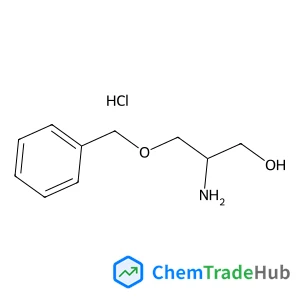
(R)-2-amino-3-(benzyloxy)propan-1-ol hydrochloride
CAS Number:
58577-95-0
Molecular Formula:
C10H16ClNO2
Recommended Suppliers





Disclaimer
This page provides academic journal information for reference and research purposes only. We are not affiliated with any journal publishers and do not handle publication submissions. For publication-related inquiries, please contact the respective journal publishers directly.
If you notice any inaccuracies in the information displayed, please contact us at support@chemtradehub.com. We will promptly review and address your concerns.