












Reactivity of dicationic N-heterocyclic chalcogen carbene analogues with methane and ethene: a theoretical investigation
Literature Information
Publication Date
2021-01-07
DOI
10.1039/D0CP06173E
Impact Factor
3.676
Authors
Tsung-Lung Li, Zheng-Feng Zhang
View Original
Abstract
The reactions of chalcogen N-heterocyclic carbenic (NHC) dications [(Dipp2DAB)M2+, M = O, S, Se, and Te, and Dipp2DAB = 1,4-(2,6-diisopropyl)phenyl-1,4-diaza-1,3-butadiene] with methane and ethene are investigated by the density functional theory. The activation energies and reaction enthalpies are analyzed by the energy decomposition analysis (EDA) to understand the reactivity of the reactions. Calculations show that the oxide carbenic dication (Dipp2DAB)O2+ reactant has a pair of rather unbalanced O–N bonds due to the combined effects of the smallness of the central O atom and the bulkiness of the two Dipp ligands surrounding the DAB ring, suggesting the oxide reactant is much less stable than the chalcogenide ones. Because of its unique characteristics, the oxide carbenic dication distinguishes itself from the rest of the chalcogen family. The differences between oxides and chalcogenides of the chalcogen family complexes well known in inorganic chemistry are also observed in this theoretical investigation. This work further reveals that the reasons for the distinctive characteristics between oxide and chalcogenide complexes are due to the fundamental fact that the 2s and 2p atomic orbitals are more amenable to hybridization than those of higher valences, and the mixing of the former valence orbitals results in much smaller atoms than the latter.
Related Literature
Mechanism and substrate stereochemistry of 2-amino-3-oxobutyrate CoA ligase: implications for 5-aminolevulinate synthase and related enzymes
Qamar Bashir, Naeem Rashid
2006-10-13
Communication
DOI: 10.1039/B609925D
Enhancing the reactivity of 1,2,3-triazoles in “click” macrocycles by face-to-face dibenzylammonium ion binding
Yi Liu, Xiyun Zhang, Liana M. Klivansky
2007-10-23
Communication
DOI: 10.1039/B711505A
Asymmetric total synthesis of martinelline and martinellic acid
Shuhei Ikeda, Masatoshi Shibuya, Yoshiharu Iwabuchi
2006-11-01
Communication
DOI: 10.1039/B611121A
Novel one step hydrothermal synthesis of TiO2/WO3 nanocomposites with enhanced photocatalytic activity
Valeria Puddu, Robert Mokaya, Gianluca Li Puma
2007-09-07
Communication
DOI: 10.1039/B711559H
Fluorescent CXCR4 chemokine receptor antagonists: metal activated binding
Abid Khan, Jon D. Silversides, Leigh Madden, John Greenman, Stephen J. Archibald
2006-12-04
Communication
DOI: 10.1039/B614557D
Activation of Lewis acid catalysts in the presence of an organic salt containing a non-coordinating anion: its origin and application potential
Jin Hong Kim, Ji Woong Lee, Ueon Sang Shin, Jin Yong Lee, Sang-gi Lee, Choong Eui Song
2007-08-29
Communication
DOI: 10.1039/B712060E
Chemo-, regio- and stereoselective preparation of silyl enol ethers from thiol esters and bis(iodozincio)alkane
Akihiro Ooguri, Zenichi Ikeda, Seijiro Matsubara
2007-08-31
Communication
DOI: 10.1039/B709456F
N-Methylimidazole significantly improves lipase-catalysed acylation of ribavirin
Bo-Kai Liu, Qi Wu, Jian-Ming Xu, Xian-Fu Lin
2006-10-27
Communication
DOI: 10.1039/B611454G
A remote valency control technique: catalytic reduction of uranium(vi) to uranium(iv) by external ultrasound irradiation
Takashi Toraishi, Takaumi Kimura, Makoto Arisaka
2006-11-23
Communication
DOI: 10.1039/B611573J
You might also like
Compound Q&A
How is Ethyl 4-chlorothieno[2,3-b]pyridine-5-carboxylate (CAS: 59713-58-5) typically synthesized?
Ethyl 4-chlorothieno[2,3-b]pyridine-5-carboxylate (CAS: 59713-58-5) can be synth...
59713-58-5Ethyl 4-chlorothieno...
Compound Q&A
What regulatory guidelines apply to 5-Methyl-1H-indole-3-carbaldehyde (CAS: 52562-50-2)?
5-Methyl-1H-indole-3-carbaldehyde (CAS: 52562-50-2) is subject to various regula...
52562-50-25-Methyl-1H-indole-3...
Compound Q&A
What are the physical and chemical properties of (1,3-Dimethyl-2,4-dioxo-1,2,3,4-tetrahydro-5-pyrimidinyl)boronic acid (CAS: 223418-73-3)?
(1,3-Dimethyl-2,4-dioxo-1,2,3,4-tetrahydro-5-pyrimidinyl)boronic acid is a white...
223418-73-3(1,3-Dimethyl-2,4-di...
Compound Q&A
How should waste containing Sulfocostunolide A (CAS: 1016983-51-9) be handled?
Waste containing Sulfocostunolide A (CAS: 1016983-51-9) should be handled with c...
1016983-51-9Sulfocostunolide A
Compound Q&A
What precautions should be taken when handling Murraxocin (CAS: 88478-44-8)?
When handling Murraxocin (CAS: 88478-44-8), ensure proper personal protective eq...
88478-44-8Murraxocin
Compound Q&A
What are the physical and chemical properties of Formvar (CAS: 63148-64-1)?
Formvar (CAS: 63148-64-1) is an alkyd resin characterized by a high molecular we...
63148-64-1Formvar(R)
Compound Q&A
Is (S)-4-benzyl-2-((benzyloxy)methyl)morpholine (CAS: 205242-66-6) safe?
(S)-4-benzyl-2-((benzyloxy)methyl)morpholine is generally safe when handled with...
205242-66-6(S)-4-benzyl-2-((ben...
Compound Q&A
What industries use Methyl 1-(5-bromo-2-pyrimidinyl)cyclopropanecarboxylate (CAS: 1447607-69-3)?
Methyl 1-(5-bromo-2-pyrimidinyl)cyclopropanecarboxylate (CAS: 1447607-69-3) is p...
1447607-69-3Methyl 1-(5-bromo-2-...
Compound Q&A
Is 2-Methyl-1-phenyl-1-propanamine hydrochloride (CAS: 24290-47-9) safe?
2-Methyl-1-phenyl-1-propanamine hydrochloride (CAS: 24290-47-9) is generally con...
24290-47-92-Methyl-1-phenyl-1-...
Compound Q&A
How is 3-(4-Bromophenyl)-2-methylpropanoic acid (CAS: 66735-01-1) typically synthesized?
3-(4-Bromophenyl)-2-methylpropanoic acid is synthesized through a multi-step pro...
66735-01-13-(4-Bromophenyl)-2-...
Source Journal
Physical Chemistry Chemical Physics

CiteScore:
5.5
Self-citation Rate:
10.3%
Articles per Year:
3036
Physical Chemistry Chemical Physics (PCCP) is an international journal co-owned by 19 physical chemistry and physics societies from around the world. This journal publishes original, cutting-edge research in physical chemistry, chemical physics and biophysical chemistry. To be suitable for publication in PCCP, articles must include significant innovation and/or insight into physical chemistry; this is the most important criterion that reviewers and Editors will judge against when evaluating submissions. The journal has a broad scope and welcomes contributions spanning experiment, theory, computation and data science. Topical coverage includes spectroscopy, dynamics, kinetics, statistical mechanics, thermodynamics, electrochemistry, catalysis, surface science, quantum mechanics, quantum computing and machine learning. Interdisciplinary research areas such as polymers and soft matter, materials, nanoscience, energy, surfaces/interfaces, and biophysical chemistry are welcomed if they demonstrate significant innovation and/or insight into physical chemistry. Joined experimental/theoretical studies are particularly appreciated when complementary and based on up-to-date approaches.
Recommended Compounds
![Sodium 6-amino-3-[(E)-{4-[(E)-(4-aminophenyl)diazenyl]-2-methoxy-5-methylphenyl}diazenyl]-4-hydroxy-2-naphthalenesulfonate structure](https://static.chemtradehub.com/structs/294/2945-96-2-092f.webp "Sodium 6-amino-3-[(E)-{4-[(E)-(4-aminophenyl)diazenyl]-2-methoxy-5-methylphenyl}diazenyl]-4-hydroxy-2-naphthalenesulfonate structure")
Sodium 6-amino-3-[(E)-{4-[(E)-(4-aminophenyl)diazenyl]-2-methoxy-5-methylphenyl}diazenyl]-4-hydroxy-2-naphthalenesulfonate
CAS Number:
2945-96-2
Molecular Formula:
C24H21N6NaO5S
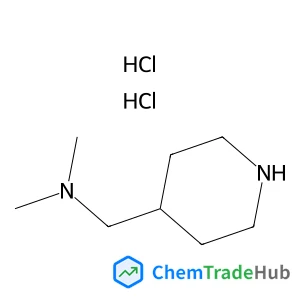
N,N-dimethyl(piperidin-4-yl)methanamine hydrochloride
CAS Number:
172281-72-0
Molecular Formula:
C8H20Cl2N2
![2-Methyl-2-propanyl 1,6-diazaspiro[3.4]octane-6-carboxylate structure](https://static.chemtradehub.com/structs/115/1158749-79-1-81ee.webp "2-Methyl-2-propanyl 1,6-diazaspiro[3.4]octane-6-carboxylate structure")
2-Methyl-2-propanyl 1,6-diazaspiro[3.4]octane-6-carboxylate
CAS Number:
1158749-79-1
Molecular Formula:
C11H20N2O2
Recommended Suppliers





Disclaimer
This page provides academic journal information for reference and research purposes only. We are not affiliated with any journal publishers and do not handle publication submissions. For publication-related inquiries, please contact the respective journal publishers directly.
If you notice any inaccuracies in the information displayed, please contact us at support@chemtradehub.com. We will promptly review and address your concerns.