












Magnetic anisotropy in YbIII complex candidates for molecular qubits: a theoretical analysis
Literature Information
Publication Date
2020-12-16
DOI
10.1039/D0CP05422D
Impact Factor
3.676
Authors
Martín Amoza, Silvia Gómez-Coca, Eliseo Ruiz
View Original
Abstract
The magnetic properties of mononuclear YbIII complexes have been explored by using multiconfigurational CASPT2/RASSI calculations. Such complexes, in particular the case of [Yb(trensal)] complex, have been proposed as molecular qubits due to their spin dynamics properties. We have verified the accuracy of the theoretical approach to study such systems by comparing with experimental magnetic data. In order to have a wide overview of the magnetic properties of mononuclear YbIII complexes, we have considered simple charged and neutral models, [Yb(H2O)n]3+ and [Yb(OH)3(H2O)n−3], for many coordination modes. Thus, the results for more than 100 models allow extraction of some conclusions about the best ligand distributions in the coordination sphere to tailor the magnetic properties. Some low coordination, between 3 and 5, complexes that have no experimental magnetic data have been studied computationally to check if they can present high magnetic anisotropy.
Related Literature
Metal–organic frameworks exhibiting strong anion–π interactions
Il'ya A. Gural'skiy, Pavlo V. Solntsev, Harald Krautscheid, Konstantin V. Domasevitch
2006-11-03
Communication
DOI: 10.1039/B612660J
Combination of electrografting and layer-by-layer deposition: an efficient way to tailor polymer coatings of (semi)-conductors
Aurélia Charlot, Sabine Gabriel, Christophe Detrembleur, Robert Jérôme, Christine Jérôme
2007-09-26
Communication
DOI: 10.1039/B712130J
Mechanism and substrate stereochemistry of 2-amino-3-oxobutyrate CoA ligase: implications for 5-aminolevulinate synthase and related enzymes
Qamar Bashir, Naeem Rashid
2006-10-13
Communication
DOI: 10.1039/B609925D
Sensitive detection of protein by an aptamer-based label-free fluorescing molecular switch
Shaojun Dong
2006-11-22
Communication
DOI: 10.1039/B612080F
Immunoasssay based on the antibody-conjugated PAMAM-dendrimer–gold quantum dot complex
Robert C. Triulzi, Miodrag Micic, Silvia Giordani, Michael Serry, Wen-An Chiou, Roger M. Leblanc
2006-11-21
Communication
DOI: 10.1039/B611278A
Solid-state luminescence switching of platinum(ii) dithiooxamide complexes in the presence of hydrogen halide and amine gases
Francesco Nastasi, Fausto Puntoriero, Natale Palmeri, Stefano Cavallaro, Sebastiano Campagna, Santo Lanza
2007-09-11
Communication
DOI: 10.1039/B710372G
Characterizing the structure and dynamics of folded oligomers: Pulsed ESR studies of peptoid helices
Aaron T. Fafarman, Peter P. Borbat, Jack H. Freed, Kent Kirshenbaum
2006-12-07
Communication
DOI: 10.1039/B612198E
You might also like
Compound Q&A
How is Ethyl 4-chlorothieno[2,3-b]pyridine-5-carboxylate (CAS: 59713-58-5) typically synthesized?
Ethyl 4-chlorothieno[2,3-b]pyridine-5-carboxylate (CAS: 59713-58-5) can be synth...
59713-58-5Ethyl 4-chlorothieno...
Compound Q&A
What regulatory guidelines apply to 5-Methyl-1H-indole-3-carbaldehyde (CAS: 52562-50-2)?
5-Methyl-1H-indole-3-carbaldehyde (CAS: 52562-50-2) is subject to various regula...
52562-50-25-Methyl-1H-indole-3...
Compound Q&A
What are the physical and chemical properties of (1,3-Dimethyl-2,4-dioxo-1,2,3,4-tetrahydro-5-pyrimidinyl)boronic acid (CAS: 223418-73-3)?
(1,3-Dimethyl-2,4-dioxo-1,2,3,4-tetrahydro-5-pyrimidinyl)boronic acid is a white...
223418-73-3(1,3-Dimethyl-2,4-di...
Compound Q&A
How should waste containing Sulfocostunolide A (CAS: 1016983-51-9) be handled?
Waste containing Sulfocostunolide A (CAS: 1016983-51-9) should be handled with c...
1016983-51-9Sulfocostunolide A
Compound Q&A
What precautions should be taken when handling Murraxocin (CAS: 88478-44-8)?
When handling Murraxocin (CAS: 88478-44-8), ensure proper personal protective eq...
88478-44-8Murraxocin
Compound Q&A
What are the physical and chemical properties of Formvar (CAS: 63148-64-1)?
Formvar (CAS: 63148-64-1) is an alkyd resin characterized by a high molecular we...
63148-64-1Formvar(R)
Compound Q&A
Is (S)-4-benzyl-2-((benzyloxy)methyl)morpholine (CAS: 205242-66-6) safe?
(S)-4-benzyl-2-((benzyloxy)methyl)morpholine is generally safe when handled with...
205242-66-6(S)-4-benzyl-2-((ben...
Compound Q&A
What industries use Methyl 1-(5-bromo-2-pyrimidinyl)cyclopropanecarboxylate (CAS: 1447607-69-3)?
Methyl 1-(5-bromo-2-pyrimidinyl)cyclopropanecarboxylate (CAS: 1447607-69-3) is p...
1447607-69-3Methyl 1-(5-bromo-2-...
Compound Q&A
Is 2-Methyl-1-phenyl-1-propanamine hydrochloride (CAS: 24290-47-9) safe?
2-Methyl-1-phenyl-1-propanamine hydrochloride (CAS: 24290-47-9) is generally con...
24290-47-92-Methyl-1-phenyl-1-...
Compound Q&A
How is 3-(4-Bromophenyl)-2-methylpropanoic acid (CAS: 66735-01-1) typically synthesized?
3-(4-Bromophenyl)-2-methylpropanoic acid is synthesized through a multi-step pro...
66735-01-13-(4-Bromophenyl)-2-...
Source Journal
Physical Chemistry Chemical Physics

CiteScore:
5.5
Self-citation Rate:
10.3%
Articles per Year:
3036
Physical Chemistry Chemical Physics (PCCP) is an international journal co-owned by 19 physical chemistry and physics societies from around the world. This journal publishes original, cutting-edge research in physical chemistry, chemical physics and biophysical chemistry. To be suitable for publication in PCCP, articles must include significant innovation and/or insight into physical chemistry; this is the most important criterion that reviewers and Editors will judge against when evaluating submissions. The journal has a broad scope and welcomes contributions spanning experiment, theory, computation and data science. Topical coverage includes spectroscopy, dynamics, kinetics, statistical mechanics, thermodynamics, electrochemistry, catalysis, surface science, quantum mechanics, quantum computing and machine learning. Interdisciplinary research areas such as polymers and soft matter, materials, nanoscience, energy, surfaces/interfaces, and biophysical chemistry are welcomed if they demonstrate significant innovation and/or insight into physical chemistry. Joined experimental/theoretical studies are particularly appreciated when complementary and based on up-to-date approaches.
Recommended Compounds
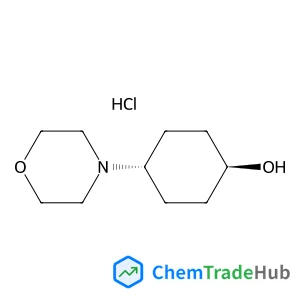
trans-4-(4-Morpholinyl)cyclohexanol hydrochloride (1:1)
CAS Number:
1588441-09-1
Molecular Formula:
C10H20ClNO2
Recommended Suppliers





Disclaimer
This page provides academic journal information for reference and research purposes only. We are not affiliated with any journal publishers and do not handle publication submissions. For publication-related inquiries, please contact the respective journal publishers directly.
If you notice any inaccuracies in the information displayed, please contact us at support@chemtradehub.com. We will promptly review and address your concerns.