












Simulation of the resonance Raman intensities of a ruthenium–palladium photocatalyst by time dependent density functional theory
Literature Information
Publication Date
2010-10-15
DOI
10.1039/C0CP00942C
Impact Factor
3.676
Authors
Julien Guthmuller, Leticia González
View Original
Abstract
The absorption and resonance Raman (RR) properties of the [(tbbpy)2Ru(tpphz)PdCl2]2+ photocatalyst have been investigated by means of time-dependent density functional theory calculations. With the intention of evaluating the accuracy of the computations, three different exchange-correlation (XC) functionals, namely B3LYP, B3LYP-35 and CAM-B3LYP, have been considered and the effects of the solvent have been described within the polarizable continuum model. It is demonstrated that the inclusion of the solvent effects within the simulations is mandatory to obtain a correct description of the excited states contributing to the first absorption band. The RR spectra of the complex have been simulated for several excitation wavelengths and have allowed an assignment of all the intense experimental bands. The calculations succeed in reproducing several aspects of the experimental absorption and RR spectra, but it is also seen that the choice of the XC functional can lead to significant differences in the simulated spectra and that none of the considered functionals succeed in reproducing all the experimental features.
Related Literature
Oxidation of thioethers and sulfoxides with hydrogen peroxide using TS-1 as catalyst
Denis J. Robinson, Lucinda Davies, Neil McGuire, Darren F. Lee, Paul McMorn, David J. Willock, Graeme W. Watson, Philip C. Bulman Page, Donald Bethell
2000-03-14
Paper
DOI: 10.1039/A907605K
Advances toward the effective use of block copolymers as organic photovoltaic active layers
V. D. Mitchell, D. J. Jones
2018-01-10
Review Article
DOI: 10.1039/C7PY01878A
A detailed mechanistic study of bulk MADIX of styrene and its chain extension
Dries J. G. Devlaminck, Paul H. M. Van Steenberge, Lies De Keer, Marie-Françoise Reyniers
2017-10-16
Paper
DOI: 10.1039/C7PY00961E
Synthesis and bioconjugation of first alkynylated poly(dithieno[3,2-b:2′,3′-d]pyrrole)s
Sylvia Schmid, Jasmina Gačanin, Peter Bäuerle
2017-11-06
Communication
DOI: 10.1039/C7PY01528C
Nucleation of solution convection channels as the first step in electro-hydrodynamic pattern formation
2000-02-28
Paper
DOI: 10.1039/A909729E
Transparent semi- and full-interpenetrating polymer networks based on uralkyd–polymethyl methacrylate
Vilas Athawale, Sachin Raut
2000-03-01
Paper
DOI: 10.1039/A908388J
Functional hydrophobic and hetero-grafted block comb polymers via a combination of spontaneous zwitterionic copolymerisation and redox-initiated RAFT polymerisation
Ayaat Mohamed Mahmoud
2017-12-15
Communication
DOI: 10.1039/C7PY01912B
In situ stabilizer formation from methacrylic acid macromonomers in emulsion polymerization
Ingeborg Schreur-Piet, Johan P. A. Heuts
2017-10-17
Paper
DOI: 10.1039/C7PY01583F
Ethylene/vinyl acetate-based macrocycles via organometallic-mediated radical polymerization and CuAAC ‘click’ reaction
Jérémy Demarteau, Julien De Winter, Christophe Detrembleur, Antoine Debuigne
2017-12-11
Communication
DOI: 10.1039/C7PY01891F
ESCA and thermodynamic studies of alkali metal ion exchange reactions on an α-MnO2 phase with the tunnel structure
M. Tsuji, Y. Tamaura
2000-03-15
Paper
DOI: 10.1039/A907614J
You might also like
Compound Q&A
How is Ethyl 4-chlorothieno[2,3-b]pyridine-5-carboxylate (CAS: 59713-58-5) typically synthesized?
Ethyl 4-chlorothieno[2,3-b]pyridine-5-carboxylate (CAS: 59713-58-5) can be synth...
59713-58-5Ethyl 4-chlorothieno...
Compound Q&A
What regulatory guidelines apply to 5-Methyl-1H-indole-3-carbaldehyde (CAS: 52562-50-2)?
5-Methyl-1H-indole-3-carbaldehyde (CAS: 52562-50-2) is subject to various regula...
52562-50-25-Methyl-1H-indole-3...
Compound Q&A
What are the physical and chemical properties of (1,3-Dimethyl-2,4-dioxo-1,2,3,4-tetrahydro-5-pyrimidinyl)boronic acid (CAS: 223418-73-3)?
(1,3-Dimethyl-2,4-dioxo-1,2,3,4-tetrahydro-5-pyrimidinyl)boronic acid is a white...
223418-73-3(1,3-Dimethyl-2,4-di...
Compound Q&A
How should waste containing Sulfocostunolide A (CAS: 1016983-51-9) be handled?
Waste containing Sulfocostunolide A (CAS: 1016983-51-9) should be handled with c...
1016983-51-9Sulfocostunolide A
Compound Q&A
What precautions should be taken when handling Murraxocin (CAS: 88478-44-8)?
When handling Murraxocin (CAS: 88478-44-8), ensure proper personal protective eq...
88478-44-8Murraxocin
Compound Q&A
What are the physical and chemical properties of Formvar (CAS: 63148-64-1)?
Formvar (CAS: 63148-64-1) is an alkyd resin characterized by a high molecular we...
63148-64-1Formvar(R)
Compound Q&A
Is (S)-4-benzyl-2-((benzyloxy)methyl)morpholine (CAS: 205242-66-6) safe?
(S)-4-benzyl-2-((benzyloxy)methyl)morpholine is generally safe when handled with...
205242-66-6(S)-4-benzyl-2-((ben...
Compound Q&A
What industries use Methyl 1-(5-bromo-2-pyrimidinyl)cyclopropanecarboxylate (CAS: 1447607-69-3)?
Methyl 1-(5-bromo-2-pyrimidinyl)cyclopropanecarboxylate (CAS: 1447607-69-3) is p...
1447607-69-3Methyl 1-(5-bromo-2-...
Compound Q&A
Is 2-Methyl-1-phenyl-1-propanamine hydrochloride (CAS: 24290-47-9) safe?
2-Methyl-1-phenyl-1-propanamine hydrochloride (CAS: 24290-47-9) is generally con...
24290-47-92-Methyl-1-phenyl-1-...
Compound Q&A
How is 3-(4-Bromophenyl)-2-methylpropanoic acid (CAS: 66735-01-1) typically synthesized?
3-(4-Bromophenyl)-2-methylpropanoic acid is synthesized through a multi-step pro...
66735-01-13-(4-Bromophenyl)-2-...
Source Journal
Physical Chemistry Chemical Physics

CiteScore:
5.5
Self-citation Rate:
10.3%
Articles per Year:
3036
Physical Chemistry Chemical Physics (PCCP) is an international journal co-owned by 19 physical chemistry and physics societies from around the world. This journal publishes original, cutting-edge research in physical chemistry, chemical physics and biophysical chemistry. To be suitable for publication in PCCP, articles must include significant innovation and/or insight into physical chemistry; this is the most important criterion that reviewers and Editors will judge against when evaluating submissions. The journal has a broad scope and welcomes contributions spanning experiment, theory, computation and data science. Topical coverage includes spectroscopy, dynamics, kinetics, statistical mechanics, thermodynamics, electrochemistry, catalysis, surface science, quantum mechanics, quantum computing and machine learning. Interdisciplinary research areas such as polymers and soft matter, materials, nanoscience, energy, surfaces/interfaces, and biophysical chemistry are welcomed if they demonstrate significant innovation and/or insight into physical chemistry. Joined experimental/theoretical studies are particularly appreciated when complementary and based on up-to-date approaches.
Recommended Compounds

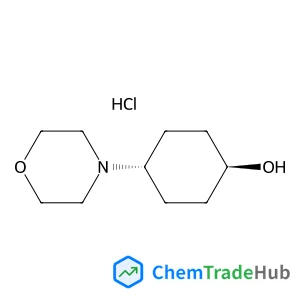
trans-4-(4-Morpholinyl)cyclohexanol hydrochloride (1:1)
CAS Number:
1588441-09-1
Molecular Formula:
C10H20ClNO2
![4-[(1-Methyl-1H-pyrrol-2-yl)methylene]-1,3(2H,4H)-isoquinolinedione structure](https://static.chemtradehub.com/structs/110/1104546-89-5-a600.webp "4-[(1-Methyl-1H-pyrrol-2-yl)methylene]-1,3(2H,4H)-isoquinolinedione structure")
4-[(1-Methyl-1H-pyrrol-2-yl)methylene]-1,3(2H,4H)-isoquinolinedione
CAS Number:
1104546-89-5
Molecular Formula:
C15H12N2O2

Recommended Suppliers





Disclaimer
This page provides academic journal information for reference and research purposes only. We are not affiliated with any journal publishers and do not handle publication submissions. For publication-related inquiries, please contact the respective journal publishers directly.
If you notice any inaccuracies in the information displayed, please contact us at support@chemtradehub.com. We will promptly review and address your concerns.