












Kinetics and mechanism of the atmospheric reactions of atomic chlorine with 1-penten-3-ol and (Z)-2-penten-1-ol: an experimental and theoretical study
Literature Information
Publication Date
2010-08-16
DOI
10.1039/C0CP00625D
Impact Factor
3.676
Authors
Ana Rodríguez, Diana Rodríguez, Andrés Garzón, Amparo Soto, Alfonso Aranda, Alberto Notario
View Original
Abstract
Smog chamber/GC techniques were used to investigate the atmospheric degradation of two unsaturated alcohols, 1-penten-3-ol and (Z)-2-penten-1-ol, by oxidation with chlorine atoms at atmospheric pressure of N2 or air, as a function of temperature. The rate coefficients at 298 K were (units in cm3 molecule−1 s−1): (2.35 ± 0.31) × 10−10 and (3.00 ± 0.49) × 10−10 for 1-penten-3-ol and (Z)-2-penten-1-ol, respectively. The identified and quantified gas-phase products (with molar yields in brackets) were carbonyl compounds such as chloroacetaldehyde (33 ± 1%), propionaldehyde (39 ± 1%), acetaldehyde (8 ± 3%) and 1-penten-3-one (2%) from 1-penten-3-ol; and chlorobutyraldehyde (19 ± 1%), propionaldehyde (27 ± 1%), acetaldehyde (18 ± 2%) and (Z)-2-pentenal (36 ± 1%) from (Z)-2-penten-1-ol. A parallel theoretical study at the QCISD(T)6-311G**//MP2/6-311G** level was carried out to facilitate understanding of the reaction mechanism. Both the theoretical and experimental studies indicated that addition of Cl to the double bond of the unsaturated alcohol is the dominant reaction pathway, although the H-abstraction channel cannot be excluded. The atmospheric lifetimes of those unsaturated alcohols were calculated and the results are discussed.
Recommended Journals
Related Literature
Investigation of the interactions between silver nanoparticles and Hela cells by scanning electrochemical microscopy‡
Zhong Chen, Shubao Xie, Li Shen, Yu Du, Shali He, Qing Li, Zhongwei Liang, Xin Meng, Bo Li, Xiaodong Xu, Hongwei Ma, Yanyi Huang, Yuanhua Shao
2008-07-29
Paper
DOI: 10.1039/B807057A
Surfactant-coated carbon nanotubes as pseudophases in liquid–liquid extraction
Carolina Carrillo-Carrión, Rafael Lucena, Soledad Cárdenas, Miguel Valcárcel
2007-04-27
Paper
DOI: 10.1039/B701019B
Near-infrared photochromic behavior in a donor–acceptor type diarylethene modulated by the cyanide anion
Jiayu Jin, Junji Zhang, Lei Zou, He Tian
2013-01-23
Communication
DOI: 10.1039/C3AN36388K
Significantly enhanced antibacterial activity of TiO2 nanofibers with hierarchical nanostructures and controlled crystallinity
Won Seok Lee, Yang-Seok Park
2014-11-11
Paper
DOI: 10.1039/C4AN01682C
A quantum dot–lucigenin probe for Cl−
Maria Jose Ruedas-Rama, Elizabeth A. H. Hall
2008-08-01
Paper
DOI: 10.1039/B801507D
Plasmon-enhanced optical sensors: a review
Ming Li, Nianqiang Wu
2014-10-06
Critical Review
DOI: 10.1039/C4AN01079E
Towards quantitatively reproducible substrates for SERS
Roger M. Jarvis, Helen E. Johnson, Emma Olembe, Arunkumar Panneerselvam, Mohammad A. Malik, Mohammad Afzaal, Paul O'Brien, Royston Goodacre
2008-07-25
Paper
DOI: 10.1039/B800340H
Fabrication of Cr doped SnO2 nanoparticles based biosensor for the selective determination of riboflavin in pharmaceuticals
N. Lavanya, S. Radhakrishnan, M. Navaneethan, Y. Hayakawa
2013-01-09
Paper
DOI: 10.1039/C3AN36754A
Characterization of the herb-derived components in rats following oral administration of Carthamus tinctorius extract by extracting diagnostic fragment ions (DFIs) in the MSn chromatograms
Jin-Feng Chen, Yue-Lin Song, Xiao-Yu Guo, Yong Jiang
2014-10-10
Paper
DOI: 10.1039/C4AN01707B
Hierarchically assembled NiCo@SiO2@Ag magnetic core–shell microspheres as highly efficient and recyclable 3D SERS substrates
Dapeng Wang, Henghui Sun
2014-11-07
Paper
DOI: 10.1039/C4AN01275E
You might also like
Compound Q&A
What precautions should be taken when handling 2-Chloro-1,2-bis(4-methylphenyl)ethanone (CAS: 71193-32-3)?
When handling 2-Chloro-1,2-bis(4-methylphenyl)ethanone (CAS: 71193-32-3), it is ...
71193-32-32-Chloro-1,2-bis(4-m...
Compound Q&A
What industries use 4-Ethoxy-3-(5-methyl-4-oxo-7-propyl-1,4-dihydroimidazo[5,1-f][1,2,4]triazin-2-yl)benzenesulfonyl chloride (CAS: 224789-26-8)?
4-Ethoxy-3-(5-methyl-4-oxo-7-propyl-1,4-dihydroimidazo[5,1-f][1,2,4]triazin-2-yl...
224789-26-84-Ethoxy-3-(5-methyl...
Compound Q&A
How should Methyl 3-Oxo-4-Androsten-17-Carboxylate (CAS: 2681-55-2) be stored?
Methyl 3-Oxo-4-Androsten-17-Carboxylate (CAS: 2681-55-2) should be stored in a c...
2681-55-2Methyl 3-Oxo-4-Andro...
Compound Q&A
What are the main uses of (R)-3-Amino-4-(3-hexylphenylamino)-4-oxobutylphosphonic acid (CAS: 909725-61-7)?
(R)-3-Amino-4-(3-hexylphenylamino)-4-oxobutylphosphonic acid is primarily used i...
909725-61-7(R)-3-Amino-4-(3-hex...
Compound Q&A
What regulatory guidelines apply to 2-Methyl-2-propanyl 3-amino-3-carbamoyl-1-azetidinecarboxylate (CAS: 1254120-14-3)?
2-Methyl-2-propanyl 3-amino-3-carbamoyl-1-azetidinecarboxylate (CAS: 1254120-14-...
1254120-14-32-Methyl-2-propanyl ...
Compound Q&A
Are there alternatives to (E)-4-(tert-Butoxy)-4-oxobut-2-enoic acid (CAS: 135355-96-3) in synthesis?
There are alternative reagents that can be used in synthesis instead of (E)-4-(t...
135355-96-3(E)-4-(tert-Butoxy)-...
Compound Q&A
What are the physical and chemical properties of [2-(3-Chlorophenyl)-1,3-thiazol-4-yl]methanol (CAS: 121202-20-8)?
[2-(3-Chlorophenyl)-1,3-thiazol-4-yl]methanol (CAS: 121202-20-8) is a crystallin...
121202-20-8[2-(3-Chlorophenyl)-...
Compound Q&A
What is the market or research trend for Methyl (2S)-[(4S)-2,2-dimethyl-1,3-dioxolan-4-yl]{[(4-methylphenyl)sulfonyl]oxy}acetate (CAS: 166249-17-8)?
The market and research trends for Methyl (2S)-[(4S)-2,2-dimethyl-1,3-dioxolan-4...
166249-17-8Methyl (2S)-[(4S)-2,...
Compound Q&A
What is the market or research trend for 1-Bromo-2-isocyanatoethane (CAS: 42865-19-0)?
The market for 1-Bromo-2-isocyanatoethane (CAS: 42865-19-0) is driven by its use...
42865-19-01-Bromo-2-isocyanato...
Compound Q&A
What are the main uses of 4-Nitro-D-phenylalanine hydrochloride (CAS: 147065-06-3)?
4-Nitro-D-phenylalanine hydrochloride (CAS: 147065-06-3) is primarily used in re...
147065-06-34-Nitro-D-phenylalan...
Source Journal
Physical Chemistry Chemical Physics

CiteScore:
5.5
Self-citation Rate:
10.3%
Articles per Year:
3036
Physical Chemistry Chemical Physics (PCCP) is an international journal co-owned by 19 physical chemistry and physics societies from around the world. This journal publishes original, cutting-edge research in physical chemistry, chemical physics and biophysical chemistry. To be suitable for publication in PCCP, articles must include significant innovation and/or insight into physical chemistry; this is the most important criterion that reviewers and Editors will judge against when evaluating submissions. The journal has a broad scope and welcomes contributions spanning experiment, theory, computation and data science. Topical coverage includes spectroscopy, dynamics, kinetics, statistical mechanics, thermodynamics, electrochemistry, catalysis, surface science, quantum mechanics, quantum computing and machine learning. Interdisciplinary research areas such as polymers and soft matter, materials, nanoscience, energy, surfaces/interfaces, and biophysical chemistry are welcomed if they demonstrate significant innovation and/or insight into physical chemistry. Joined experimental/theoretical studies are particularly appreciated when complementary and based on up-to-date approaches.
Recommended Compounds
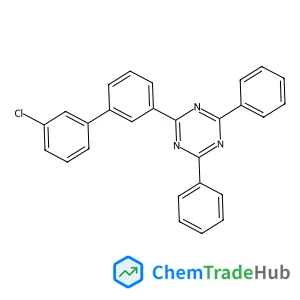
2-(3'-Chlorobiphenyl-3-yl)-4,6-diphenyl-1,3,5-triazine
CAS Number:
1443049-83-9
Molecular Formula:
C27H18ClN3

Recommended Suppliers





Disclaimer
This page provides academic journal information for reference and research purposes only. We are not affiliated with any journal publishers and do not handle publication submissions. For publication-related inquiries, please contact the respective journal publishers directly.
If you notice any inaccuracies in the information displayed, please contact us at support@chemtradehub.com. We will promptly review and address your concerns.