













Plasmon-enhanced optical sensors: a review
Literature Information
Publication Date
2014-10-06
DOI
10.1039/C4AN01079E
Impact Factor
4.616
Authors
Ming Li, Nianqiang Wu
View Original
Abstract
Surface plasmon resonance (SPR) has found extensive applications in chemi-sensors and biosensors. Plasmons play different roles in different types of optical sensors. SPR transduces a signal in a colorimetric sensor through shifts in the spectral position and intensity in response to external stimuli. SPR can also concentrate the incident electromagnetic field in a nanostructure, modulating fluorescence emission and enabling plasmon-enhanced fluorescence to be used for ultrasensitive detection. Furthermore, plasmons have been extensively used for amplifying a Raman signal in a surface-enhanced Raman scattering sensor. This paper presents a review of recent research progress in plasmon-enhanced optical sensing, giving emphasis on the physical basis of plasmon-enhanced sensors and how these principles guide the design of sensors. In particular, this paper discusses the design strategies for nanomaterials and nanostructures to plasmonically enhance optical sensing signals, also highlighting the applications of plasmon-enhanced optical sensors in healthcare, homeland security, food safety and environmental monitoring.
Related Literature
Nanocomposite microstructures with tunable mechanical and chemical properties
Sameh Tawfick, Xiaopei Deng, A. John Hart, Joerg Lahann
2010-02-24
Paper
DOI: 10.1039/C000304M
Electrochemistry of poly(3,4-ethylenedioxythiophene)-polyaniline/Prussian blue electrochromic devices containing an ionic liquid based gel electrolyte film
Melepurath Deepa, Arvind Awadhia, Shweta Bhandari
2009-05-08
Paper
DOI: 10.1039/B900091G
Study of the CH3⋯H2O radical complex stabilized in helium nanodroplets
Svemir Rudić, Jeremy M. Merritt, Roger E. Miller
2009-04-20
Paper
DOI: 10.1039/B817484A
Shannon entropy as a new measure of aromaticity, Shannon aromaticity
Siamak Noorizadeh, Ehsan Shakerzadeh
2010-03-16
Paper
DOI: 10.1039/B916509F
Retracted Article: On the enzymatic activity of catalase: an iron L-edge X-ray absorption study of the active centre
Nora Bergmann, Sébastien Bonhommeau, Kathrin M. Lange, Stefanie M. Greil, Frank de Groot, Majed Chergui
2010-03-16
Paper
DOI: 10.1039/B924245G
Electronic structure of Lewis acid sites on high surface area aluminium fluorides: a combined XPS and ab initio investigation
Christine L. Bailey, Erhard Kemnitz, Sanghamitra Mukhopadhyay, Adrian Wander, Barry G. Searle
2009-05-08
Paper
DOI: 10.1039/B821484K
Preparation, structure, and stability of Pt and Pd monolayer modified Pd and Pt electrocatalysts
P. P. Wells, E. M. Crabb, C. R. King, R. Wiltshire, B. Billsborrow, D. Thompsett, A. E. Russell
2009-05-12
Paper
DOI: 10.1039/B823504J
Surface photochemistry: alloxazine within nanochannels of Na+ and H+ ZSM-5 zeolites
L. F. Vieira Ferreira, A. M. Botelho do Rego, E. Sikorska, M. Sikorski
2009-05-13
Paper
DOI: 10.1039/B903013A
The gas-phase reaction between silylene and 2-butyne: kinetics, isotope studies, pressure dependence studies and quantum chemical calculations
Rosa Becerra, J. Pat Cannady, Guy Dormer, Robin Walsh
2009-04-17
Paper
DOI: 10.1039/B823109E
Single-stranded DNA adsorption on chiral molecule coated Au surface: a molecular dynamics study
Haiqing Liang, Zhenyu Li, Jinlong Yang
2010-02-24
Paper
DOI: 10.1039/B923012B
You might also like
Compound Q&A
What precautions should be taken when handling 2-Chloro-1,2-bis(4-methylphenyl)ethanone (CAS: 71193-32-3)?
When handling 2-Chloro-1,2-bis(4-methylphenyl)ethanone (CAS: 71193-32-3), it is ...
71193-32-32-Chloro-1,2-bis(4-m...
Compound Q&A
What industries use 4-Ethoxy-3-(5-methyl-4-oxo-7-propyl-1,4-dihydroimidazo[5,1-f][1,2,4]triazin-2-yl)benzenesulfonyl chloride (CAS: 224789-26-8)?
4-Ethoxy-3-(5-methyl-4-oxo-7-propyl-1,4-dihydroimidazo[5,1-f][1,2,4]triazin-2-yl...
224789-26-84-Ethoxy-3-(5-methyl...
Compound Q&A
How should Methyl 3-Oxo-4-Androsten-17-Carboxylate (CAS: 2681-55-2) be stored?
Methyl 3-Oxo-4-Androsten-17-Carboxylate (CAS: 2681-55-2) should be stored in a c...
2681-55-2Methyl 3-Oxo-4-Andro...
Compound Q&A
What are the main uses of (R)-3-Amino-4-(3-hexylphenylamino)-4-oxobutylphosphonic acid (CAS: 909725-61-7)?
(R)-3-Amino-4-(3-hexylphenylamino)-4-oxobutylphosphonic acid is primarily used i...
909725-61-7(R)-3-Amino-4-(3-hex...
Compound Q&A
What regulatory guidelines apply to 2-Methyl-2-propanyl 3-amino-3-carbamoyl-1-azetidinecarboxylate (CAS: 1254120-14-3)?
2-Methyl-2-propanyl 3-amino-3-carbamoyl-1-azetidinecarboxylate (CAS: 1254120-14-...
1254120-14-32-Methyl-2-propanyl ...
Compound Q&A
Are there alternatives to (E)-4-(tert-Butoxy)-4-oxobut-2-enoic acid (CAS: 135355-96-3) in synthesis?
There are alternative reagents that can be used in synthesis instead of (E)-4-(t...
135355-96-3(E)-4-(tert-Butoxy)-...
Compound Q&A
What are the physical and chemical properties of [2-(3-Chlorophenyl)-1,3-thiazol-4-yl]methanol (CAS: 121202-20-8)?
[2-(3-Chlorophenyl)-1,3-thiazol-4-yl]methanol (CAS: 121202-20-8) is a crystallin...
121202-20-8[2-(3-Chlorophenyl)-...
Compound Q&A
What is the market or research trend for Methyl (2S)-[(4S)-2,2-dimethyl-1,3-dioxolan-4-yl]{[(4-methylphenyl)sulfonyl]oxy}acetate (CAS: 166249-17-8)?
The market and research trends for Methyl (2S)-[(4S)-2,2-dimethyl-1,3-dioxolan-4...
166249-17-8Methyl (2S)-[(4S)-2,...
Compound Q&A
What is the market or research trend for 1-Bromo-2-isocyanatoethane (CAS: 42865-19-0)?
The market for 1-Bromo-2-isocyanatoethane (CAS: 42865-19-0) is driven by its use...
42865-19-01-Bromo-2-isocyanato...
Compound Q&A
What are the main uses of 4-Nitro-D-phenylalanine hydrochloride (CAS: 147065-06-3)?
4-Nitro-D-phenylalanine hydrochloride (CAS: 147065-06-3) is primarily used in re...
147065-06-34-Nitro-D-phenylalan...
Source Journal
Analyst

CiteScore:
7.8
Self-citation Rate:
5.6%
Articles per Year:
653
Analyst publishes analytical and bioanalytical research that reports premier fundamental discoveries and inventions, and the applications of those discoveries, unconfined by traditional discipline barriers.
Recommended Compounds
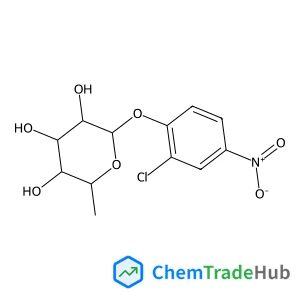
2-Chloro-4-nitrophenyl 6-deoxy-alpha-L-galactopyranoside
CAS Number:
157843-41-9
Molecular Formula:
C12H14ClNO7
![4-[2-(Trichlorosilyl)ethyl]benzenesulfonyl chloride structure](https://static.chemtradehub.com/structs/797/79793-00-3-de16.webp "4-[2-(Trichlorosilyl)ethyl]benzenesulfonyl chloride structure")
4-[2-(Trichlorosilyl)ethyl]benzenesulfonyl chloride
CAS Number:
79793-00-3
Molecular Formula:
C8H8Cl4O2SSi
Recommended Suppliers





Disclaimer
This page provides academic journal information for reference and research purposes only. We are not affiliated with any journal publishers and do not handle publication submissions. For publication-related inquiries, please contact the respective journal publishers directly.
If you notice any inaccuracies in the information displayed, please contact us at support@chemtradehub.com. We will promptly review and address your concerns.