












A quantum dot–lucigenin probe for Cl−
Literature Information
Publication Date
2008-08-01
DOI
10.1039/B801507D
Impact Factor
4.616
Authors
Maria Jose Ruedas-Rama, Elizabeth A. H. Hall
View Original
Abstract
In this work, the first chloride ion sensor based on QD–lucigenin nanoparticles is reported. The mechanism uses the ability of semiconductor QDs to engage in short range exchange processes, leading to fluorescence changes. An acridinium dication (lucigenin) which is an electron acceptor, was self-assembled on the surface of negative charged QDs (capped with mercaptopropionic acid). Mutual quenching of the lucigenin and QD were observed. From a sphere of action, Perrin-type model, exchange was estimated to occur over a range of the order of 2 nm. The possibility of spin–orbit coupling (SOC) or electron transfer between the QD and the lucigenin dication (Luc2+) is discussed. The radical cation Luc+˙ was not identified, but electron transfer from the QD conduction band to the Luc2+, then electron transfer back, from the Luc+˙ to the QD valence band, could lead to mutual quenching, without build up of Luc+˙. SOC between the QD and lucigenin, with or without charge transfer being involved, can also account for the results obtained. Lucigenin is also a chloride-sensitive indicator dye, with a sensing mechanism based on SOC. In the QD–MPA–lucigenin conjugate luminescence is restored by adding chloride ion. Thus, the presence of chloride is transduced into an enhancement of the luminescence of QDs. Using this operating principle, a chloride ion sensor based on CdSe–ZnS core–shell QD nanoparticles, showed a very good linearity in the range 1–250 mM, with a detection limit 0.29 mM and a RSD of 2.5% (n = 10). In a study of interferences, the chloride sensitive QDs showed good selectivity to most of the other anions tested. The versatility of the system was also demonstrated in terms of fluorescent emission wavelength, which could be selected across a wide range through choice of QDs. Examples are shown for λmax = 500, 540 and 620 nm. The results from samples mimicking physiological conditions suggested very good applicability in the determination of chloride ion in physiological samples.
Related Literature
Associative detachment (AD) paths for H and CN− in the gas-phase: astrophysical implications
Stanka V. Jerosimić, Franco A. Gianturco, Roland Wester
2017-10-17
Paper
DOI: 10.1039/C7CP05573K
A combined experimental and computational investigation on pyrene based D–π–A dyes
Themmila Khamrang, Marappan Velusamy, Mohan Ramesh, Murugavel Kathiresan, Arunkumar Kathiravan
2018-01-31
Paper
DOI: 10.1039/C7CP08038G
Phonon transport in Janus monolayer MoSSe: a first-principles study
2018-02-15
Paper
DOI: 10.1039/C8CP00350E
Excitation spectra of retinal by multiconfiguration pair-density functional theory
Sijia S. Dong, Laura Gagliardi, Donald G. Truhlar
2018-02-08
Paper
DOI: 10.1039/C7CP07275A
A potential material for hydrogen storage: a Li decorated graphitic-CN monolayer
Yong-Dao Chen, Song Yu, Wen-Hui Zhao, Shun-Fang Li, Xiang-Mei Duan
2018-04-25
Paper
DOI: 10.1039/C8CP01145A
Aromaticity of acenes: the model of migrating π-circuits
Dariusz W. Szczepanik, Miquel Solà, Tadeusz M. Krygowski, Halina Szatylowicz, Marcin Andrzejak, Barbara Pawełek, Justyna Dominikowska, Mercedes Kukułka, Karol Dyduch
2018-04-27
Paper
DOI: 10.1039/C8CP01108G
Vibrational satellites of C2S, C3S, and C4S: microwave spectral taxonomy as a stepping stone to the millimeter-wave band
Marie-Aline Martin-Drumel, Kin Long Kelvin Lee, John F. Stanton, Carl A. Gottlieb
2018-04-11
Paper
DOI: 10.1039/C8CP01102H
Au36(SePh)24 nanomolecules: synthesis, optical spectroscopy and theoretical analysis
Milan Rambukwella, Anish Ravishanker, Alessandro Fortunelli, Mauro Stener, Amala Dass
2018-05-08
Paper
DOI: 10.1039/C8CP01564C
Theoretical insights into the reactivity of Fe-based catalysts for water oxidation: the role of electron-withdrawing groups
Penglin Xu, Shaojin Hu, Hou-Dao Zhang, Xiao Zheng
2018-04-30
Paper
DOI: 10.1039/C8CP00687C
Viable aromatic BenHn stars enclosing a planar hypercoordinate boron or late transition metal
Xue-Feng Zhao, Jia-Jia Li, Hai-Ru Li, Caixia Yuan, Xinxin Tian, Si-Dian Li, Yan-Bo Wu, Zhi-Xiang Wang
2018-02-19
Paper
DOI: 10.1039/C7CP06955C
You might also like
Compound Q&A
What precautions should be taken when handling 2-Chloro-1,2-bis(4-methylphenyl)ethanone (CAS: 71193-32-3)?
When handling 2-Chloro-1,2-bis(4-methylphenyl)ethanone (CAS: 71193-32-3), it is ...
71193-32-32-Chloro-1,2-bis(4-m...
Compound Q&A
What industries use 4-Ethoxy-3-(5-methyl-4-oxo-7-propyl-1,4-dihydroimidazo[5,1-f][1,2,4]triazin-2-yl)benzenesulfonyl chloride (CAS: 224789-26-8)?
4-Ethoxy-3-(5-methyl-4-oxo-7-propyl-1,4-dihydroimidazo[5,1-f][1,2,4]triazin-2-yl...
224789-26-84-Ethoxy-3-(5-methyl...
Compound Q&A
How should Methyl 3-Oxo-4-Androsten-17-Carboxylate (CAS: 2681-55-2) be stored?
Methyl 3-Oxo-4-Androsten-17-Carboxylate (CAS: 2681-55-2) should be stored in a c...
2681-55-2Methyl 3-Oxo-4-Andro...
Compound Q&A
What are the main uses of (R)-3-Amino-4-(3-hexylphenylamino)-4-oxobutylphosphonic acid (CAS: 909725-61-7)?
(R)-3-Amino-4-(3-hexylphenylamino)-4-oxobutylphosphonic acid is primarily used i...
909725-61-7(R)-3-Amino-4-(3-hex...
Compound Q&A
What regulatory guidelines apply to 2-Methyl-2-propanyl 3-amino-3-carbamoyl-1-azetidinecarboxylate (CAS: 1254120-14-3)?
2-Methyl-2-propanyl 3-amino-3-carbamoyl-1-azetidinecarboxylate (CAS: 1254120-14-...
1254120-14-32-Methyl-2-propanyl ...
Compound Q&A
Are there alternatives to (E)-4-(tert-Butoxy)-4-oxobut-2-enoic acid (CAS: 135355-96-3) in synthesis?
There are alternative reagents that can be used in synthesis instead of (E)-4-(t...
135355-96-3(E)-4-(tert-Butoxy)-...
Compound Q&A
What are the physical and chemical properties of [2-(3-Chlorophenyl)-1,3-thiazol-4-yl]methanol (CAS: 121202-20-8)?
[2-(3-Chlorophenyl)-1,3-thiazol-4-yl]methanol (CAS: 121202-20-8) is a crystallin...
121202-20-8[2-(3-Chlorophenyl)-...
Compound Q&A
What is the market or research trend for Methyl (2S)-[(4S)-2,2-dimethyl-1,3-dioxolan-4-yl]{[(4-methylphenyl)sulfonyl]oxy}acetate (CAS: 166249-17-8)?
The market and research trends for Methyl (2S)-[(4S)-2,2-dimethyl-1,3-dioxolan-4...
166249-17-8Methyl (2S)-[(4S)-2,...
Compound Q&A
What is the market or research trend for 1-Bromo-2-isocyanatoethane (CAS: 42865-19-0)?
The market for 1-Bromo-2-isocyanatoethane (CAS: 42865-19-0) is driven by its use...
42865-19-01-Bromo-2-isocyanato...
Compound Q&A
What are the main uses of 4-Nitro-D-phenylalanine hydrochloride (CAS: 147065-06-3)?
4-Nitro-D-phenylalanine hydrochloride (CAS: 147065-06-3) is primarily used in re...
147065-06-34-Nitro-D-phenylalan...
Source Journal
Analyst

CiteScore:
7.8
Self-citation Rate:
5.6%
Articles per Year:
653
Analyst publishes analytical and bioanalytical research that reports premier fundamental discoveries and inventions, and the applications of those discoveries, unconfined by traditional discipline barriers.
Recommended Compounds
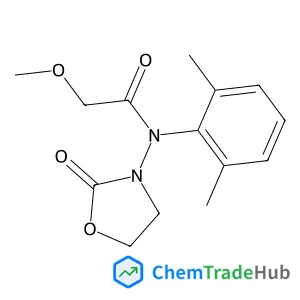
N-(2,6-Dimethylphenyl)-2-methoxy-N-(2-oxo-1,3-oxazolidin-3-yl)acetamide
CAS Number:
77732-09-3
Molecular Formula:
C14H18N2O4
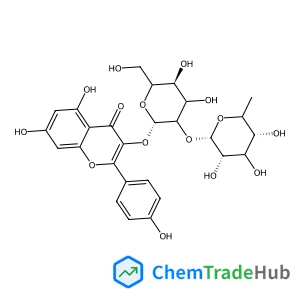
5,7-Dihydroxy-2-(4-hydroxyphenyl)-4-oxo-4H-chromen-3-yl 2-O-(6-deoxy-alpha-L-mannopyranosyl)-beta-D-glucopyranoside
CAS Number:
32602-81-6
Molecular Formula:
C27H30O15
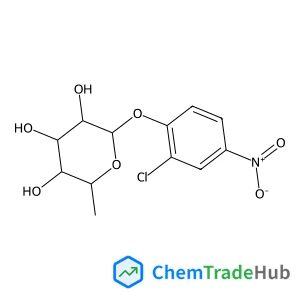
2-Chloro-4-nitrophenyl 6-deoxy-alpha-L-galactopyranoside
CAS Number:
157843-41-9
Molecular Formula:
C12H14ClNO7
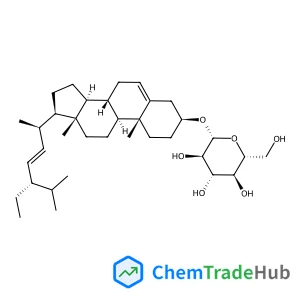
(3beta,22E)-Stigmasta-5,22-dien-3-yl beta-D-glucopyranoside
CAS Number:
19716-26-8
Molecular Formula:
C35H58O6
Recommended Suppliers





Disclaimer
This page provides academic journal information for reference and research purposes only. We are not affiliated with any journal publishers and do not handle publication submissions. For publication-related inquiries, please contact the respective journal publishers directly.
If you notice any inaccuracies in the information displayed, please contact us at support@chemtradehub.com. We will promptly review and address your concerns.