












![(2E)-4-[(1R,2S,8R,19S,21R)-14-Hydroxy-11-isopropenyl-8,23,23-trimethyl-5-(3-methyl-2-buten-1-yl)-16,20-dioxo-3,7,22-trioxaheptacyclo[17.4.1.1~8,12~.0~2,17~.0~2,21~.0~4,15~.0~6,13~]pentacosa-4(15),5,13
,17-tetraen-21-yl]-2-methyl-2-butenoic acid structure](https://static.chemtradehub.com/structs/173/173867-04-4-d2d3.webp "(2E)-4-[(1R,2S,8R,19S,21R)-14-Hydroxy-11-isopropenyl-8,23,23-trimethyl-5-(3-methyl-2-buten-1-yl)-16,20-dioxo-3,7,22-trioxaheptacyclo[17.4.1.1~8,12~.0~2,17~.0~2,21~.0~4,15~.0~6,13~]pentacosa-4(15),5,13
,17-tetraen-21-yl]-2-methyl-2-butenoic acid structure")
Effects of surface hydroxylation on adhesion at zinc/silica interfaces
Literature Information
Publication Date
2018-05-18
DOI
10.1039/C8CP02139B
Impact Factor
3.676
Authors
Alexey Koltsov, Jean-Michel Mataigne
View Original
Abstract
The weak interaction between zinc and silica is responsible for the poor performance of anti-corrosive galvanic zinc coatings on modern advanced high-strength steels, which are fundamental in the automotive industry, and important for rail transport, shipbuilding, and aerospace. With the goal of identifying possible methods for its improvement, we report an ab initio study of the effect of surface hydroxylation on the adhesion characteristics of model zinc/β-cristobalite interfaces, representative of various surface hydroxylation/hydrogenation conditions. We show that surface silanols resulting from dissociative water adsorption at the most stable stoichiometric (001) and (111) surfaces prevent strong zinc–silica interactions. However, dehydrogenation of such interfaces produces oxygen-rich zinc/silica contacts with excellent adhesion characteristics. These are due to partial zinc oxidation and the formation of strong iono-covalent Zn–O bonds between zinc atoms and the under-coordinated excess anions, remnant of the hydroxylation layer. Interestingly, these interfaces appear as the most thermodynamically stable in a wide range of realistic oxygen-rich and hydrogen-lean environments. We also point out that the partial oxidation of zinc atoms in direct contact with the oxide substrate may somewhat weaken the cohesion in the zinc deposit itself. This fundamental analysis of the microscopic mechanisms responsible for the improved zinc wetting on pre-hydroxylated silica substrates provides useful guidelines towards practical attempts to improve adhesion.
Related Literature
The infrared spectra of protic ionic liquids: performances of different computational models to predict hydrogen bonds and conformer evolution
O. Palumbo, A. Cimini, J.-B. Brubach, P. Roy, A. Paolone
2020-03-19
Paper
DOI: 10.1039/D0CP00907E
Photoexcited triplet states of twisted acenes investigated by Electron Paramagnetic Resonance
Claudia E. Tait, Anjan Bedi, Ori Gidron, Jan Behrends
2019-09-20
Paper
DOI: 10.1039/C9CP04135D
Pulse radiolysis study on the reactivity of NO3˙ radical toward uranous(iv), hydrazinium nitrate and hydroxyl ammonium nitrate at room temperature and at 45 °C
R. Musat, J. L. Marignier, C. Le Naour, S. Denisov, L. Venault, Ph. Moisy, M. Mostafavi
2020-02-13
Paper
DOI: 10.1039/C9CP07034F
2Ch–2N square and hexagon interactions: a combined crystallographic data analysis and computational study
Yunxiang Lu, Wenxia Li, Weiwei Yang, Zhengdan Zhu, Zhijian Xu, Honglai Liu
2019-09-05
Paper
DOI: 10.1039/C9CP04562G
Velocity map imaging study of the photodissociation dynamics of the allyl radical
Marta G. González, Luis Rubio-Lago
2020-02-18
Paper
DOI: 10.1039/C9CP04758A
Structural properties and influence of solvent on the stability of telomeric four-stranded i-motif DNA
Dhananjay Bhattacharyya
2019-09-19
Paper
DOI: 10.1039/C9CP03253C
A theoretical investigation on boron–ligand cooperation to activate molecular hydrogen by a frustrated Lewis pair and subsequent reduction of carbon dioxide
Manas Ghara, Sudip Pan
2019-09-05
Paper
DOI: 10.1039/C9CP03756J
An electric double layer structure and differential capacitance at the electrode interface of tributylmethylammonium bis(trifluoromethanesulfonyl)amide studied using a molecular dynamics simulation
Seiji Katakura, Naoya Nishi, Kazuya Kobayashi, Tetsuo Sakka
2020-01-28
Paper
DOI: 10.1039/C9CP05297F
You might also like
Compound Q&A
Is 6-(3-Fluorophenyl)picolinic acid (CAS: 887982-40-3) safe?
6-(3-Fluorophenyl)picolinic acid is generally considered safe for laboratory use...
887982-40-36-(3-Fluorophenyl)pi...
Compound Q&A
What industries use (3R)-3-Pyrrolidinol (CAS: 2799-21-5)?
(3R)-3-Pyrrolidinol is used in the pharmaceutical industry as a precursor for dr...
2799-21-5(3R)-3-Pyrrolidinol
Compound Q&A
What precautions should be taken when handling (4R,5R)-4,5-Diethoxycarbonyl-2,2-dimethyldioxolane (CAS: 59779-75-8)?
When handling (4R,5R)-4,5-Diethoxycarbonyl-2,2-dimethyldioxolane (CAS: 59779-75-...
59779-75-8(4R,5R)-4,5-Diethoxy...
Compound Q&A
How is 1-(6-Chloroimidazo[1,2-b]pyridazin-3-yl)ethanone (CAS: 90734-71-7) typically synthesized?
1-(6-Chloroimidazo[1,2-b]pyridazin-3-yl)ethanone is often synthesized via a mult...
90734-71-71-(6-Chloroimidazo[1...
Compound Q&A
What is the market or research trend for N-Ethyl-3,4-dimethylbenzylamine (CAS: 39180-83-1)?
The market for N-Ethyl-3,4-dimethylbenzylamine (CAS: 39180-83-1) remains steady,...
39180-83-1N-Ethyl-3,4-dimethyl...
Compound Q&A
What is Tert-butyl 3-(pyrrolidin-1-yl)azetidine-1-carboxylate (CAS: 1019008-21-9)?
Tert-butyl 3-(pyrrolidin-1-yl)azetidine-1-carboxylate is a chemical compound wit...
1019008-21-9Tert-butyl 3-(pyrrol...
Compound Q&A
What regulatory guidelines apply to 1-Bromo-3-chloro-2,4-dimethoxybenzene (CAS: 1228956-93-1)?
1-Bromo-3-chloro-2,4-dimethoxybenzene (CAS: 1228956-93-1) falls under the classi...
1228956-93-11-Bromo-3-chloro-2,4...
Compound Q&A
Is 8-Bromo-2-methyl-3,4-dihydroisoquinolin-1(2H)-one (CAS: 1368622-07-4) safe?
The safety of 8-Bromo-2-methyl-3,4-dihydroisoquinolin-1(2H)-one (CAS: 1368622-07...
1368622-07-48-Bromo-2-methyl-3,4...
Compound Q&A
Is Benzyl [(3S)-2,6-dioxo-3-piperidinyl]carbamate (CAS: 22785-43-9) safe?
Benzyl [(3S)-2,6-dioxo-3-piperidinyl]carbamate is generally safe when handled wi...
22785-43-9Benzyl [(3S)-2,6-dio...
Compound Q&A
How should 1-{[4-(4,4,5,5-Tetramethyl-1,3,2-dioxaborolan-2-yl)phenyl]sulfonyl}pyrrolidine (CAS: 928657-21-0) be stored?
1-{[4-(4,4,5,5-Tetramethyl-1,3,2-dioxaborolan-2-yl)phenyl]sulfonyl}pyrrolidine s...
928657-21-01-{[4-(4,4,5,5-Tetra...
Source Journal
Physical Chemistry Chemical Physics

CiteScore:
5.5
Self-citation Rate:
10.3%
Articles per Year:
3036
Physical Chemistry Chemical Physics (PCCP) is an international journal co-owned by 19 physical chemistry and physics societies from around the world. This journal publishes original, cutting-edge research in physical chemistry, chemical physics and biophysical chemistry. To be suitable for publication in PCCP, articles must include significant innovation and/or insight into physical chemistry; this is the most important criterion that reviewers and Editors will judge against when evaluating submissions. The journal has a broad scope and welcomes contributions spanning experiment, theory, computation and data science. Topical coverage includes spectroscopy, dynamics, kinetics, statistical mechanics, thermodynamics, electrochemistry, catalysis, surface science, quantum mechanics, quantum computing and machine learning. Interdisciplinary research areas such as polymers and soft matter, materials, nanoscience, energy, surfaces/interfaces, and biophysical chemistry are welcomed if they demonstrate significant innovation and/or insight into physical chemistry. Joined experimental/theoretical studies are particularly appreciated when complementary and based on up-to-date approaches.
Recommended Compounds
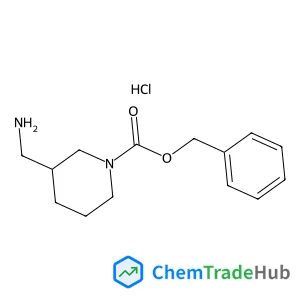
Benzyl 3-(aminomethyl)piperidine-1-carboxylate hydrochloride
CAS Number:
1186663-23-9
Molecular Formula:
C14H21ClN2O2

![[4-Chloro-3-(diethylcarbamoyl)phenyl]boronic acid structure](https://static.chemtradehub.com/structs/871/871332-68-2-0e3b.webp "[4-Chloro-3-(diethylcarbamoyl)phenyl]boronic acid structure")
[4-Chloro-3-(diethylcarbamoyl)phenyl]boronic acid
CAS Number:
871332-68-2
Molecular Formula:
C11H15BClNO3
Recommended Suppliers






Disclaimer
This page provides academic journal information for reference and research purposes only. We are not affiliated with any journal publishers and do not handle publication submissions. For publication-related inquiries, please contact the respective journal publishers directly.
If you notice any inaccuracies in the information displayed, please contact us at support@chemtradehub.com. We will promptly review and address your concerns.