












Recent progress in adaptive multiscale molecular dynamics simulations of soft matter
Literature Information
Publication Date
2010-08-24
DOI
10.1039/C004111D
Impact Factor
3.676
Authors
Steven O. Nielsen, Rosa E. Bulo, Preston B. Moore, Bernd Ensing
View Original
Abstract
Understanding mesoscopic phenomena in terms of the fundamental motions of atoms and electrons poses a severe challenge for molecular simulation. This challenge is being met by multiscale modeling techniques that aim to bridge between the microscopic and mesoscopic time and length scales. In such techniques different levels of theory are combined to describe a system at a number of scales or resolutions. Here we review recent advancements in adaptive hybrid simulations, in which the different levels are used in separate spatial domains and matter can diffuse from one region to another with an accompanying resolution change. We discuss what it means to simulate such a system, and how to enact the resolution changes. We show how to construct efficient adaptive hybrid quantum mechanics/molecular mechanics (QM/MM) and atomistic/coarse grain (AA/CG) molecular dynamics methods that use an intermediate healing region to smoothly couple the regions together. This coupling is formulated to use only the native forces inherent to each region. The total energy is conserved through the use of auxiliary bookkeeping terms. Error control, and the choice of time step and healing region width, is obtained by careful analysis of the energy flow between the different representations. We emphasize the CG → AA reverse mapping problem and show how this problem is resolved through the use of rigid atomistic fragments located within each CG particle whose orientation is preconditioned for a possible resolution change through a rotational dynamics scheme. These advancements are shown to enable the adaptive hybrid multiscale molecular dynamics simulation of macromolecular soft matter systems.
Related Literature
A detailed mechanistic study of bulk MADIX of styrene and its chain extension
Dries J. G. Devlaminck, Paul H. M. Van Steenberge, Lies De Keer, Marie-Françoise Reyniers
2017-10-16
Paper
DOI: 10.1039/C7PY00961E
EQCM studies of polypyrrole films. Part 2. Exposure to aqueous sodium tosylate solutions under thermodynamically non-permselective conditions
Stanley Bruckenstein, Krystyna Brzezinska, A. Robert Hillman
2000-03-02
Paper
DOI: 10.1039/A908719B
Molecular beam study on interaction dynamics in a reactive system: NO on bare Ru(0001)
David A. Butler, Charles T. Rettner, Daniel J. Auerbach, Steven Stolte
2000-01-07
Paper
DOI: 10.1039/A907941F
Adsorption selectivity of sugars toward hydrous zirconium(IV) and hydrous iron(III) oxide surfaces
Masami Kanao Koshikawa, Toshitaka Hori
2000-03-06
Paper
DOI: 10.1039/A908159C
An improved potential energy surface for the C + NO reaction
Stefan Andersson, Nikola Marković, Gunnar Nyman
2000-02-03
Paper
DOI: 10.1039/A908183F
In situ stabilizer formation from methacrylic acid macromonomers in emulsion polymerization
Ingeborg Schreur-Piet, Johan P. A. Heuts
2017-10-17
Paper
DOI: 10.1039/C7PY01583F
The anionic ring-opening polymerization of N-(methanesulfonyl)azetidine
Louis Reisman, Elizabeth A. Rowe, Qiaoli Liang, Paul A. Rupar
2018-02-26
Paper
DOI: 10.1039/C8PY00074C
ESCA and thermodynamic studies of alkali metal ion exchange reactions on an α-MnO2 phase with the tunnel structure
M. Tsuji, Y. Tamaura
2000-03-15
Paper
DOI: 10.1039/A907614J
Design, synthesis and ring-opening polymerization of a new iodinated carbonate monomer: a universal route towards ultrahigh radiopaque aliphatic polycarbonates
Qian Ma, Kewen Lei, Jian Ding, Lin Yu, Jiandong Ding
2017-10-25
Paper
DOI: 10.1039/C7PY01411B
You might also like
Compound Q&A
How is Ethyl 4-chlorothieno[2,3-b]pyridine-5-carboxylate (CAS: 59713-58-5) typically synthesized?
Ethyl 4-chlorothieno[2,3-b]pyridine-5-carboxylate (CAS: 59713-58-5) can be synth...
59713-58-5Ethyl 4-chlorothieno...
Compound Q&A
What regulatory guidelines apply to 5-Methyl-1H-indole-3-carbaldehyde (CAS: 52562-50-2)?
5-Methyl-1H-indole-3-carbaldehyde (CAS: 52562-50-2) is subject to various regula...
52562-50-25-Methyl-1H-indole-3...
Compound Q&A
What are the physical and chemical properties of (1,3-Dimethyl-2,4-dioxo-1,2,3,4-tetrahydro-5-pyrimidinyl)boronic acid (CAS: 223418-73-3)?
(1,3-Dimethyl-2,4-dioxo-1,2,3,4-tetrahydro-5-pyrimidinyl)boronic acid is a white...
223418-73-3(1,3-Dimethyl-2,4-di...
Compound Q&A
How should waste containing Sulfocostunolide A (CAS: 1016983-51-9) be handled?
Waste containing Sulfocostunolide A (CAS: 1016983-51-9) should be handled with c...
1016983-51-9Sulfocostunolide A
Compound Q&A
What precautions should be taken when handling Murraxocin (CAS: 88478-44-8)?
When handling Murraxocin (CAS: 88478-44-8), ensure proper personal protective eq...
88478-44-8Murraxocin
Compound Q&A
What are the physical and chemical properties of Formvar (CAS: 63148-64-1)?
Formvar (CAS: 63148-64-1) is an alkyd resin characterized by a high molecular we...
63148-64-1Formvar(R)
Compound Q&A
Is (S)-4-benzyl-2-((benzyloxy)methyl)morpholine (CAS: 205242-66-6) safe?
(S)-4-benzyl-2-((benzyloxy)methyl)morpholine is generally safe when handled with...
205242-66-6(S)-4-benzyl-2-((ben...
Compound Q&A
What industries use Methyl 1-(5-bromo-2-pyrimidinyl)cyclopropanecarboxylate (CAS: 1447607-69-3)?
Methyl 1-(5-bromo-2-pyrimidinyl)cyclopropanecarboxylate (CAS: 1447607-69-3) is p...
1447607-69-3Methyl 1-(5-bromo-2-...
Compound Q&A
Is 2-Methyl-1-phenyl-1-propanamine hydrochloride (CAS: 24290-47-9) safe?
2-Methyl-1-phenyl-1-propanamine hydrochloride (CAS: 24290-47-9) is generally con...
24290-47-92-Methyl-1-phenyl-1-...
Compound Q&A
How is 3-(4-Bromophenyl)-2-methylpropanoic acid (CAS: 66735-01-1) typically synthesized?
3-(4-Bromophenyl)-2-methylpropanoic acid is synthesized through a multi-step pro...
66735-01-13-(4-Bromophenyl)-2-...
Source Journal
Physical Chemistry Chemical Physics

CiteScore:
5.5
Self-citation Rate:
10.3%
Articles per Year:
3036
Physical Chemistry Chemical Physics (PCCP) is an international journal co-owned by 19 physical chemistry and physics societies from around the world. This journal publishes original, cutting-edge research in physical chemistry, chemical physics and biophysical chemistry. To be suitable for publication in PCCP, articles must include significant innovation and/or insight into physical chemistry; this is the most important criterion that reviewers and Editors will judge against when evaluating submissions. The journal has a broad scope and welcomes contributions spanning experiment, theory, computation and data science. Topical coverage includes spectroscopy, dynamics, kinetics, statistical mechanics, thermodynamics, electrochemistry, catalysis, surface science, quantum mechanics, quantum computing and machine learning. Interdisciplinary research areas such as polymers and soft matter, materials, nanoscience, energy, surfaces/interfaces, and biophysical chemistry are welcomed if they demonstrate significant innovation and/or insight into physical chemistry. Joined experimental/theoretical studies are particularly appreciated when complementary and based on up-to-date approaches.
Recommended Compounds
![2-Methyl-2-propanyl 1,6-diazaspiro[3.4]octane-6-carboxylate structure](https://static.chemtradehub.com/structs/115/1158749-79-1-81ee.webp "2-Methyl-2-propanyl 1,6-diazaspiro[3.4]octane-6-carboxylate structure")
2-Methyl-2-propanyl 1,6-diazaspiro[3.4]octane-6-carboxylate
CAS Number:
1158749-79-1
Molecular Formula:
C11H20N2O2
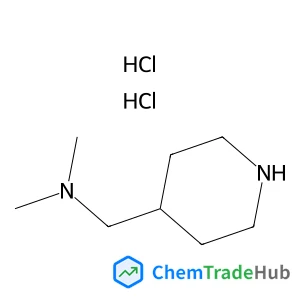
N,N-dimethyl(piperidin-4-yl)methanamine hydrochloride
CAS Number:
172281-72-0
Molecular Formula:
C8H20Cl2N2
![[2-(Benzyloxy)-3-bromo-5-methylphenyl]boronic acid structure](https://static.chemtradehub.com/structs/870/870777-20-1-24ac.webp "[2-(Benzyloxy)-3-bromo-5-methylphenyl]boronic acid structure")
[2-(Benzyloxy)-3-bromo-5-methylphenyl]boronic acid
CAS Number:
870777-20-1
Molecular Formula:
C14H14BBrO3

Recommended Suppliers





Disclaimer
This page provides academic journal information for reference and research purposes only. We are not affiliated with any journal publishers and do not handle publication submissions. For publication-related inquiries, please contact the respective journal publishers directly.
If you notice any inaccuracies in the information displayed, please contact us at support@chemtradehub.com. We will promptly review and address your concerns.