













Adsorption selectivity of sugars toward hydrous zirconium(IV) and hydrous iron(III) oxide surfaces
Literature Information
Publication Date
2000-03-06
DOI
10.1039/A908159C
Impact Factor
3.676
Authors
Masami Kanao Koshikawa, Toshitaka Hori
View Original
Abstract
To substantiate stereochemical interactions between sugars and hydrous metal oxides, a selection of sugars including seventeen monosaccharides and sucrose were adsorbed on hydrous zirconium oxide (HZO) and hydrous iron oxide (HIO) suspended in aqueous solutions and their strengths of adsorption were compared according to the Langmuir monolayer adsorption isotherm. Among the eighteen sugars, the largest Langmuir constant a was observed for D- and L-ribose (a=37±5 and 35.0±0.7, resp.) and the smallest was for α-methyl-D-glucoside (a=1.0±0.2). Intermediate values were obtained for mannose, galactose and mannitol (a=17±2, 18±1 and 16±3, resp.). The configuration of a set of three neighboring hydroxy groups located either on the C(2), C(3) and C(4) carbon atoms of aldoses or on the C(3), C(4) and C(5) carbons of ketoses has a major effect on the Langmuir constant. The strength of adsorption of sugars decreased in the order ax–eq–ax>ax–eq–eq>eq–eq–eq>*–eq–eq (or *–eq–ax or eq–*-eq), where eq and ax indicate that the respective hydroxy groups are equatorial and axial toward the rings of the sugar molecules, and the asterisk indicates that the hydroxy group is replaced by a H– or CH3O– group. In addition, it is possible to correlate the order of a values more closely to the geometry of sugar molecules by considering the contribution from all hydroxy groups, together with hemiacetal oxygen atoms in the molecules. The numbers of NCONF and NTCSC were counted by manipulating a stereochemical molecular model of sugars and the ratio of R=NTCSC/NCONF was calculated; here, NCONF was the total number of conformations derived from a given sugar molecule and calculated by considering the existence of (i) α- and β-anomers, (ii) 1C- and C1-conformers, (iii) three rotamers arising from rotations around the C(5)–C(6) bond of aldohexoses and around the C(1)–C(2) bond of ketohexoses. NTCSC was the number of sets of three oxygen atoms included in the sugar molecule and expected to come close to each other to form a triangle, circumscribed by the smallest circle having an approximate radius of 1.6±0.2 Å. The Langmuir constant a was found to be linearly dependent on the ratio R=NTCSC/NCONF, the regression line being expressed by the equation a=28R+1.
Related Literature
In situ surface-enhanced Raman spectroscopic study of formic acid electrooxidation on spontaneously deposited platinum on gold
Ranjani Muralidharan, Michael McIntosh, Xiao Li
2013-04-18
Paper
DOI: 10.1039/C3CP51128F
Efficient hydrogenation over single-site bimetallic RuSn clusters
Lauro Oliver Paz-Borbón, Anders Hellman, John Meurig Thomas, Henrik Grönbeck
2013-04-11
Paper
DOI: 10.1039/C3CP51384J
Calculation of arrangement of oxygen ions and vacancies in double perovskite GdBaCo2O5+δ by first-principles DFT with Monte Carlo simulations
Hiromasa Shiiba, Toshihiro Kasuga, Robin W. Grimes, John A. Kilner
2013-04-22
Paper
DOI: 10.1039/C3CP50316J
The conversion of protonated cytosine-SO3− to uracil-SO3−: Insights into the novel induced hydrolytic deamination through bisulfite catalysis
Wenliang Wang, Daodao Hu, Jian Lü
2013-04-16
Communication
DOI: 10.1039/C3CP51275D
Effects of the morphology of nanostructured ZnO and interface modification on the device configuration and charge transport of ZnO/polymer hybrid solar cells
Pipat Ruankham, Susumu Yoshikawa, Takashi Sagawa
2013-01-29
Paper
DOI: 10.1039/C3CP50266J
Visible light-induced OH radicals in Ga2O3: an EPR study
Zeev Tzitrinovich, Anat Lipovsky, Aharon Gedanken, Rachel Lubart
2013-06-11
Paper
DOI: 10.1039/C3CP00102D
A versatile electrochemical cell for the preparation and characterisation of model electrocatalytic systems
Aliaksandr S. Bandarenka
2013-06-05
Paper
DOI: 10.1039/C3CP51998H
Organic n-type materials for charge transport and charge storage applications
Monika Stolar, Thomas Baumgartner
2013-05-14
Perspective
DOI: 10.1039/C3CP51379C
Editorial of the PCCP themed issue “Scanning tunneling microscopy: revealing new physical chemistry insight”
2013-07-05
Editorial
DOI: 10.1039/C3CP90096G
You might also like
Compound Q&A
How is Ethyl 4-chlorothieno[2,3-b]pyridine-5-carboxylate (CAS: 59713-58-5) typically synthesized?
Ethyl 4-chlorothieno[2,3-b]pyridine-5-carboxylate (CAS: 59713-58-5) can be synth...
59713-58-5Ethyl 4-chlorothieno...
Compound Q&A
What regulatory guidelines apply to 5-Methyl-1H-indole-3-carbaldehyde (CAS: 52562-50-2)?
5-Methyl-1H-indole-3-carbaldehyde (CAS: 52562-50-2) is subject to various regula...
52562-50-25-Methyl-1H-indole-3...
Compound Q&A
What are the physical and chemical properties of (1,3-Dimethyl-2,4-dioxo-1,2,3,4-tetrahydro-5-pyrimidinyl)boronic acid (CAS: 223418-73-3)?
(1,3-Dimethyl-2,4-dioxo-1,2,3,4-tetrahydro-5-pyrimidinyl)boronic acid is a white...
223418-73-3(1,3-Dimethyl-2,4-di...
Compound Q&A
How should waste containing Sulfocostunolide A (CAS: 1016983-51-9) be handled?
Waste containing Sulfocostunolide A (CAS: 1016983-51-9) should be handled with c...
1016983-51-9Sulfocostunolide A
Compound Q&A
What precautions should be taken when handling Murraxocin (CAS: 88478-44-8)?
When handling Murraxocin (CAS: 88478-44-8), ensure proper personal protective eq...
88478-44-8Murraxocin
Compound Q&A
What are the physical and chemical properties of Formvar (CAS: 63148-64-1)?
Formvar (CAS: 63148-64-1) is an alkyd resin characterized by a high molecular we...
63148-64-1Formvar(R)
Compound Q&A
Is (S)-4-benzyl-2-((benzyloxy)methyl)morpholine (CAS: 205242-66-6) safe?
(S)-4-benzyl-2-((benzyloxy)methyl)morpholine is generally safe when handled with...
205242-66-6(S)-4-benzyl-2-((ben...
Compound Q&A
What industries use Methyl 1-(5-bromo-2-pyrimidinyl)cyclopropanecarboxylate (CAS: 1447607-69-3)?
Methyl 1-(5-bromo-2-pyrimidinyl)cyclopropanecarboxylate (CAS: 1447607-69-3) is p...
1447607-69-3Methyl 1-(5-bromo-2-...
Compound Q&A
Is 2-Methyl-1-phenyl-1-propanamine hydrochloride (CAS: 24290-47-9) safe?
2-Methyl-1-phenyl-1-propanamine hydrochloride (CAS: 24290-47-9) is generally con...
24290-47-92-Methyl-1-phenyl-1-...
Compound Q&A
How is 3-(4-Bromophenyl)-2-methylpropanoic acid (CAS: 66735-01-1) typically synthesized?
3-(4-Bromophenyl)-2-methylpropanoic acid is synthesized through a multi-step pro...
66735-01-13-(4-Bromophenyl)-2-...
Source Journal
Physical Chemistry Chemical Physics

CiteScore:
5.5
Self-citation Rate:
10.3%
Articles per Year:
3036
Physical Chemistry Chemical Physics (PCCP) is an international journal co-owned by 19 physical chemistry and physics societies from around the world. This journal publishes original, cutting-edge research in physical chemistry, chemical physics and biophysical chemistry. To be suitable for publication in PCCP, articles must include significant innovation and/or insight into physical chemistry; this is the most important criterion that reviewers and Editors will judge against when evaluating submissions. The journal has a broad scope and welcomes contributions spanning experiment, theory, computation and data science. Topical coverage includes spectroscopy, dynamics, kinetics, statistical mechanics, thermodynamics, electrochemistry, catalysis, surface science, quantum mechanics, quantum computing and machine learning. Interdisciplinary research areas such as polymers and soft matter, materials, nanoscience, energy, surfaces/interfaces, and biophysical chemistry are welcomed if they demonstrate significant innovation and/or insight into physical chemistry. Joined experimental/theoretical studies are particularly appreciated when complementary and based on up-to-date approaches.
Recommended Compounds


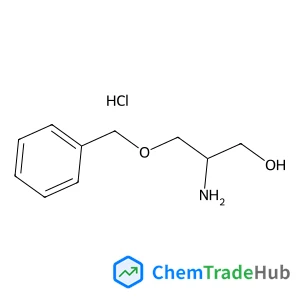
(R)-2-amino-3-(benzyloxy)propan-1-ol hydrochloride
CAS Number:
58577-95-0
Molecular Formula:
C10H16ClNO2
Recommended Suppliers






Disclaimer
This page provides academic journal information for reference and research purposes only. We are not affiliated with any journal publishers and do not handle publication submissions. For publication-related inquiries, please contact the respective journal publishers directly.
If you notice any inaccuracies in the information displayed, please contact us at support@chemtradehub.com. We will promptly review and address your concerns.