












An improved potential energy surface for the C + NO reaction
Literature Information
Publication Date
2000-02-03
DOI
10.1039/A908183F
Impact Factor
3.676
Authors
Stefan Andersson, Nikola Marković, Gunnar Nyman
View Original
Abstract
A new potential energy surface for the reaction between C(3P) and NO(X2Π) is presented. The surface is based on 998 ab initio energy points, of which 578 are new points calculated in this work. Complete active space second-order perturbation theory has been employed using a (14s9p4d3f)/[4s3p2d1f] contracted ANO basis. An analytic fit of the 2A″ surface is presented with special attention paid to the long-range part of the potential. This surface improves a previously published surface (Simonson et al., Chem. Phys., 1995, 200, 141), which was based on more limited ab initio data. In particular the long-range part of the potential and non-linear geometries have been improved, including the description of several stationary points. Thermal rate coefficients for formation of CN(X2Σ + ) + O(3P) and CO(X1Σ + ) + N(2D) in the temperature range from 200 K to 4500 K have been obtained using quasiclassical trajectory calculations. While the total rate constant agrees better with experiment for the new surface, the branching ratio appears to agree better on the old surface, which is discussed.
Related Literature
Correction: Benchmark thermochemistry of chloramines, bromamines, and bromochloramines: halogen oxidants stabilized by electron correlation
Daniela Trogolo, J. Samuel Arey
2016-11-03
Correction
DOI: 10.1039/C6CP90261H
Modelling temperature-dependent properties of polymorphic organic molecular crystals
Jonas Nyman, Graeme M. Day
2016-10-31
Paper
DOI: 10.1039/C6CP05447A
Preferential solvation and ion association properties in aqueous dimethyl sulfoxide solutions
Anand Narayanan Krishnamoorthy, Johannes Zeman, Christian Holm, Jens Smiatek
2016-10-31
Paper
DOI: 10.1039/C6CP05909K
Molecular modeling of ions at interfaces: exploring similarities to hydrophobic solvation through the lens of induced aqueous interfacial fluctuations
Shu-Ching Ou, Di Cui, Sandeep Patel
2016-08-11
Perspective
DOI: 10.1039/C6CP04112D
Excited-state intramolecular proton transfer and conformational relaxation in 4′-N,N-dimethylamino-3-hydroxyflavone doped in acetonitrile crystals
Kazuki Furukawa, Norifumi Yamamoto, Kazuyuki Hino, Hiroshi Sekiya
2016-09-21
Paper
DOI: 10.1039/C6CP04322D
Lipid molecules can induce an opening of membrane-facing tunnels in cytochrome P450 1A2
Petr Jeřábek, Jan Florián
2016-09-12
Paper
DOI: 10.1039/C6CP03692A
Trapped in the coordination sphere: nitrate ion transfer driven by the cerium(iii/iv) redox couple
Ross J. Ellis, Mrinal K. Bera, Benjamin Reinhart, Mark R. Antonio
2016-11-07
Paper
DOI: 10.1039/C6CP06528G
Theoretical characterization of the conformational features of unnatural oligonucleotides containing a six nucleotide genetic alphabet
Wenjuan Wang, Xiehuang Sheng, Shaolong Zhang, Fang Huang, Chuanzhi Sun, Jianbiao Liu, Dezhan Chen
2016-09-20
Paper
DOI: 10.1039/C6CP05594J
The i-TTM model for ab initio-based ion–water interaction potentials. II. Alkali metal ion–water potential energy functions
Marc Riera, Andreas W. Götz, Francesco Paesani
2016-08-22
Paper
DOI: 10.1039/C6CP02553F
A new understanding of the photocatalytic mechanism of the direct Z-scheme g-C3N4/TiO2 heterostructure
Bei Cheng
2016-10-21
Paper
DOI: 10.1039/C6CP06147H
You might also like
Compound Q&A
How is Ethyl 4-chlorothieno[2,3-b]pyridine-5-carboxylate (CAS: 59713-58-5) typically synthesized?
Ethyl 4-chlorothieno[2,3-b]pyridine-5-carboxylate (CAS: 59713-58-5) can be synth...
59713-58-5Ethyl 4-chlorothieno...
Compound Q&A
What regulatory guidelines apply to 5-Methyl-1H-indole-3-carbaldehyde (CAS: 52562-50-2)?
5-Methyl-1H-indole-3-carbaldehyde (CAS: 52562-50-2) is subject to various regula...
52562-50-25-Methyl-1H-indole-3...
Compound Q&A
What are the physical and chemical properties of (1,3-Dimethyl-2,4-dioxo-1,2,3,4-tetrahydro-5-pyrimidinyl)boronic acid (CAS: 223418-73-3)?
(1,3-Dimethyl-2,4-dioxo-1,2,3,4-tetrahydro-5-pyrimidinyl)boronic acid is a white...
223418-73-3(1,3-Dimethyl-2,4-di...
Compound Q&A
How should waste containing Sulfocostunolide A (CAS: 1016983-51-9) be handled?
Waste containing Sulfocostunolide A (CAS: 1016983-51-9) should be handled with c...
1016983-51-9Sulfocostunolide A
Compound Q&A
What precautions should be taken when handling Murraxocin (CAS: 88478-44-8)?
When handling Murraxocin (CAS: 88478-44-8), ensure proper personal protective eq...
88478-44-8Murraxocin
Compound Q&A
What are the physical and chemical properties of Formvar (CAS: 63148-64-1)?
Formvar (CAS: 63148-64-1) is an alkyd resin characterized by a high molecular we...
63148-64-1Formvar(R)
Compound Q&A
Is (S)-4-benzyl-2-((benzyloxy)methyl)morpholine (CAS: 205242-66-6) safe?
(S)-4-benzyl-2-((benzyloxy)methyl)morpholine is generally safe when handled with...
205242-66-6(S)-4-benzyl-2-((ben...
Compound Q&A
What industries use Methyl 1-(5-bromo-2-pyrimidinyl)cyclopropanecarboxylate (CAS: 1447607-69-3)?
Methyl 1-(5-bromo-2-pyrimidinyl)cyclopropanecarboxylate (CAS: 1447607-69-3) is p...
1447607-69-3Methyl 1-(5-bromo-2-...
Compound Q&A
Is 2-Methyl-1-phenyl-1-propanamine hydrochloride (CAS: 24290-47-9) safe?
2-Methyl-1-phenyl-1-propanamine hydrochloride (CAS: 24290-47-9) is generally con...
24290-47-92-Methyl-1-phenyl-1-...
Compound Q&A
How is 3-(4-Bromophenyl)-2-methylpropanoic acid (CAS: 66735-01-1) typically synthesized?
3-(4-Bromophenyl)-2-methylpropanoic acid is synthesized through a multi-step pro...
66735-01-13-(4-Bromophenyl)-2-...
Source Journal
Physical Chemistry Chemical Physics

CiteScore:
5.5
Self-citation Rate:
10.3%
Articles per Year:
3036
Physical Chemistry Chemical Physics (PCCP) is an international journal co-owned by 19 physical chemistry and physics societies from around the world. This journal publishes original, cutting-edge research in physical chemistry, chemical physics and biophysical chemistry. To be suitable for publication in PCCP, articles must include significant innovation and/or insight into physical chemistry; this is the most important criterion that reviewers and Editors will judge against when evaluating submissions. The journal has a broad scope and welcomes contributions spanning experiment, theory, computation and data science. Topical coverage includes spectroscopy, dynamics, kinetics, statistical mechanics, thermodynamics, electrochemistry, catalysis, surface science, quantum mechanics, quantum computing and machine learning. Interdisciplinary research areas such as polymers and soft matter, materials, nanoscience, energy, surfaces/interfaces, and biophysical chemistry are welcomed if they demonstrate significant innovation and/or insight into physical chemistry. Joined experimental/theoretical studies are particularly appreciated when complementary and based on up-to-date approaches.
Recommended Compounds
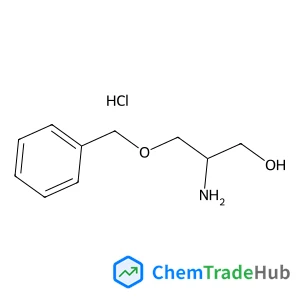
(R)-2-amino-3-(benzyloxy)propan-1-ol hydrochloride
CAS Number:
58577-95-0
Molecular Formula:
C10H16ClNO2
![2-Methyl-2-propanyl 1,6-diazaspiro[3.4]octane-6-carboxylate structure](https://static.chemtradehub.com/structs/115/1158749-79-1-81ee.webp "2-Methyl-2-propanyl 1,6-diazaspiro[3.4]octane-6-carboxylate structure")
2-Methyl-2-propanyl 1,6-diazaspiro[3.4]octane-6-carboxylate
CAS Number:
1158749-79-1
Molecular Formula:
C11H20N2O2
Recommended Suppliers





Disclaimer
This page provides academic journal information for reference and research purposes only. We are not affiliated with any journal publishers and do not handle publication submissions. For publication-related inquiries, please contact the respective journal publishers directly.
If you notice any inaccuracies in the information displayed, please contact us at support@chemtradehub.com. We will promptly review and address your concerns.