












Molecular beam study on interaction dynamics in a reactive system: NO on bare Ru(0001)
Literature Information
Publication Date
2000-01-07
DOI
10.1039/A907941F
Impact Factor
3.676
Authors
David A. Butler, Charles T. Rettner, Daniel J. Auerbach, Steven Stolte
View Original
Abstract
The interaction dynamics of NO with the reactive Ru(0001) surface has been investigated with the use of supersonic molecular beam techniques. Helium scattering, King and Wells sticking measurements and time-of-flight (TOF) experiments are performed. The initial sticking coefficient is remarkably high with incident energy, varying from unity at thermal energies to ∽90% for 0.25⩽Ei⩽2.4 eV and does not seem to depend on surface temperature for 400⩽Ts⩽850 K. Counter intuitively, the non-sticking ∽10% of the incident flux has only about 12% translational energy transfer in the specular scattering direction. Molecular sticking is observed at low surface temperatures for above thermal incident energies, up to at least 0.45 eV.An attempt is made to distinguish between molecular precursor mediated pathways and direct dissociation. In order to account for the surprisingly constant initial sticking coefficients, the opening of a direct dissociative channel is proposed for beam energies exceeding the depth of the molecular chemisorption well. Several open problems are identified.
Recommended Journals
Related Literature
Orientation order and rotation mobility of nitroxide biradicals determined by quantitative simulation of EPR spectra
Alexey V. Bogdanov, Andrey Kh. Vorobiev
2016-10-20
Paper
DOI: 10.1039/C6CP05815A
Should “anion–π interactions” be called “anion–σ interactions”? A revision of the origin of some hole-bonds and their nomenclature
2016-10-12
Communication
DOI: 10.1039/C6CP06416G
The role of relative rate constants in determining surface state phenomena at semiconductor–liquid interfaces
Asif Iqbal, Md. Sazzad Hossain, Kirk H. Bevan
2016-09-28
Paper
DOI: 10.1039/C6CP04952D
XPS enables visualization of electrode potential screening in an ionic liquid medium with temporal- and lateral-resolution
M. T. Camci, P. Aydogan, B. Ulgut, C. Kocabas, S. Suzer
2016-08-15
Paper
DOI: 10.1039/C6CP04933H
Band structure engineering in a MoS2/PbI2 van der Waals heterostructure via an external electric field
Yaqiang Ma, Xu Zhao, Tianxing Wang, Wei Li, Shanshan Chang, Yi Li, Mingyu Zhao
2016-09-19
Paper
DOI: 10.1039/C6CP06046C
Fluorescence quantum yield rationalized by the magnitude of the charge transfer in π-conjugated terpyridine derivatives
Marie Humbert-Droz, Claude Piguet, Tomasz A. Wesolowski
2016-09-16
Paper
DOI: 10.1039/C6CP04252J
Interaction of Rhodamine 6G molecules with graphene: a combined computational–experimental study
Kan Zhang, Shansheng Yu, Baoming Jv, Weitao Zheng
2016-08-19
Paper
DOI: 10.1039/C6CP03987A
Design, synthesis and DSSC performance of o-fluorine substituted phenylene spacer sensitizers: effect of TiO2 thickness variation
Telugu Bhim Raju, Jayraj V. Vaghasiya, Mohammad Adil Afroz, Saurabh S. Soni
2016-09-16
Paper
DOI: 10.1039/C6CP05641E
Preferential solvation and ion association properties in aqueous dimethyl sulfoxide solutions
Anand Narayanan Krishnamoorthy, Johannes Zeman, Christian Holm, Jens Smiatek
2016-10-31
Paper
DOI: 10.1039/C6CP05909K
Oxidative etching of MoS2/WS2 nanosheets to their QDs by facile UV irradiation
Xiaolong Lu, Rongguo Wang, Lifeng Hao, Fan Yang, Weicheng Jiao, Ping Peng, Feng Yuan, Wenbo Liu
2016-11-07
Paper
DOI: 10.1039/C6CP06748D
You might also like
Compound Q&A
How is Ethyl 4-chlorothieno[2,3-b]pyridine-5-carboxylate (CAS: 59713-58-5) typically synthesized?
Ethyl 4-chlorothieno[2,3-b]pyridine-5-carboxylate (CAS: 59713-58-5) can be synth...
59713-58-5Ethyl 4-chlorothieno...
Compound Q&A
What regulatory guidelines apply to 5-Methyl-1H-indole-3-carbaldehyde (CAS: 52562-50-2)?
5-Methyl-1H-indole-3-carbaldehyde (CAS: 52562-50-2) is subject to various regula...
52562-50-25-Methyl-1H-indole-3...
Compound Q&A
What are the physical and chemical properties of (1,3-Dimethyl-2,4-dioxo-1,2,3,4-tetrahydro-5-pyrimidinyl)boronic acid (CAS: 223418-73-3)?
(1,3-Dimethyl-2,4-dioxo-1,2,3,4-tetrahydro-5-pyrimidinyl)boronic acid is a white...
223418-73-3(1,3-Dimethyl-2,4-di...
Compound Q&A
How should waste containing Sulfocostunolide A (CAS: 1016983-51-9) be handled?
Waste containing Sulfocostunolide A (CAS: 1016983-51-9) should be handled with c...
1016983-51-9Sulfocostunolide A
Compound Q&A
What precautions should be taken when handling Murraxocin (CAS: 88478-44-8)?
When handling Murraxocin (CAS: 88478-44-8), ensure proper personal protective eq...
88478-44-8Murraxocin
Compound Q&A
What are the physical and chemical properties of Formvar (CAS: 63148-64-1)?
Formvar (CAS: 63148-64-1) is an alkyd resin characterized by a high molecular we...
63148-64-1Formvar(R)
Compound Q&A
Is (S)-4-benzyl-2-((benzyloxy)methyl)morpholine (CAS: 205242-66-6) safe?
(S)-4-benzyl-2-((benzyloxy)methyl)morpholine is generally safe when handled with...
205242-66-6(S)-4-benzyl-2-((ben...
Compound Q&A
What industries use Methyl 1-(5-bromo-2-pyrimidinyl)cyclopropanecarboxylate (CAS: 1447607-69-3)?
Methyl 1-(5-bromo-2-pyrimidinyl)cyclopropanecarboxylate (CAS: 1447607-69-3) is p...
1447607-69-3Methyl 1-(5-bromo-2-...
Compound Q&A
Is 2-Methyl-1-phenyl-1-propanamine hydrochloride (CAS: 24290-47-9) safe?
2-Methyl-1-phenyl-1-propanamine hydrochloride (CAS: 24290-47-9) is generally con...
24290-47-92-Methyl-1-phenyl-1-...
Compound Q&A
How is 3-(4-Bromophenyl)-2-methylpropanoic acid (CAS: 66735-01-1) typically synthesized?
3-(4-Bromophenyl)-2-methylpropanoic acid is synthesized through a multi-step pro...
66735-01-13-(4-Bromophenyl)-2-...
Source Journal
Physical Chemistry Chemical Physics

CiteScore:
5.5
Self-citation Rate:
10.3%
Articles per Year:
3036
Physical Chemistry Chemical Physics (PCCP) is an international journal co-owned by 19 physical chemistry and physics societies from around the world. This journal publishes original, cutting-edge research in physical chemistry, chemical physics and biophysical chemistry. To be suitable for publication in PCCP, articles must include significant innovation and/or insight into physical chemistry; this is the most important criterion that reviewers and Editors will judge against when evaluating submissions. The journal has a broad scope and welcomes contributions spanning experiment, theory, computation and data science. Topical coverage includes spectroscopy, dynamics, kinetics, statistical mechanics, thermodynamics, electrochemistry, catalysis, surface science, quantum mechanics, quantum computing and machine learning. Interdisciplinary research areas such as polymers and soft matter, materials, nanoscience, energy, surfaces/interfaces, and biophysical chemistry are welcomed if they demonstrate significant innovation and/or insight into physical chemistry. Joined experimental/theoretical studies are particularly appreciated when complementary and based on up-to-date approaches.
Recommended Compounds

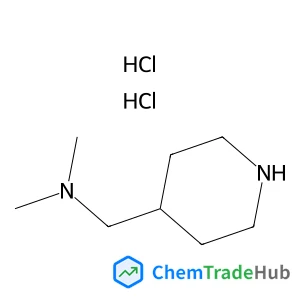
N,N-dimethyl(piperidin-4-yl)methanamine hydrochloride
CAS Number:
172281-72-0
Molecular Formula:
C8H20Cl2N2
Recommended Suppliers




Disclaimer
This page provides academic journal information for reference and research purposes only. We are not affiliated with any journal publishers and do not handle publication submissions. For publication-related inquiries, please contact the respective journal publishers directly.
If you notice any inaccuracies in the information displayed, please contact us at support@chemtradehub.com. We will promptly review and address your concerns.