












Competing ultrafast intersystem crossing and internal conversion in the “channel 3” region of benzene
Literature Information
Publication Date
2010-06-08
DOI
10.1039/C001671C
Impact Factor
3.676
Authors
R. S. Minns, D. S. N. Parker, T. J. Penfold, G. A. Worth, H. H. Fielding
View Original
Abstract
We report new, detailed, femtosecond time-resolved photoelectron spectroscopy experiments and calculations investigating the competition between ultrafast internal conversion and ultrafast intersystem crossing in electronically and vibrationally excited benzene at the onset of “channel 3”. Using different probe energies to record the total photoelectron yield as a function of pump–probe delay we are able to confirm that S1, T1 and T2 electronic states are involved in the excited state dynamics. Time-resolved photoelectron spectroscopy measurements then allow us to unravel the evolution of the S1, T1 and T2 components of the excited state population and, together with complementary quantum chemistry and quantum dynamics calculations, support our earlier proposal that ultrafast intersystem crossing competes with internal conversion (Chem. Phys. Lett., 2009, 469, 43).
Related Literature
Lipid molecules can induce an opening of membrane-facing tunnels in cytochrome P450 1A2
Petr Jeřábek, Jan Florián
2016-09-12
Paper
DOI: 10.1039/C6CP03692A
A new understanding of the photocatalytic mechanism of the direct Z-scheme g-C3N4/TiO2 heterostructure
Bei Cheng
2016-10-21
Paper
DOI: 10.1039/C6CP06147H
Exploring the mechanism of F282L mutation-caused constitutive activity of GPCR by a computational study
Nan Gao, Tao Liang, Yuan Yuan, Xiuchan Xiao, Yihuan Zhao, Yanzhi Guo, Menglong Li, Xuemei Pu
2016-09-16
Paper
DOI: 10.1039/C6CP03710K
A theoretical study of weak interactions in phenylenediamine homodimer clusters
Meiye Jia, Peifeng Su, Zhixun Luo, Jiannian Yao
2016-09-27
Paper
DOI: 10.1039/C6CP04922B
Metallic cyanoacetylides of copper, silver and gold: generation and structural characterization
Carlos Cabezas, Carmen Barrientos, Antonio Largo, Jean-Claude Guillemin, J. L. Alonso
2016-09-20
Paper
DOI: 10.1039/C6CP04474C
Relation between oxygen stoichiometry and thermodynamic properties and the electronic structure of nonstoichiometric perovskite La0.6Sr0.4CoO3−δ
S. F. Bychkov, M. P. Popov
2016-10-17
Paper
DOI: 10.1039/C6CP05435H
Investigation of the effect of cucurbit[7]uril complexation on the photophysical and acid–base properties of the antimalarial drug quinine
Suman Mallick, Kaushik Pal, Falguni Chandra, Apurba L. Koner
2016-10-07
Paper
DOI: 10.1039/C6CP04931A
Understanding the phase formation kinetics of nano-crystalline kesterite deposited on mesoscopic scaffolds via in situ multi-wavelength Raman-monitored annealing
Zhuoran Wang, Samir Elouatik, George P. Demopoulos
2016-09-30
Paper
DOI: 10.1039/C6CP05759D
Detection of adsorbed O2− species on CeO2 solid impregnated with Ag2+ ions during its thermal treatment under a H2 atmosphere, an EPR study
Sara Hany, Samer Aouad, Cédric Gennequin, Madona Labaki, Edmond Abi-Aad, Antoine Aboukaïs
2016-09-28
Paper
DOI: 10.1039/C6CP05574E
Light-induced dipole moment modulation in diarylethenes: a fundamental study
Andrea Bianco, Giorgio Ferrari, Rossella Castagna, Andrea Rossi, Marco Carminati, Giorgio Pariani, Matteo Tommasini
2016-10-17
Paper
DOI: 10.1039/C6CP05609A
You might also like
Compound Q&A
How is Ethyl 4-chlorothieno[2,3-b]pyridine-5-carboxylate (CAS: 59713-58-5) typically synthesized?
Ethyl 4-chlorothieno[2,3-b]pyridine-5-carboxylate (CAS: 59713-58-5) can be synth...
59713-58-5Ethyl 4-chlorothieno...
Compound Q&A
What regulatory guidelines apply to 5-Methyl-1H-indole-3-carbaldehyde (CAS: 52562-50-2)?
5-Methyl-1H-indole-3-carbaldehyde (CAS: 52562-50-2) is subject to various regula...
52562-50-25-Methyl-1H-indole-3...
Compound Q&A
What are the physical and chemical properties of (1,3-Dimethyl-2,4-dioxo-1,2,3,4-tetrahydro-5-pyrimidinyl)boronic acid (CAS: 223418-73-3)?
(1,3-Dimethyl-2,4-dioxo-1,2,3,4-tetrahydro-5-pyrimidinyl)boronic acid is a white...
223418-73-3(1,3-Dimethyl-2,4-di...
Compound Q&A
How should waste containing Sulfocostunolide A (CAS: 1016983-51-9) be handled?
Waste containing Sulfocostunolide A (CAS: 1016983-51-9) should be handled with c...
1016983-51-9Sulfocostunolide A
Compound Q&A
What precautions should be taken when handling Murraxocin (CAS: 88478-44-8)?
When handling Murraxocin (CAS: 88478-44-8), ensure proper personal protective eq...
88478-44-8Murraxocin
Compound Q&A
What are the physical and chemical properties of Formvar (CAS: 63148-64-1)?
Formvar (CAS: 63148-64-1) is an alkyd resin characterized by a high molecular we...
63148-64-1Formvar(R)
Compound Q&A
Is (S)-4-benzyl-2-((benzyloxy)methyl)morpholine (CAS: 205242-66-6) safe?
(S)-4-benzyl-2-((benzyloxy)methyl)morpholine is generally safe when handled with...
205242-66-6(S)-4-benzyl-2-((ben...
Compound Q&A
What industries use Methyl 1-(5-bromo-2-pyrimidinyl)cyclopropanecarboxylate (CAS: 1447607-69-3)?
Methyl 1-(5-bromo-2-pyrimidinyl)cyclopropanecarboxylate (CAS: 1447607-69-3) is p...
1447607-69-3Methyl 1-(5-bromo-2-...
Compound Q&A
Is 2-Methyl-1-phenyl-1-propanamine hydrochloride (CAS: 24290-47-9) safe?
2-Methyl-1-phenyl-1-propanamine hydrochloride (CAS: 24290-47-9) is generally con...
24290-47-92-Methyl-1-phenyl-1-...
Compound Q&A
How is 3-(4-Bromophenyl)-2-methylpropanoic acid (CAS: 66735-01-1) typically synthesized?
3-(4-Bromophenyl)-2-methylpropanoic acid is synthesized through a multi-step pro...
66735-01-13-(4-Bromophenyl)-2-...
Source Journal
Physical Chemistry Chemical Physics

CiteScore:
5.5
Self-citation Rate:
10.3%
Articles per Year:
3036
Physical Chemistry Chemical Physics (PCCP) is an international journal co-owned by 19 physical chemistry and physics societies from around the world. This journal publishes original, cutting-edge research in physical chemistry, chemical physics and biophysical chemistry. To be suitable for publication in PCCP, articles must include significant innovation and/or insight into physical chemistry; this is the most important criterion that reviewers and Editors will judge against when evaluating submissions. The journal has a broad scope and welcomes contributions spanning experiment, theory, computation and data science. Topical coverage includes spectroscopy, dynamics, kinetics, statistical mechanics, thermodynamics, electrochemistry, catalysis, surface science, quantum mechanics, quantum computing and machine learning. Interdisciplinary research areas such as polymers and soft matter, materials, nanoscience, energy, surfaces/interfaces, and biophysical chemistry are welcomed if they demonstrate significant innovation and/or insight into physical chemistry. Joined experimental/theoretical studies are particularly appreciated when complementary and based on up-to-date approaches.
Recommended Compounds
![[2-(Benzyloxy)-3-bromo-5-methylphenyl]boronic acid structure](https://static.chemtradehub.com/structs/870/870777-20-1-24ac.webp "[2-(Benzyloxy)-3-bromo-5-methylphenyl]boronic acid structure")
[2-(Benzyloxy)-3-bromo-5-methylphenyl]boronic acid
CAS Number:
870777-20-1
Molecular Formula:
C14H14BBrO3
![Imidazo[1,5-a]pyrazine structure](https://static.chemtradehub.com/structs/274/274-49-7-d749.webp "Imidazo[1,5-a]pyrazine structure")
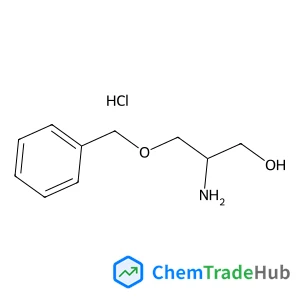
(R)-2-amino-3-(benzyloxy)propan-1-ol hydrochloride
CAS Number:
58577-95-0
Molecular Formula:
C10H16ClNO2
Recommended Suppliers






Disclaimer
This page provides academic journal information for reference and research purposes only. We are not affiliated with any journal publishers and do not handle publication submissions. For publication-related inquiries, please contact the respective journal publishers directly.
If you notice any inaccuracies in the information displayed, please contact us at support@chemtradehub.com. We will promptly review and address your concerns.