












Investigation of the effect of cucurbit[7]uril complexation on the photophysical and acid–base properties of the antimalarial drug quinine
Literature Information
Publication Date
2016-10-07
DOI
10.1039/C6CP04931A
Impact Factor
3.676
Authors
Suman Mallick, Kaushik Pal, Falguni Chandra, Apurba L. Koner
View Original
Abstract
Host–guest complexation of mono and dicationic quinine with cucurbit[7]uril (CB7), a water-soluble macrocyclic host molecule, has been investigated. Job's plot, time-resolved anisotropy as well as concentration dependent NMR titration confirm the binding of two CB7 macrocycles with one quinine molecule. The binding affinity of dicationic quinine with CB7 is one order of magnitude higher than the binding constant of mono-cationic quinine. Such preferential binding results in one unit pKa shift in the ground-state of the quinoline ring. However, using fluorescence spectroscopy we have obtained two acid-dissociation constants, one for quinoline ring nitrogen and the other for the nitrogen of the quinuclidine moiety. In the excited state, CB7 complexation causes one unit pKa shift for the quinoline ring and 1.9 unit shift for the quinuclidine moiety. Interestingly, a large enhancement of fluorescence lifetime and anisotropy of quinine at pH 2.7 and pH 9.0 upon CB7 complexation was observed due to the restriction of conformational flexibility. Moreover, at pH 3.0, a large fluorescence enhancement of quinine due to CB7 complexation was observed and it was quite significant as compared to that of quinine in 0.1 (M) HCl without CB7. We believe that this study of quinine complexation with CB7 will reduce phototoxicity, increase bioavailability and offer an alternative standard for quantum yield measurements in an amiable condition.
Related Literature
Comparison of ultrafast intense-field photodynamics in aniline and nitrobenzene: stability under amino and nitro substitution
Timothy D. Scarborough, Collin J. McAcy, Joshua Beck, Cornelis J. G. J. Uiterwaal
2019-02-26
Paper
DOI: 10.1039/C8CP07866A
Ultrafast imaging of laser-controlled non-adiabatic dynamics in NO2 from time-resolved photoelectron emission
Jesús González-Vázquez, Zdeněk Mašín, Danilo S. Brambila, Alex G. Harvey, Felipe Morales
2019-04-08
Paper
DOI: 10.1039/C9CP00649D
Tuning of the surface plasmon resonance of aluminum nanoshell near-infrared regimes
Parthasarathi, P. Senthil Kumar, R. P. Sharma
2019-04-23
Paper
DOI: 10.1039/C9CP01115C
Effect of particle packing and density on shock response in ordered arrays of Ni + Al nanoparticles
Yongnan Xiong, Xiaofan Li, Shifang Xiao, Huiqiu Deng, Bowen Huang, Wenjun Zhu, Wangyu Hu
2019-01-05
Paper
DOI: 10.1039/C8CP06497K
Theoretical study of C-arylations with aryl halides to determine the reaction mechanism, the effect of substituents and heteroatoms
Rocío Durán, Barbara Herrera
2019-04-29
Paper
DOI: 10.1039/C8CP07752E
Formation of homochiral helical nanostructures in diblock copolymers under the confinement of nanopores
Haiyan Xue, Ruifang Cao, Weihua Li
2019-03-07
Paper
DOI: 10.1039/C9CP00227H
Transition-metal solvated-electron precursors: diffuse and 3d electrons in V(NH3) 0,±6
Nuno M. S. Almeida, Filip Pawłowski, Joseph Vincent Ortiz, Evangelos Miliordos
2019-03-08
Paper
DOI: 10.1039/C8CP07420H
Imaging inelastic scattering of CO with argon: polarization dependent differential cross sections
Zhong-Fa Sun, Chandan K. Bishwakarma, Lei Song, Ad van der Avoird, Marc C. van Hemert, Arthur G. Suits, George C. McBane, David H. Parker
2019-04-05
Paper
DOI: 10.1039/C9CP00876D
In situ study of the low overpotential “dimer pathway” for electrocatalytic carbon dioxide reduction by manganese carbonyl complexes
Gaia Neri, Paul M. Donaldson, Alexander J. Cowan
2019-03-22
Paper
DOI: 10.1039/C9CP00504H
You might also like
Compound Q&A
How is Ethyl 4-chlorothieno[2,3-b]pyridine-5-carboxylate (CAS: 59713-58-5) typically synthesized?
Ethyl 4-chlorothieno[2,3-b]pyridine-5-carboxylate (CAS: 59713-58-5) can be synth...
59713-58-5Ethyl 4-chlorothieno...
Compound Q&A
What regulatory guidelines apply to 5-Methyl-1H-indole-3-carbaldehyde (CAS: 52562-50-2)?
5-Methyl-1H-indole-3-carbaldehyde (CAS: 52562-50-2) is subject to various regula...
52562-50-25-Methyl-1H-indole-3...
Compound Q&A
What are the physical and chemical properties of (1,3-Dimethyl-2,4-dioxo-1,2,3,4-tetrahydro-5-pyrimidinyl)boronic acid (CAS: 223418-73-3)?
(1,3-Dimethyl-2,4-dioxo-1,2,3,4-tetrahydro-5-pyrimidinyl)boronic acid is a white...
223418-73-3(1,3-Dimethyl-2,4-di...
Compound Q&A
How should waste containing Sulfocostunolide A (CAS: 1016983-51-9) be handled?
Waste containing Sulfocostunolide A (CAS: 1016983-51-9) should be handled with c...
1016983-51-9Sulfocostunolide A
Compound Q&A
What precautions should be taken when handling Murraxocin (CAS: 88478-44-8)?
When handling Murraxocin (CAS: 88478-44-8), ensure proper personal protective eq...
88478-44-8Murraxocin
Compound Q&A
What are the physical and chemical properties of Formvar (CAS: 63148-64-1)?
Formvar (CAS: 63148-64-1) is an alkyd resin characterized by a high molecular we...
63148-64-1Formvar(R)
Compound Q&A
Is (S)-4-benzyl-2-((benzyloxy)methyl)morpholine (CAS: 205242-66-6) safe?
(S)-4-benzyl-2-((benzyloxy)methyl)morpholine is generally safe when handled with...
205242-66-6(S)-4-benzyl-2-((ben...
Compound Q&A
What industries use Methyl 1-(5-bromo-2-pyrimidinyl)cyclopropanecarboxylate (CAS: 1447607-69-3)?
Methyl 1-(5-bromo-2-pyrimidinyl)cyclopropanecarboxylate (CAS: 1447607-69-3) is p...
1447607-69-3Methyl 1-(5-bromo-2-...
Compound Q&A
Is 2-Methyl-1-phenyl-1-propanamine hydrochloride (CAS: 24290-47-9) safe?
2-Methyl-1-phenyl-1-propanamine hydrochloride (CAS: 24290-47-9) is generally con...
24290-47-92-Methyl-1-phenyl-1-...
Compound Q&A
How is 3-(4-Bromophenyl)-2-methylpropanoic acid (CAS: 66735-01-1) typically synthesized?
3-(4-Bromophenyl)-2-methylpropanoic acid is synthesized through a multi-step pro...
66735-01-13-(4-Bromophenyl)-2-...
Source Journal
Physical Chemistry Chemical Physics

CiteScore:
5.5
Self-citation Rate:
10.3%
Articles per Year:
3036
Physical Chemistry Chemical Physics (PCCP) is an international journal co-owned by 19 physical chemistry and physics societies from around the world. This journal publishes original, cutting-edge research in physical chemistry, chemical physics and biophysical chemistry. To be suitable for publication in PCCP, articles must include significant innovation and/or insight into physical chemistry; this is the most important criterion that reviewers and Editors will judge against when evaluating submissions. The journal has a broad scope and welcomes contributions spanning experiment, theory, computation and data science. Topical coverage includes spectroscopy, dynamics, kinetics, statistical mechanics, thermodynamics, electrochemistry, catalysis, surface science, quantum mechanics, quantum computing and machine learning. Interdisciplinary research areas such as polymers and soft matter, materials, nanoscience, energy, surfaces/interfaces, and biophysical chemistry are welcomed if they demonstrate significant innovation and/or insight into physical chemistry. Joined experimental/theoretical studies are particularly appreciated when complementary and based on up-to-date approaches.
Recommended Compounds
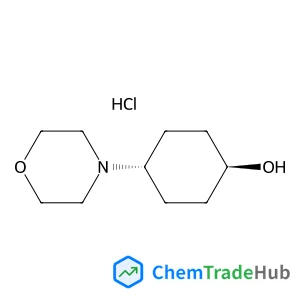
trans-4-(4-Morpholinyl)cyclohexanol hydrochloride (1:1)
CAS Number:
1588441-09-1
Molecular Formula:
C10H20ClNO2
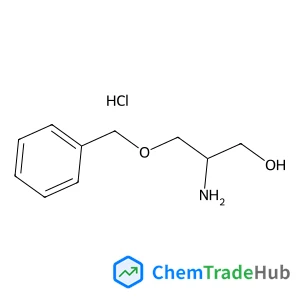
(R)-2-amino-3-(benzyloxy)propan-1-ol hydrochloride
CAS Number:
58577-95-0
Molecular Formula:
C10H16ClNO2
Recommended Suppliers





Disclaimer
This page provides academic journal information for reference and research purposes only. We are not affiliated with any journal publishers and do not handle publication submissions. For publication-related inquiries, please contact the respective journal publishers directly.
If you notice any inaccuracies in the information displayed, please contact us at support@chemtradehub.com. We will promptly review and address your concerns.