












![2-Methyl-2-propanyl 1,6-diazaspiro[3.4]octane-6-carboxylate structure](https://static.chemtradehub.com/structs/115/1158749-79-1-81ee.webp "2-Methyl-2-propanyl 1,6-diazaspiro[3.4]octane-6-carboxylate structure")
2-Methyl-2-propanyl 1,6-diazaspiro[3.4]octane-6-carboxylate
CAS Number:
1158749-79-1
Molecular Formula:
C11H20N2O2
Meiye Jia, Peifeng Su, Zhixun Luo, Jiannian Yao
Weak intermolecular interactions in phenylenediamine dimer (pdd) clusters are studied by dispersion-corrected density functional theory (DFT) calculations. Along with the optimization of geometric structures and the calculation of interaction energies, we employ molecular electrostatic potential (MEP) mapping, natural bond orbital (NBO) analysis and quantum theory of atoms in molecule (AIM) to analyze the origin and relative energetic contributions of the weak interactions in these pdd systems. It is revealed that the most stable o-phenylenediamine dimer (opdd) cluster is dominated by N–H⋯N hydrogen bonds, the p-phenylenediamine dimer (ppdd) cluster is largely stabilized by N–H⋯π and π⋯π stacking interactions, while the m-phenylenediamine dimer (mpdd) cluster is mainly held by a combination of n → π*, C–H⋯π and C–H⋯N interactions. Energy decomposition analysis (EDA) of the total interaction energies of these clusters further demonstrates that the weak intermolecular interactions are associated with electrostatic and dispersion contributions. Structural spectroscopic analysis is also addressed depicting the coexistence of multiple intermolecular interactions which give rise to the spectral variation in wavenumbers of the infrared and Raman activities. Insights into the weak interactions of pdds help us to understand the molecular mechanisms involved in biochemistry and self-assembly materials.
Hashem Shahroosvand, Fahimeh Nasouti, Ahmad Sousaraei, Ezeddin Mohajerani, Amir Khabbazi
DOI: 10.1039/C3CP51141C
Dimitrios Kaltsas, Leonidas Tsetseris
DOI: 10.1039/C3CP50944C
Hai Xiao, Xiaohong Wen, William A. Goddard III, Song Li, Gaowu Qin
DOI: 10.1039/C3CP50330E
Rongbin Zhang
DOI: 10.1039/C3CP50942G
Li Guan, Xue-Mei Zhang, Shuai Wang, Li-Hua Gan, Qing-Dao Zeng, Chen Wang
DOI: 10.1039/C3CP50371B
Sumio Kaizaki, Dai Shirotani, Hisako Sato
DOI: 10.1039/C3CP50509J
Yoshihiro Ogi, Hiroshi Kohguchi
DOI: 10.1039/C3CP51680F
Arnaud Spangenberg, Rémi Métivier, Kunihiro Shibata, Arnaud Brosseau, Johan Grand, Jean Aubard, Pei Yu, Tsuyoshi Asahi, Keitaro Nakatani
DOI: 10.1039/C3CP50770J
M. Hafeez, S. Rehman, U. Manzoor, M. A. Khan, A. S. Bhatti
DOI: 10.1039/C3CP50534K
Ethyl 4-chlorothieno[2,3-b]pyridine-5-carboxylate (CAS: 59713-58-5) can be synth...
5-Methyl-1H-indole-3-carbaldehyde (CAS: 52562-50-2) is subject to various regula...
(1,3-Dimethyl-2,4-dioxo-1,2,3,4-tetrahydro-5-pyrimidinyl)boronic acid is a white...
Waste containing Sulfocostunolide A (CAS: 1016983-51-9) should be handled with c...
When handling Murraxocin (CAS: 88478-44-8), ensure proper personal protective eq...
Formvar (CAS: 63148-64-1) is an alkyd resin characterized by a high molecular we...
(S)-4-benzyl-2-((benzyloxy)methyl)morpholine is generally safe when handled with...
Methyl 1-(5-bromo-2-pyrimidinyl)cyclopropanecarboxylate (CAS: 1447607-69-3) is p...
2-Methyl-1-phenyl-1-propanamine hydrochloride (CAS: 24290-47-9) is generally con...
3-(4-Bromophenyl)-2-methylpropanoic acid is synthesized through a multi-step pro...

Physical Chemistry Chemical Physics (PCCP) is an international journal co-owned by 19 physical chemistry and physics societies from around the world. This journal publishes original, cutting-edge research in physical chemistry, chemical physics and biophysical chemistry. To be suitable for publication in PCCP, articles must include significant innovation and/or insight into physical chemistry; this is the most important criterion that reviewers and Editors will judge against when evaluating submissions. The journal has a broad scope and welcomes contributions spanning experiment, theory, computation and data science. Topical coverage includes spectroscopy, dynamics, kinetics, statistical mechanics, thermodynamics, electrochemistry, catalysis, surface science, quantum mechanics, quantum computing and machine learning. Interdisciplinary research areas such as polymers and soft matter, materials, nanoscience, energy, surfaces/interfaces, and biophysical chemistry are welcomed if they demonstrate significant innovation and/or insight into physical chemistry. Joined experimental/theoretical studies are particularly appreciated when complementary and based on up-to-date approaches.
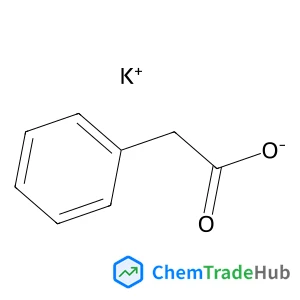
![9H-Fluoren-9-ylmethyl [(2S)-1-hydroxy-3-(1H-indol-3-yl)-2-propanyl]carbamate structure](https://static.chemtradehub.com/structs/153/153815-60-2-a67d.webp "9H-Fluoren-9-ylmethyl [(2S)-1-hydroxy-3-(1H-indol-3-yl)-2-propanyl]carbamate structure")
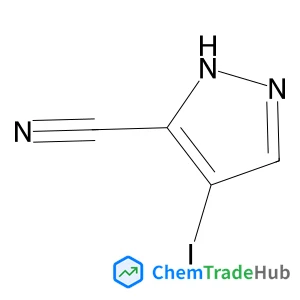
![9,9'-Spirobi[fluoren]-2-amine structure](https://static.chemtradehub.com/structs/118/118951-68-1-0d14.webp "9,9'-Spirobi[fluoren]-2-amine structure")



