












Metallic cyanoacetylides of copper, silver and gold: generation and structural characterization
Literature Information
Publication Date
2016-09-20
DOI
10.1039/C6CP04474C
Impact Factor
3.676
Authors
Carlos Cabezas, Carmen Barrientos, Antonio Largo, Jean-Claude Guillemin, J. L. Alonso
View Original
Abstract
The metallic cyanoacetylides CuCCCN, AgCCCN, and AuCCCN have been synthesized in the throat of a pulsed supersonic expansion by reaction of metal vapors, produced by laser ablation, and BrCCCN. Their pure rotational spectra in the (X1Σ+) electronic ground state were observed by Fourier transform microwave spectroscopy in the 2–10 GHz frequency region. Importantly, the rotational spectroscopy constants determined from the analysis of the rotational spectra clearly established the existence of metal–CCCN arrangements for all the mentioned cyanoacetylides. A study of the chemical bonding by means of a topological analysis of the electron density helps to understand the preference for metal–C bonding over metal–N bonding.
Related Literature
Simple and efficient synthesis of cyclic carbonates using quaternized glycine as a green catalyst
Jose Tharun, George Mathai, Roshith Roshan, Amal Cherian Kathalikkattil, Kim Bomi, Dae-Won Park
2013-04-23
Communication
DOI: 10.1039/C3CP51158H
Stability and electronic properties of ultrathin films of silicon and germanium
Dimitrios Kaltsas, Leonidas Tsetseris
2013-04-15
Paper
DOI: 10.1039/C3CP50944C
A novel correlation of vibrational circular dichroismspectra with the electronic ground state for Δ-SAPR-8-cesium-tetrakis((+)-heptafluorobutyryl-camphorato)lanthanide(iii) complexes
Sumio Kaizaki, Dai Shirotani, Hisako Sato
2013-05-07
Communication
DOI: 10.1039/C3CP50509J
Switching and charging of a ruthenium dye on Ag(111)
Nadine Hauptmann, Christian Hamann, Richard Berndt
2013-05-10
Communication
DOI: 10.1039/C3CP51023A
Visible light-induced OH radicals in Ga2O3: an EPR study
Zeev Tzitrinovich, Anat Lipovsky, Aharon Gedanken, Rachel Lubart
2013-06-11
Paper
DOI: 10.1039/C3CP00102D
Computational study of peptide bond formation in the gas phase through ion–molecule reactions
Pilar Redondo, Henar Martínez, Álvaro Cimas, Carmen Barrientos, Antonio Largo
2013-06-07
Paper
DOI: 10.1039/C3CP51535D
Separation of cobalt and nickel by solvent extraction with two mutually immiscible ionic liquids
Sil Wellens, Ben Thijs, Claudia Möller, Koen Binnemans
2013-04-12
Paper
DOI: 10.1039/C3CP50819F
Infiltrating sulfur in hierarchical architecture MWCNT@meso C core–shell nanocomposites for lithium–sulfur batteries
Yingchao Yu, Weidong Zhou, Hao Chen, Francis J. DiSalvo, Héctor D. Abruña
2013-04-12
Communication
DOI: 10.1039/C3CP51551F
Dependence on the structure and surface polarity of ZnS photocatalytic activities of water splitting: first-principles calculations
Hai Xiao, Xiaohong Wen, William A. Goddard III, Song Li, Gaowu Qin
2013-04-22
Paper
DOI: 10.1039/C3CP50330E
The effect of secondary structures on the NLO properties of single chain oligopeptides: a comparison between β-strand and α-helix polyglycines
Andrea Alparone
2013-06-07
Paper
DOI: 10.1039/C3CP51496J
You might also like
Compound Q&A
How is Ethyl 4-chlorothieno[2,3-b]pyridine-5-carboxylate (CAS: 59713-58-5) typically synthesized?
Ethyl 4-chlorothieno[2,3-b]pyridine-5-carboxylate (CAS: 59713-58-5) can be synth...
59713-58-5Ethyl 4-chlorothieno...
Compound Q&A
What regulatory guidelines apply to 5-Methyl-1H-indole-3-carbaldehyde (CAS: 52562-50-2)?
5-Methyl-1H-indole-3-carbaldehyde (CAS: 52562-50-2) is subject to various regula...
52562-50-25-Methyl-1H-indole-3...
Compound Q&A
What are the physical and chemical properties of (1,3-Dimethyl-2,4-dioxo-1,2,3,4-tetrahydro-5-pyrimidinyl)boronic acid (CAS: 223418-73-3)?
(1,3-Dimethyl-2,4-dioxo-1,2,3,4-tetrahydro-5-pyrimidinyl)boronic acid is a white...
223418-73-3(1,3-Dimethyl-2,4-di...
Compound Q&A
How should waste containing Sulfocostunolide A (CAS: 1016983-51-9) be handled?
Waste containing Sulfocostunolide A (CAS: 1016983-51-9) should be handled with c...
1016983-51-9Sulfocostunolide A
Compound Q&A
What precautions should be taken when handling Murraxocin (CAS: 88478-44-8)?
When handling Murraxocin (CAS: 88478-44-8), ensure proper personal protective eq...
88478-44-8Murraxocin
Compound Q&A
What are the physical and chemical properties of Formvar (CAS: 63148-64-1)?
Formvar (CAS: 63148-64-1) is an alkyd resin characterized by a high molecular we...
63148-64-1Formvar(R)
Compound Q&A
Is (S)-4-benzyl-2-((benzyloxy)methyl)morpholine (CAS: 205242-66-6) safe?
(S)-4-benzyl-2-((benzyloxy)methyl)morpholine is generally safe when handled with...
205242-66-6(S)-4-benzyl-2-((ben...
Compound Q&A
What industries use Methyl 1-(5-bromo-2-pyrimidinyl)cyclopropanecarboxylate (CAS: 1447607-69-3)?
Methyl 1-(5-bromo-2-pyrimidinyl)cyclopropanecarboxylate (CAS: 1447607-69-3) is p...
1447607-69-3Methyl 1-(5-bromo-2-...
Compound Q&A
Is 2-Methyl-1-phenyl-1-propanamine hydrochloride (CAS: 24290-47-9) safe?
2-Methyl-1-phenyl-1-propanamine hydrochloride (CAS: 24290-47-9) is generally con...
24290-47-92-Methyl-1-phenyl-1-...
Compound Q&A
How is 3-(4-Bromophenyl)-2-methylpropanoic acid (CAS: 66735-01-1) typically synthesized?
3-(4-Bromophenyl)-2-methylpropanoic acid is synthesized through a multi-step pro...
66735-01-13-(4-Bromophenyl)-2-...
Source Journal
Physical Chemistry Chemical Physics

CiteScore:
5.5
Self-citation Rate:
10.3%
Articles per Year:
3036
Physical Chemistry Chemical Physics (PCCP) is an international journal co-owned by 19 physical chemistry and physics societies from around the world. This journal publishes original, cutting-edge research in physical chemistry, chemical physics and biophysical chemistry. To be suitable for publication in PCCP, articles must include significant innovation and/or insight into physical chemistry; this is the most important criterion that reviewers and Editors will judge against when evaluating submissions. The journal has a broad scope and welcomes contributions spanning experiment, theory, computation and data science. Topical coverage includes spectroscopy, dynamics, kinetics, statistical mechanics, thermodynamics, electrochemistry, catalysis, surface science, quantum mechanics, quantum computing and machine learning. Interdisciplinary research areas such as polymers and soft matter, materials, nanoscience, energy, surfaces/interfaces, and biophysical chemistry are welcomed if they demonstrate significant innovation and/or insight into physical chemistry. Joined experimental/theoretical studies are particularly appreciated when complementary and based on up-to-date approaches.
Recommended Compounds
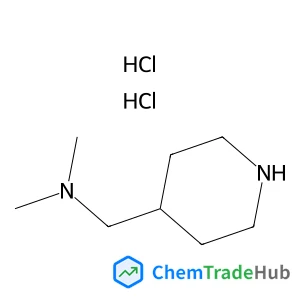
N,N-dimethyl(piperidin-4-yl)methanamine hydrochloride
CAS Number:
172281-72-0
Molecular Formula:
C8H20Cl2N2
![9,9'-Spirobi[fluoren]-2-amine structure](https://static.chemtradehub.com/structs/118/118951-68-1-0d14.webp "9,9'-Spirobi[fluoren]-2-amine structure")
Recommended Suppliers




Disclaimer
This page provides academic journal information for reference and research purposes only. We are not affiliated with any journal publishers and do not handle publication submissions. For publication-related inquiries, please contact the respective journal publishers directly.
If you notice any inaccuracies in the information displayed, please contact us at support@chemtradehub.com. We will promptly review and address your concerns.