












Exploring the mechanism of F282L mutation-caused constitutive activity of GPCR by a computational study
Literature Information
Publication Date
2016-09-16
DOI
10.1039/C6CP03710K
Impact Factor
3.676
Authors
Nan Gao, Tao Liang, Yuan Yuan, Xiuchan Xiao, Yihuan Zhao, Yanzhi Guo, Menglong Li, Xuemei Pu
View Original
Abstract
G-protein-coupled receptors (GPCRs) are important drug targets and generally activated by ligands. However, some experiments found that GPCRs also give rise to constitutive activity through some mutations (viz., CAM), which are usually associated with different kinds of diseases. However, the mechanisms of CAMs and their roles in interactions with drug-ligands are unclear in experiments. Herein, we used microsecond molecular dynamics simulations to study the effect of one important F282L mutation on β2AR in order to address the questions above. With the aid of principle component and correlation analysis, our results revealed that the F282L mutation could increase the instability of the overall structure, increase the dramatic fluctuations of NPxxY and extracellular loops, and decrease restraint of the helices through weakening interhelical H-bonding and correlations between residues, which could partly contribute to the constitutive activity reported by the experiments. The observations from the protein structure network (PSN) analysis indicate that the mutant exhibits less information flow than the wild β2AR and weakens the role of TM5 and TM6 in the signal transmission, but it enhances the impact of TM3 on the orthosteric pathway and TM4 on the allosteric one. In addition, the results from the virtual screening reveal that the mutant prefers to select agonists rather than antagonists, similar to the active state but opposite of the inactive state, further confirming that the F282L mutation advances the activation of β2AR. Our observations provide valuable information for understanding the mechanism of the mutation-caused constitutive activity of GPCR and related drug-design.
Related Literature
The effect of secondary structures on the NLO properties of single chain oligopeptides: a comparison between β-strand and α-helix polyglycines
Andrea Alparone
2013-06-07
Paper
DOI: 10.1039/C3CP51496J
Comparative investigation of the performances of hematite nanoplates and nanograins in lithium-ion batteries
Fengqi Lu, Qili Wu, Xianfeng Yang, Liqiao Chen, Junjie Cai, Chaolun Liang, Mingmei Wu, Peikang Shen
2013-04-26
Paper
DOI: 10.1039/C3CP50619C
High performance enzyme fuel cells using a genetically expressed FAD-dependent glucose dehydrogenase α-subunit of Burkholderia cepacia immobilized in a carbon nanotubeelectrode for low glucose conditions
Deby Fapyane, Soo-Jin Lee, Seo-Hee Kang, Du-Hyun Lim, Kwon-Koo Cho, Tae-hyun Nam, Jae-Pyoung Ahn, Jou-Hyeon Ahn, Seon-Won Kim, In Seop Chang
2013-05-07
Communication
DOI: 10.1039/C3CP51864G
Structures of hydrogen bond networks formed by a few tens of methanol molecules in the gas phase: size-selective infrared spectroscopy of neutral and protonated methanol clusters
Tomohiro Kobayashi, Ryunosuke Shishido, Kenta Mizuse, Asuka Fujii, Jer-Lai Kuo
2013-04-12
Paper
DOI: 10.1039/C3CP50985K
Size-dependent Auger spectra and two-hole Coulomb interaction of small supported Cu-clusters
M. Al-Hada
2013-04-15
Paper
DOI: 10.1039/C3CP00109A
A versatile electrochemical cell for the preparation and characterisation of model electrocatalytic systems
Aliaksandr S. Bandarenka
2013-06-05
Paper
DOI: 10.1039/C3CP51998H
Deuterium isotope effects in the polyatomic reaction of O(1D2) + CH4 → OH + CH3
Yoshihiro Ogi, Hiroshi Kohguchi
2013-07-01
Paper
DOI: 10.1039/C3CP51680F
Catalyst driven optical properties of the self – assembled ZnS nanostructures
M. Hafeez, S. Rehman, U. Manzoor, M. A. Khan, A. S. Bhatti
2013-04-15
Paper
DOI: 10.1039/C3CP50534K
Photoswitchable interactions between photochromic organic diarylethene and surface plasmon resonance of gold nanoparticles in hybrid thin films
Arnaud Spangenberg, Rémi Métivier, Kunihiro Shibata, Arnaud Brosseau, Johan Grand, Jean Aubard, Pei Yu, Tsuyoshi Asahi, Keitaro Nakatani
2013-04-15
Paper
DOI: 10.1039/C3CP50770J
STM tip-assisted single molecule chemistry
Aidi Zhao, Shijing Tan, Bin Li, Bing Wang, Jinlong Yang, J. G. Hou
2013-05-20
Perspective
DOI: 10.1039/C3CP51446C
You might also like
Compound Q&A
How is Ethyl 4-chlorothieno[2,3-b]pyridine-5-carboxylate (CAS: 59713-58-5) typically synthesized?
Ethyl 4-chlorothieno[2,3-b]pyridine-5-carboxylate (CAS: 59713-58-5) can be synth...
59713-58-5Ethyl 4-chlorothieno...
Compound Q&A
What regulatory guidelines apply to 5-Methyl-1H-indole-3-carbaldehyde (CAS: 52562-50-2)?
5-Methyl-1H-indole-3-carbaldehyde (CAS: 52562-50-2) is subject to various regula...
52562-50-25-Methyl-1H-indole-3...
Compound Q&A
What are the physical and chemical properties of (1,3-Dimethyl-2,4-dioxo-1,2,3,4-tetrahydro-5-pyrimidinyl)boronic acid (CAS: 223418-73-3)?
(1,3-Dimethyl-2,4-dioxo-1,2,3,4-tetrahydro-5-pyrimidinyl)boronic acid is a white...
223418-73-3(1,3-Dimethyl-2,4-di...
Compound Q&A
How should waste containing Sulfocostunolide A (CAS: 1016983-51-9) be handled?
Waste containing Sulfocostunolide A (CAS: 1016983-51-9) should be handled with c...
1016983-51-9Sulfocostunolide A
Compound Q&A
What precautions should be taken when handling Murraxocin (CAS: 88478-44-8)?
When handling Murraxocin (CAS: 88478-44-8), ensure proper personal protective eq...
88478-44-8Murraxocin
Compound Q&A
What are the physical and chemical properties of Formvar (CAS: 63148-64-1)?
Formvar (CAS: 63148-64-1) is an alkyd resin characterized by a high molecular we...
63148-64-1Formvar(R)
Compound Q&A
Is (S)-4-benzyl-2-((benzyloxy)methyl)morpholine (CAS: 205242-66-6) safe?
(S)-4-benzyl-2-((benzyloxy)methyl)morpholine is generally safe when handled with...
205242-66-6(S)-4-benzyl-2-((ben...
Compound Q&A
What industries use Methyl 1-(5-bromo-2-pyrimidinyl)cyclopropanecarboxylate (CAS: 1447607-69-3)?
Methyl 1-(5-bromo-2-pyrimidinyl)cyclopropanecarboxylate (CAS: 1447607-69-3) is p...
1447607-69-3Methyl 1-(5-bromo-2-...
Compound Q&A
Is 2-Methyl-1-phenyl-1-propanamine hydrochloride (CAS: 24290-47-9) safe?
2-Methyl-1-phenyl-1-propanamine hydrochloride (CAS: 24290-47-9) is generally con...
24290-47-92-Methyl-1-phenyl-1-...
Compound Q&A
How is 3-(4-Bromophenyl)-2-methylpropanoic acid (CAS: 66735-01-1) typically synthesized?
3-(4-Bromophenyl)-2-methylpropanoic acid is synthesized through a multi-step pro...
66735-01-13-(4-Bromophenyl)-2-...
Source Journal
Physical Chemistry Chemical Physics

CiteScore:
5.5
Self-citation Rate:
10.3%
Articles per Year:
3036
Physical Chemistry Chemical Physics (PCCP) is an international journal co-owned by 19 physical chemistry and physics societies from around the world. This journal publishes original, cutting-edge research in physical chemistry, chemical physics and biophysical chemistry. To be suitable for publication in PCCP, articles must include significant innovation and/or insight into physical chemistry; this is the most important criterion that reviewers and Editors will judge against when evaluating submissions. The journal has a broad scope and welcomes contributions spanning experiment, theory, computation and data science. Topical coverage includes spectroscopy, dynamics, kinetics, statistical mechanics, thermodynamics, electrochemistry, catalysis, surface science, quantum mechanics, quantum computing and machine learning. Interdisciplinary research areas such as polymers and soft matter, materials, nanoscience, energy, surfaces/interfaces, and biophysical chemistry are welcomed if they demonstrate significant innovation and/or insight into physical chemistry. Joined experimental/theoretical studies are particularly appreciated when complementary and based on up-to-date approaches.
Recommended Compounds
![9H-Fluoren-9-ylmethyl [(2S)-1-hydroxy-3-(1H-indol-3-yl)-2-propanyl]carbamate structure](https://static.chemtradehub.com/structs/153/153815-60-2-a67d.webp "9H-Fluoren-9-ylmethyl [(2S)-1-hydroxy-3-(1H-indol-3-yl)-2-propanyl]carbamate structure")
9H-Fluoren-9-ylmethyl [(2S)-1-hydroxy-3-(1H-indol-3-yl)-2-propanyl]carbamate
CAS Number:
153815-60-2
Molecular Formula:
C26H24N2O3
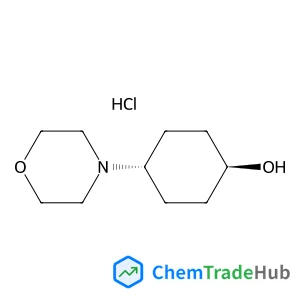
trans-4-(4-Morpholinyl)cyclohexanol hydrochloride (1:1)
CAS Number:
1588441-09-1
Molecular Formula:
C10H20ClNO2

Recommended Suppliers






Disclaimer
This page provides academic journal information for reference and research purposes only. We are not affiliated with any journal publishers and do not handle publication submissions. For publication-related inquiries, please contact the respective journal publishers directly.
If you notice any inaccuracies in the information displayed, please contact us at support@chemtradehub.com. We will promptly review and address your concerns.