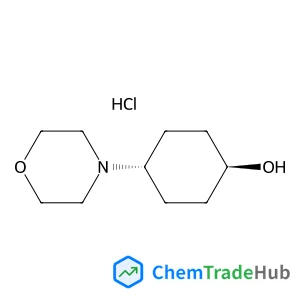
trans-4-(4-Morpholinyl)cyclohexanol hydrochloride (1:1)
CAS Number:
1588441-09-1
Molecular Formula:
C10H20ClNO2
Bei Cheng
Constructing a TiO2 based heterostructure is a very effective strategy for enhancing photocatalytic performance. The details of the electronic structure, interfacial interaction, and photogenerated carrier separation are important for explaining the photocatalytic properties of a heterostructure. Herein, the density of states, charge distribution, and the band offset of the monolayer g-C3N4/TiO2 heterojunction are systematically investigated through the hybrid DFT method. Results indicated that the valence band offset and the conduction band offset of the g-C3N4/TiO2 heterostructure were 0.40 and 0.18 eV, respectively. Interfacial interaction made the TiO2 surface with negative charge, whereas the g-C3N4 surface with positive charge, which led to the formation of a built-in electric field at the interface. Under illumination, the built-in electric field accelerates the transfer of photoexcited electrons in the CB of TiO2 into the VB of g-C3N4, thus resulting in the photoexcited electrons and holes naturally accumulating in the CB of g-C3N4 and the VB of TiO2, respectively. The photoexcited electrons and holes gathering in different surface regions efficiently prolonged the lifetime of photogenerated carriers. Meanwhile, electrons in the CB of g-C3N4 and holes in the VB of TiO2 had a stronger redox ability. Therefore, g-C3N4/TiO2 is a direct Z-scheme photocatalyst, and the Z-scheme heterostructure mechanism can well explain the improved photocatalytic activity of the g-C3N4/TiO2 heterostructure.
De-Gong Wang, Li-Gang Niu, Bin-Bin Xu, Jun-Feng Song, Qi-Dai Chen, Hong-Bo Sun
DOI: 10.1039/C3CP44051F
Hashem Shahroosvand, Fahimeh Nasouti, Ahmad Sousaraei, Ezeddin Mohajerani, Amir Khabbazi
DOI: 10.1039/C3CP51141C
Sil Wellens, Ben Thijs, Claudia Möller, Koen Binnemans
DOI: 10.1039/C3CP50819F
Andrea Alparone
DOI: 10.1039/C3CP51496J
Laura Orian, Stefano Scuppa, Saverio Santi, Moreno Meneghetti
DOI: 10.1039/C3CP51257F
Ranjani Muralidharan, Michael McIntosh, Xiao Li
DOI: 10.1039/C3CP51128F
Pablo Sebastián Bonanni, Diego Massazza, Juan Pablo Busalmen
DOI: 10.1039/C3CP50411E
Aruna Ravi, Marvin A. Malone, Antriksh Luthra, David Lioi, James V. Coe
DOI: 10.1039/C3CP51422F
Paul E. Shaw, Hamish Cavaye, Simon S. Y. Chen, Ian R. Gentle, Paul L. Burn
DOI: 10.1039/C3CP51372F
Ethyl 4-chlorothieno[2,3-b]pyridine-5-carboxylate (CAS: 59713-58-5) can be synth...
5-Methyl-1H-indole-3-carbaldehyde (CAS: 52562-50-2) is subject to various regula...
(1,3-Dimethyl-2,4-dioxo-1,2,3,4-tetrahydro-5-pyrimidinyl)boronic acid is a white...
Waste containing Sulfocostunolide A (CAS: 1016983-51-9) should be handled with c...
When handling Murraxocin (CAS: 88478-44-8), ensure proper personal protective eq...
Formvar (CAS: 63148-64-1) is an alkyd resin characterized by a high molecular we...
(S)-4-benzyl-2-((benzyloxy)methyl)morpholine is generally safe when handled with...
Methyl 1-(5-bromo-2-pyrimidinyl)cyclopropanecarboxylate (CAS: 1447607-69-3) is p...
2-Methyl-1-phenyl-1-propanamine hydrochloride (CAS: 24290-47-9) is generally con...
3-(4-Bromophenyl)-2-methylpropanoic acid is synthesized through a multi-step pro...

Physical Chemistry Chemical Physics (PCCP) is an international journal co-owned by 19 physical chemistry and physics societies from around the world. This journal publishes original, cutting-edge research in physical chemistry, chemical physics and biophysical chemistry. To be suitable for publication in PCCP, articles must include significant innovation and/or insight into physical chemistry; this is the most important criterion that reviewers and Editors will judge against when evaluating submissions. The journal has a broad scope and welcomes contributions spanning experiment, theory, computation and data science. Topical coverage includes spectroscopy, dynamics, kinetics, statistical mechanics, thermodynamics, electrochemistry, catalysis, surface science, quantum mechanics, quantum computing and machine learning. Interdisciplinary research areas such as polymers and soft matter, materials, nanoscience, energy, surfaces/interfaces, and biophysical chemistry are welcomed if they demonstrate significant innovation and/or insight into physical chemistry. Joined experimental/theoretical studies are particularly appreciated when complementary and based on up-to-date approaches.