












Facilitated search of proteins on DNA: correlations are important
Literature Information
Publication Date
2010-02-05
DOI
10.1039/B921303A
Impact Factor
3.676
Authors
Rahul K. Das, Anatoly B. Kolomeisky
View Original
Abstract
A starting point of many biological processes is protein binding to specific regions on DNA. Although typical concentrations of DNA-binding proteins are low, and target sites are typically buried among huge number of non-specific sites, the search process is frequently achieved at a remarkably fast rate. For some proteins it has been confirmed that association rates might be even larger than the maximal allowed three-dimensional diffusion rates. The current theoretical view of this phenomenon is based on the idea of lowering dimensionality, i.e., the overall search process is viewed as a combination of uncorrelated three-dimensional excursions in the solution and one-dimensional hoppings on DNA. However, some predictions of this theoretical picture contradict recent single-molecule measurements of protein diffusion processes. An alternative theoretical approach points out the importance of correlations during the search process that appear due to non-specific interactions between protein and DNA molecules. To test different theoretical ideas we performed extensive lattice Monte Carlo computer simulations of the facilitated diffusion. Our results revealed that correlations are important, and the acceleration in the search could only be achieved at some intermediate non-specific binding energies and protein concentrations. Physico-chemical aspects and the origins of these correlations are discussed.
Related Literature
Triplet state promoted reaction of SO2 with H2O by competition between proton coupled electron transfer (pcet) and hydrogen atom transfer (hat) processes
Josep M. Anglada, Marilia T. C. Martins-Costa, Joseph S. Francisco, Manuel F. Ruiz-López
2019-04-23
Paper
DOI: 10.1039/C9CP01105F
Efficient as-cast semi-transparent organic solar cells with efficiency over 9% and a high average visible transmittance of 27.6%
Wenyan Su, Qunping Fan, Xia Guo, Jingnan Wu, Maojie Zhang
2019-04-29
Paper
DOI: 10.1039/C9CP01101C
Hydration-mediated stiffening of collective membrane dynamics by cholesterol
Christopher Päslack, Matthias Heyden, Lars V. Schäfer
2019-04-30
Paper
DOI: 10.1039/C9CP01431D
Stanene on a SiC(0001) surface: a candidate for realizing quantum anomalous Hall effect
2019-04-30
Paper
DOI: 10.1039/C9CP01509D
In situ quasi-elastic neutron scattering study on the water dynamics and reaction mechanisms in alkali-activated slags
Yongqiang Cheng, Luke L. Daemen
2019-04-30
Paper
DOI: 10.1039/C9CP00889F
Excited-state dynamics of heteroleptic copper(i) photosensitizers and their electrochemically reduced forms containing a dipyridophenazine moiety – a spectroelectrochemical transient absorption study
Linda Zedler, Michael Karnahl
2019-05-07
Paper
DOI: 10.1039/C9CP00412B
Predicting aromatic exciplex fluorescence emission energies
Rachel A. Krueger, Guillaume Blanquart
2019-05-03
Paper
DOI: 10.1039/C9CP02027F
Entangling non planar molecules via inversion doublet transition with negligible spontaneous emission
Isabel Gonzalo, Miguel A. Antón
2019-04-25
Paper
DOI: 10.1039/C8CP07764A
Rigidified and expanded N-annulated perylenes as efficient donors in organic sensitizers for application in solar cells
Ping Li, Zhixiang Wang, Houyu Zhang
2019-04-23
Paper
DOI: 10.1039/C9CP00779B
Improved phase stability of the CsPbI3 perovskite via organic cation doping
Jiajia Zhang, Lei Yang, Yu Zhong, Hequn Hao, Mei Yang, Renyong Liu
2019-05-03
Paper
DOI: 10.1039/C9CP01211G
You might also like
Compound Q&A
What precautions should be taken when handling 2-Chloro-1,2-bis(4-methylphenyl)ethanone (CAS: 71193-32-3)?
When handling 2-Chloro-1,2-bis(4-methylphenyl)ethanone (CAS: 71193-32-3), it is ...
71193-32-32-Chloro-1,2-bis(4-m...
Compound Q&A
What industries use 4-Ethoxy-3-(5-methyl-4-oxo-7-propyl-1,4-dihydroimidazo[5,1-f][1,2,4]triazin-2-yl)benzenesulfonyl chloride (CAS: 224789-26-8)?
4-Ethoxy-3-(5-methyl-4-oxo-7-propyl-1,4-dihydroimidazo[5,1-f][1,2,4]triazin-2-yl...
224789-26-84-Ethoxy-3-(5-methyl...
Compound Q&A
How should Methyl 3-Oxo-4-Androsten-17-Carboxylate (CAS: 2681-55-2) be stored?
Methyl 3-Oxo-4-Androsten-17-Carboxylate (CAS: 2681-55-2) should be stored in a c...
2681-55-2Methyl 3-Oxo-4-Andro...
Compound Q&A
What are the main uses of (R)-3-Amino-4-(3-hexylphenylamino)-4-oxobutylphosphonic acid (CAS: 909725-61-7)?
(R)-3-Amino-4-(3-hexylphenylamino)-4-oxobutylphosphonic acid is primarily used i...
909725-61-7(R)-3-Amino-4-(3-hex...
Compound Q&A
What regulatory guidelines apply to 2-Methyl-2-propanyl 3-amino-3-carbamoyl-1-azetidinecarboxylate (CAS: 1254120-14-3)?
2-Methyl-2-propanyl 3-amino-3-carbamoyl-1-azetidinecarboxylate (CAS: 1254120-14-...
1254120-14-32-Methyl-2-propanyl ...
Compound Q&A
Are there alternatives to (E)-4-(tert-Butoxy)-4-oxobut-2-enoic acid (CAS: 135355-96-3) in synthesis?
There are alternative reagents that can be used in synthesis instead of (E)-4-(t...
135355-96-3(E)-4-(tert-Butoxy)-...
Compound Q&A
What are the physical and chemical properties of [2-(3-Chlorophenyl)-1,3-thiazol-4-yl]methanol (CAS: 121202-20-8)?
[2-(3-Chlorophenyl)-1,3-thiazol-4-yl]methanol (CAS: 121202-20-8) is a crystallin...
121202-20-8[2-(3-Chlorophenyl)-...
Compound Q&A
What is the market or research trend for Methyl (2S)-[(4S)-2,2-dimethyl-1,3-dioxolan-4-yl]{[(4-methylphenyl)sulfonyl]oxy}acetate (CAS: 166249-17-8)?
The market and research trends for Methyl (2S)-[(4S)-2,2-dimethyl-1,3-dioxolan-4...
166249-17-8Methyl (2S)-[(4S)-2,...
Compound Q&A
What is the market or research trend for 1-Bromo-2-isocyanatoethane (CAS: 42865-19-0)?
The market for 1-Bromo-2-isocyanatoethane (CAS: 42865-19-0) is driven by its use...
42865-19-01-Bromo-2-isocyanato...
Compound Q&A
What are the main uses of 4-Nitro-D-phenylalanine hydrochloride (CAS: 147065-06-3)?
4-Nitro-D-phenylalanine hydrochloride (CAS: 147065-06-3) is primarily used in re...
147065-06-34-Nitro-D-phenylalan...
Source Journal
Physical Chemistry Chemical Physics

CiteScore:
5.5
Self-citation Rate:
10.3%
Articles per Year:
3036
Physical Chemistry Chemical Physics (PCCP) is an international journal co-owned by 19 physical chemistry and physics societies from around the world. This journal publishes original, cutting-edge research in physical chemistry, chemical physics and biophysical chemistry. To be suitable for publication in PCCP, articles must include significant innovation and/or insight into physical chemistry; this is the most important criterion that reviewers and Editors will judge against when evaluating submissions. The journal has a broad scope and welcomes contributions spanning experiment, theory, computation and data science. Topical coverage includes spectroscopy, dynamics, kinetics, statistical mechanics, thermodynamics, electrochemistry, catalysis, surface science, quantum mechanics, quantum computing and machine learning. Interdisciplinary research areas such as polymers and soft matter, materials, nanoscience, energy, surfaces/interfaces, and biophysical chemistry are welcomed if they demonstrate significant innovation and/or insight into physical chemistry. Joined experimental/theoretical studies are particularly appreciated when complementary and based on up-to-date approaches.
Recommended Compounds

2-Chloro-4-nitrophenyl 6-deoxy-alpha-L-galactopyranoside
CAS Number:
157843-41-9
Molecular Formula:
C12H14ClNO7
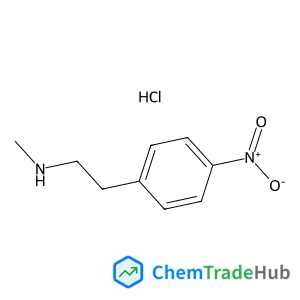
N-Methyl-2-(4-nitrophenyl)ethanamine hydrochloride (1:1)
CAS Number:
166943-39-1
Molecular Formula:
C9H13ClN2O2

5,7-Dihydroxy-2-(4-hydroxyphenyl)-4-oxo-4H-chromen-3-yl 2-O-(6-deoxy-alpha-L-mannopyranosyl)-beta-D-glucopyranoside
CAS Number:
32602-81-6
Molecular Formula:
C27H30O15
Recommended Suppliers



Disclaimer
This page provides academic journal information for reference and research purposes only. We are not affiliated with any journal publishers and do not handle publication submissions. For publication-related inquiries, please contact the respective journal publishers directly.
If you notice any inaccuracies in the information displayed, please contact us at support@chemtradehub.com. We will promptly review and address your concerns.