













Triplet state promoted reaction of SO2 with H2O by competition between proton coupled electron transfer (pcet) and hydrogen atom transfer (hat) processes
Literature Information
Publication Date
2019-04-23
DOI
10.1039/C9CP01105F
Impact Factor
3.676
Authors
Josep M. Anglada, Marilia T. C. Martins-Costa, Joseph S. Francisco, Manuel F. Ruiz-López
View Original
Abstract
The SO2 + H2O reaction is proposed to be the starting process for the oxidation of sulfur dioxide to sulfate in liquid water, although the thermal reaction displays a high activation barrier. Recent studies have suggested that the reaction can be promoted by light absorption in the near UV. We report ab initio calculations showing that the SO2 excited triplet state is unstable in water, as it immediately reacts with H2O through a water-assisted proton coupled electron transfer mechanism forming OH and HOSO radicals. The work provides new insights for a general class of excited-state promoted reactions of related YXY compounds with water, where Y is a chalcogen atom and X is either an atom or a functional group, which opens up interesting chemical perspectives in technological applications of photoinduced H-transfer.
Related Literature
Dynamic nitroxyl formation in the ammonia oxidation on platinum via Eley–Rideal reactions
Yunxi Yao, Konstantinos P. Giapis
2016-10-14
Paper
DOI: 10.1039/C6CP06533C
Experimental and theoretical studies on methylene blue and methyl orange sorption by wheat straw-derived biochar with a large surface area
Peifang Wang, Chuangfei Wu, Yong Guo, Chao Wang
2016-10-10
Paper
DOI: 10.1039/C6CP04625H
Reaction dynamics inside superfluid helium nanodroplets: the formation of the Ne2 molecule from Ne + Ne@(4He)N
Arnau Vilà, Miguel González
2016-10-10
Paper
DOI: 10.1039/C6CP03942A
In situ growth of sulfide/g-C3N4 nano-heterostructures with an adjusted band gap toward enhanced visible photocatalysis
Yumeng Liu, Xiao Zhang, Junpeng Wang, Ping Yang
2016-10-19
Paper
DOI: 10.1039/C6CP06371C
Dark states enhance the photocell power via phononic dissipation
Yiteng Zhang, Aaron Wirthwein, Fahhad H. Alharbi, Gregory S. Engel
2016-11-07
Paper
DOI: 10.1039/C6CP06098F
The temperature dependence of the Hofmeister series: thermodynamic fingerprints of cosolute–protein interactions
Michael Senske, Diana Constantinescu-Aruxandei, Martina Havenith, Christian Herrmann, Hermann Weingärtner, Simon Ebbinghaus
2016-08-22
Paper
DOI: 10.1039/C6CP05080H
Chemical vapor deposition-prepared sub-nanometer Zr clusters on Pd surfaces: promotion of methane dry reforming
Xue-Rong Shi, Norbert Köpfle, Dmitry Y. Zemlyanov, Axel Knop-Gericke, Michael Hävecker, Bernhard Klötzer, Simon Penner
2016-11-08
Paper
DOI: 10.1039/C6CP07197J
Carbonate based ionic liquid synthesis (CBILS®): thermodynamic analysis
Roland S. Kalb, Elena N. Stepurko
2016-10-21
Paper
DOI: 10.1039/C6CP06594E
You might also like
Compound Q&A
What precautions should be taken when handling 2-Chloro-1,2-bis(4-methylphenyl)ethanone (CAS: 71193-32-3)?
When handling 2-Chloro-1,2-bis(4-methylphenyl)ethanone (CAS: 71193-32-3), it is ...
71193-32-32-Chloro-1,2-bis(4-m...
Compound Q&A
What industries use 4-Ethoxy-3-(5-methyl-4-oxo-7-propyl-1,4-dihydroimidazo[5,1-f][1,2,4]triazin-2-yl)benzenesulfonyl chloride (CAS: 224789-26-8)?
4-Ethoxy-3-(5-methyl-4-oxo-7-propyl-1,4-dihydroimidazo[5,1-f][1,2,4]triazin-2-yl...
224789-26-84-Ethoxy-3-(5-methyl...
Compound Q&A
How should Methyl 3-Oxo-4-Androsten-17-Carboxylate (CAS: 2681-55-2) be stored?
Methyl 3-Oxo-4-Androsten-17-Carboxylate (CAS: 2681-55-2) should be stored in a c...
2681-55-2Methyl 3-Oxo-4-Andro...
Compound Q&A
What are the main uses of (R)-3-Amino-4-(3-hexylphenylamino)-4-oxobutylphosphonic acid (CAS: 909725-61-7)?
(R)-3-Amino-4-(3-hexylphenylamino)-4-oxobutylphosphonic acid is primarily used i...
909725-61-7(R)-3-Amino-4-(3-hex...
Compound Q&A
What regulatory guidelines apply to 2-Methyl-2-propanyl 3-amino-3-carbamoyl-1-azetidinecarboxylate (CAS: 1254120-14-3)?
2-Methyl-2-propanyl 3-amino-3-carbamoyl-1-azetidinecarboxylate (CAS: 1254120-14-...
1254120-14-32-Methyl-2-propanyl ...
Compound Q&A
Are there alternatives to (E)-4-(tert-Butoxy)-4-oxobut-2-enoic acid (CAS: 135355-96-3) in synthesis?
There are alternative reagents that can be used in synthesis instead of (E)-4-(t...
135355-96-3(E)-4-(tert-Butoxy)-...
Compound Q&A
What are the physical and chemical properties of [2-(3-Chlorophenyl)-1,3-thiazol-4-yl]methanol (CAS: 121202-20-8)?
[2-(3-Chlorophenyl)-1,3-thiazol-4-yl]methanol (CAS: 121202-20-8) is a crystallin...
121202-20-8[2-(3-Chlorophenyl)-...
Compound Q&A
What is the market or research trend for Methyl (2S)-[(4S)-2,2-dimethyl-1,3-dioxolan-4-yl]{[(4-methylphenyl)sulfonyl]oxy}acetate (CAS: 166249-17-8)?
The market and research trends for Methyl (2S)-[(4S)-2,2-dimethyl-1,3-dioxolan-4...
166249-17-8Methyl (2S)-[(4S)-2,...
Compound Q&A
What is the market or research trend for 1-Bromo-2-isocyanatoethane (CAS: 42865-19-0)?
The market for 1-Bromo-2-isocyanatoethane (CAS: 42865-19-0) is driven by its use...
42865-19-01-Bromo-2-isocyanato...
Compound Q&A
What are the main uses of 4-Nitro-D-phenylalanine hydrochloride (CAS: 147065-06-3)?
4-Nitro-D-phenylalanine hydrochloride (CAS: 147065-06-3) is primarily used in re...
147065-06-34-Nitro-D-phenylalan...
Source Journal
Physical Chemistry Chemical Physics

CiteScore:
5.5
Self-citation Rate:
10.3%
Articles per Year:
3036
Physical Chemistry Chemical Physics (PCCP) is an international journal co-owned by 19 physical chemistry and physics societies from around the world. This journal publishes original, cutting-edge research in physical chemistry, chemical physics and biophysical chemistry. To be suitable for publication in PCCP, articles must include significant innovation and/or insight into physical chemistry; this is the most important criterion that reviewers and Editors will judge against when evaluating submissions. The journal has a broad scope and welcomes contributions spanning experiment, theory, computation and data science. Topical coverage includes spectroscopy, dynamics, kinetics, statistical mechanics, thermodynamics, electrochemistry, catalysis, surface science, quantum mechanics, quantum computing and machine learning. Interdisciplinary research areas such as polymers and soft matter, materials, nanoscience, energy, surfaces/interfaces, and biophysical chemistry are welcomed if they demonstrate significant innovation and/or insight into physical chemistry. Joined experimental/theoretical studies are particularly appreciated when complementary and based on up-to-date approaches.
Recommended Compounds
![2-Hydroxy-4-[({[(4-methylphenyl)sulfonyl]oxy}acetyl)amino]benzoic acid structure](https://static.chemtradehub.com/structs/501/501919-59-1-579f.webp "2-Hydroxy-4-[({[(4-methylphenyl)sulfonyl]oxy}acetyl)amino]benzoic acid structure")
2-Hydroxy-4-[({[(4-methylphenyl)sulfonyl]oxy}acetyl)amino]benzoic acid
CAS Number:
501919-59-1
Molecular Formula:
C16H15NO7S
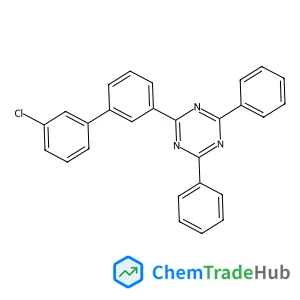
2-(3'-Chlorobiphenyl-3-yl)-4,6-diphenyl-1,3,5-triazine
CAS Number:
1443049-83-9
Molecular Formula:
C27H18ClN3
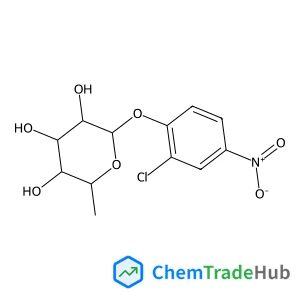
2-Chloro-4-nitrophenyl 6-deoxy-alpha-L-galactopyranoside
CAS Number:
157843-41-9
Molecular Formula:
C12H14ClNO7

Recommended Suppliers





Disclaimer
This page provides academic journal information for reference and research purposes only. We are not affiliated with any journal publishers and do not handle publication submissions. For publication-related inquiries, please contact the respective journal publishers directly.
If you notice any inaccuracies in the information displayed, please contact us at support@chemtradehub.com. We will promptly review and address your concerns.