


In situ quasi-elastic neutron scattering study on the water dynamics and reaction mechanisms in alkali-activated slags
Literature Information
Publication Date
2019-04-30
DOI
10.1039/C9CP00889F
Impact Factor
3.676
Authors
Yongqiang Cheng, Luke L. Daemen
View Original
Abstract
In this study, in situ quasi-elastic neutron scattering (QENS) has been employed to probe the water dynamics and reaction mechanisms occurring during the formation of NaOH- and Na2SiO3-activated slags, an important class of low-CO2 cements, in conjunction with isothermal conduction calorimetry (ICC), Fourier transform infrared spectroscopy (FTIR) analysis and N2 sorption measurements. We show that the single ICC reaction peak in the NaOH-activated slag is accompanied with a transformation of free water to bound water (from QENS analysis), which directly signals formation of a sodium-containing aluminum-substituted calcium–silicate–hydrate (C–(N)–A–S–H) gel, as confirmed by FTIR. In contrast, the Na2SiO3-activated slag sample exhibits two distinct reaction peaks in the ICC data, where the first reaction peak is associated with conversion of constrained water to bound and free water, and the second peak is accompanied by conversion of free water to bound and constrained water (from QENS analysis). The second conversion is attributed to formation of the main reaction product (i.e., C–(N)–A–S–H gel) as confirmed by FTIR and N2 sorption data. Analysis of the QENS, FTIR and N2 sorption data together with thermodynamic information from the literature explicitly shows that the first reaction peak is associated with the formation of an initial gel (similar to C–(N)–A–S–H gel) that is governed by the Na+ ions and silicate species in Na2SiO3 solution and the dissolved Ca/Al species from slag. Hence, this study exemplifies the power of in situ QENS, when combined with laboratory-based characterization techniques, in elucidating the water dynamics and associated chemical mechanisms occurring in complex materials, and has provided important mechanistic insight on the early-age reactions occurring during formation of two alkali-activated slags.
Recommended Journals

Critical Reviews in Solid State and Materials Sciences

Topics in Catalysis

Main Group Chemistry

Biocatalysis and Biotransformation

NDT & E International

Atomization and Sprays

Herald of the Russian Academy of Sciences

Bioorganic & Medicinal Chemistry

Journal of the Indian Institute of Science

Journal of Chemical Sciences
Related Literature
Charge transfer process at the Ag/MPH/TiO2 interface by SERS: alignment of the Fermi level
Xiaolei Zhang, Huimin Sui, Xiaolei Wang, Hongyang Su, Weina Cheng, Xu Wang, Bing Zhao
2016-10-13
Paper
DOI: 10.1039/C6CP04370D
Interface phonon modes in the [AlN/GaN]20 and [Al0.35Ga0.65N/Al0.55Ga0.45N]20 2D multi-quantum well structures
A. K. Sivadasan, Chirantan Singha, A. Bhattacharyya, Sandip Dhara
2016-10-04
Paper
DOI: 10.1039/C6CP05520F
Salt gradient driven ion transport in solid-state nanopores: the crucial role of reservoir geometry and size
Chih-Yuan Lin, Fu Chen, Li-Hsien Yeh, Jyh-Ping Hsu
2016-10-12
Paper
DOI: 10.1039/C6CP06459K
Phosphine passivated gold clusters: how charge transfer affects electronic structure and stability
Doreen Mollenhauer, Nicola Gaston
2016-09-09
Paper
DOI: 10.1039/C6CP04562F
Planarity and multiple components promote organic photovoltaic efficiency by improving electronic transport
Matthew B. Goldey, Daniel Reid, Juan de Pablo, Giulia Galli
2016-09-09
Paper
DOI: 10.1039/C6CP04999K
Ionic liquids as modulators of physicochemical properties and nanostructures of sodium dodecyl sulfate in aqueous solutions and potential application in pesticide microemulsions
Jing Li, Tengfei Fan, Yong Xu, Xuemin Wu
2016-10-11
Paper
DOI: 10.1039/C6CP04722J
How does ammonia bind to the oxygen-evolving complex in the S2 state of photosynthetic water oxidation? Theoretical support and implications for the W1 substitution mechanism
Yu Guo, Lan-Lan He, Dong-Xia Zhao, Li-Dong Gong, Cui Liu, Zhong-Zhi Yang
2016-10-21
Paper
DOI: 10.1039/C6CP05725J
Energetics of native defects in anatase TiO2: a hybrid density functional study
Pakpoom Reunchan
2016-10-10
Paper
DOI: 10.1039/C6CP05798E
You might also like
Compound Q&A
What precautions should be taken when handling 2-Chloro-1,2-bis(4-methylphenyl)ethanone (CAS: 71193-32-3)?
When handling 2-Chloro-1,2-bis(4-methylphenyl)ethanone (CAS: 71193-32-3), it is ...
71193-32-32-Chloro-1,2-bis(4-m...
Compound Q&A
What industries use 4-Ethoxy-3-(5-methyl-4-oxo-7-propyl-1,4-dihydroimidazo[5,1-f][1,2,4]triazin-2-yl)benzenesulfonyl chloride (CAS: 224789-26-8)?
4-Ethoxy-3-(5-methyl-4-oxo-7-propyl-1,4-dihydroimidazo[5,1-f][1,2,4]triazin-2-yl...
224789-26-84-Ethoxy-3-(5-methyl...
Compound Q&A
How should Methyl 3-Oxo-4-Androsten-17-Carboxylate (CAS: 2681-55-2) be stored?
Methyl 3-Oxo-4-Androsten-17-Carboxylate (CAS: 2681-55-2) should be stored in a c...
2681-55-2Methyl 3-Oxo-4-Andro...
Compound Q&A
What are the main uses of (R)-3-Amino-4-(3-hexylphenylamino)-4-oxobutylphosphonic acid (CAS: 909725-61-7)?
(R)-3-Amino-4-(3-hexylphenylamino)-4-oxobutylphosphonic acid is primarily used i...
909725-61-7(R)-3-Amino-4-(3-hex...
Compound Q&A
What regulatory guidelines apply to 2-Methyl-2-propanyl 3-amino-3-carbamoyl-1-azetidinecarboxylate (CAS: 1254120-14-3)?
2-Methyl-2-propanyl 3-amino-3-carbamoyl-1-azetidinecarboxylate (CAS: 1254120-14-...
1254120-14-32-Methyl-2-propanyl ...
Compound Q&A
Are there alternatives to (E)-4-(tert-Butoxy)-4-oxobut-2-enoic acid (CAS: 135355-96-3) in synthesis?
There are alternative reagents that can be used in synthesis instead of (E)-4-(t...
135355-96-3(E)-4-(tert-Butoxy)-...
Compound Q&A
What are the physical and chemical properties of [2-(3-Chlorophenyl)-1,3-thiazol-4-yl]methanol (CAS: 121202-20-8)?
[2-(3-Chlorophenyl)-1,3-thiazol-4-yl]methanol (CAS: 121202-20-8) is a crystallin...
121202-20-8[2-(3-Chlorophenyl)-...
Compound Q&A
What is the market or research trend for Methyl (2S)-[(4S)-2,2-dimethyl-1,3-dioxolan-4-yl]{[(4-methylphenyl)sulfonyl]oxy}acetate (CAS: 166249-17-8)?
The market and research trends for Methyl (2S)-[(4S)-2,2-dimethyl-1,3-dioxolan-4...
166249-17-8Methyl (2S)-[(4S)-2,...
Compound Q&A
What is the market or research trend for 1-Bromo-2-isocyanatoethane (CAS: 42865-19-0)?
The market for 1-Bromo-2-isocyanatoethane (CAS: 42865-19-0) is driven by its use...
42865-19-01-Bromo-2-isocyanato...
Compound Q&A
What are the main uses of 4-Nitro-D-phenylalanine hydrochloride (CAS: 147065-06-3)?
4-Nitro-D-phenylalanine hydrochloride (CAS: 147065-06-3) is primarily used in re...
147065-06-34-Nitro-D-phenylalan...
Source Journal
Physical Chemistry Chemical Physics

CiteScore:
5.5
Self-citation Rate:
10.3%
Articles per Year:
3036
Physical Chemistry Chemical Physics (PCCP) is an international journal co-owned by 19 physical chemistry and physics societies from around the world. This journal publishes original, cutting-edge research in physical chemistry, chemical physics and biophysical chemistry. To be suitable for publication in PCCP, articles must include significant innovation and/or insight into physical chemistry; this is the most important criterion that reviewers and Editors will judge against when evaluating submissions. The journal has a broad scope and welcomes contributions spanning experiment, theory, computation and data science. Topical coverage includes spectroscopy, dynamics, kinetics, statistical mechanics, thermodynamics, electrochemistry, catalysis, surface science, quantum mechanics, quantum computing and machine learning. Interdisciplinary research areas such as polymers and soft matter, materials, nanoscience, energy, surfaces/interfaces, and biophysical chemistry are welcomed if they demonstrate significant innovation and/or insight into physical chemistry. Joined experimental/theoretical studies are particularly appreciated when complementary and based on up-to-date approaches.
Recommended Compounds
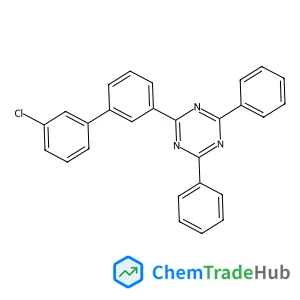
2-(3'-Chlorobiphenyl-3-yl)-4,6-diphenyl-1,3,5-triazine
CAS Number:
1443049-83-9
Molecular Formula:
C27H18ClN3
Recommended Suppliers




Disclaimer
This page provides academic journal information for reference and research purposes only. We are not affiliated with any journal publishers and do not handle publication submissions. For publication-related inquiries, please contact the respective journal publishers directly.
If you notice any inaccuracies in the information displayed, please contact us at support@chemtradehub.com. We will promptly review and address your concerns.