













Hydration-mediated stiffening of collective membrane dynamics by cholesterol
Literature Information
Publication Date
2019-04-30
DOI
10.1039/C9CP01431D
Impact Factor
3.676
Authors
Christopher Päslack, Matthias Heyden, Lars V. Schäfer
View Original
Abstract
The collective behaviour of individual lipid molecules determines the properties of phospholipid membranes. However, the collective molecular motions often remain challenging to characterise at the desired spatial and temporal resolution. Here we study collective vibrational motion on picosecond time scales in dioleoylphosphatidylcholine lipid bilayers with varying cholesterol content using all-atom molecular dynamics simulations. Cholesterol is found to not only laterally compact the lipid bilayer, but also to change the velocity of longitudinal density fluctuations propagating in the plane of the membrane. Cholesterol-induced reduction of the area per lipid alters the collective dynamics of the lipid headgroups, but not of the lipid tails. The introduction of cholesterol reduces the number of water molecules interacting with the lipid headgroups, leading to a decrease in the velocity of the laterally-propagating sound mode. Thus, the stiffening effect of cholesterol is found to be indirect: decreasing the area per lipid weakens the interactions between the lipid headgroups and water. The collective modes characterised in this work can enable the membrane to dissipate excess energy and thus maintain its structural integrity, e.g., under mechanical stress.
Related Literature
Solvation free energies for periodic surfaces: comparison of implicit and explicit solvation models‡
Stephan N. Steinmann, Carine Michel
2016-10-28
Paper
DOI: 10.1039/C6CP04094B
A soft X-ray spectroscopic perspective of electron localization and transport in tungsten doped bismuth vanadate single crystals
Alexander J. E. Rettie, Vijay R. Singh, Jianshi Zhou, Bethany Lamoureux, Hendrik Bluhm
2016-11-09
Paper
DOI: 10.1039/C6CP04526J
Interface phonon modes in the [AlN/GaN]20 and [Al0.35Ga0.65N/Al0.55Ga0.45N]20 2D multi-quantum well structures
A. K. Sivadasan, Chirantan Singha, A. Bhattacharyya, Sandip Dhara
2016-10-04
Paper
DOI: 10.1039/C6CP05520F
Energy frameworks and a topological analysis of the supramolecular features in in situ cryocrystallized liquids: tuning the weak interaction landscape via fluorination
Dhananjay Dey, Subhrajyoti Bhandary, Sajesh P. Thomas, Mark A. Spackman, Deepak Chopra
2016-10-31
Paper
DOI: 10.1039/C6CP05917A
Theoretical study of the H/D isotope effect on phase transition of hydrogen-bonded organic conductor κ-H3(Cat-EDT-TTF)2
Kaichi Yamamoto, Yusuke Kanematsu, Umpei Nagashima, Akira Ueda, Hatsumi Mori, Masanori Tachikawa
2016-10-06
Communication
DOI: 10.1039/C6CP05414E
Sustainable one-pot integration of ZnO nanoparticles into carbon spheres: manipulation of the morphological, optical and electrochemical properties
Greta Patrinoiu, Jose M. Calderon-Moreno, Ruxandra Birjega, Daniela C. Culita, Simona Somacescu, Adina M. Musuc, Tanta Spataru, Oana Carp
2016-10-14
Paper
DOI: 10.1039/C6CP05911B
Phosphine passivated gold clusters: how charge transfer affects electronic structure and stability
Doreen Mollenhauer, Nicola Gaston
2016-09-09
Paper
DOI: 10.1039/C6CP04562F
A comparative study of Ni–Mn layered double hydroxide/carbon composites with different morphologies for supercapacitors
M. Li, F. Liu, X. B. Zhang, J. P. Cheng
2016-10-06
Paper
DOI: 10.1039/C6CP05119G
Rotational dynamics of Li+ ions encapsulated in C60 cages at low temperatures
Hal Suzuki, Misaki Ishida, Masatsugu Yamashita, Chiko Otani, Kazuhiko Kawachi, Yasuhiko Kasama, Eunsang Kwon
2016-11-07
Communication
DOI: 10.1039/C6CP06949E
You might also like
Compound Q&A
What precautions should be taken when handling 2-Chloro-1,2-bis(4-methylphenyl)ethanone (CAS: 71193-32-3)?
When handling 2-Chloro-1,2-bis(4-methylphenyl)ethanone (CAS: 71193-32-3), it is ...
71193-32-32-Chloro-1,2-bis(4-m...
Compound Q&A
What industries use 4-Ethoxy-3-(5-methyl-4-oxo-7-propyl-1,4-dihydroimidazo[5,1-f][1,2,4]triazin-2-yl)benzenesulfonyl chloride (CAS: 224789-26-8)?
4-Ethoxy-3-(5-methyl-4-oxo-7-propyl-1,4-dihydroimidazo[5,1-f][1,2,4]triazin-2-yl...
224789-26-84-Ethoxy-3-(5-methyl...
Compound Q&A
How should Methyl 3-Oxo-4-Androsten-17-Carboxylate (CAS: 2681-55-2) be stored?
Methyl 3-Oxo-4-Androsten-17-Carboxylate (CAS: 2681-55-2) should be stored in a c...
2681-55-2Methyl 3-Oxo-4-Andro...
Compound Q&A
What are the main uses of (R)-3-Amino-4-(3-hexylphenylamino)-4-oxobutylphosphonic acid (CAS: 909725-61-7)?
(R)-3-Amino-4-(3-hexylphenylamino)-4-oxobutylphosphonic acid is primarily used i...
909725-61-7(R)-3-Amino-4-(3-hex...
Compound Q&A
What regulatory guidelines apply to 2-Methyl-2-propanyl 3-amino-3-carbamoyl-1-azetidinecarboxylate (CAS: 1254120-14-3)?
2-Methyl-2-propanyl 3-amino-3-carbamoyl-1-azetidinecarboxylate (CAS: 1254120-14-...
1254120-14-32-Methyl-2-propanyl ...
Compound Q&A
Are there alternatives to (E)-4-(tert-Butoxy)-4-oxobut-2-enoic acid (CAS: 135355-96-3) in synthesis?
There are alternative reagents that can be used in synthesis instead of (E)-4-(t...
135355-96-3(E)-4-(tert-Butoxy)-...
Compound Q&A
What are the physical and chemical properties of [2-(3-Chlorophenyl)-1,3-thiazol-4-yl]methanol (CAS: 121202-20-8)?
[2-(3-Chlorophenyl)-1,3-thiazol-4-yl]methanol (CAS: 121202-20-8) is a crystallin...
121202-20-8[2-(3-Chlorophenyl)-...
Compound Q&A
What is the market or research trend for Methyl (2S)-[(4S)-2,2-dimethyl-1,3-dioxolan-4-yl]{[(4-methylphenyl)sulfonyl]oxy}acetate (CAS: 166249-17-8)?
The market and research trends for Methyl (2S)-[(4S)-2,2-dimethyl-1,3-dioxolan-4...
166249-17-8Methyl (2S)-[(4S)-2,...
Compound Q&A
What is the market or research trend for 1-Bromo-2-isocyanatoethane (CAS: 42865-19-0)?
The market for 1-Bromo-2-isocyanatoethane (CAS: 42865-19-0) is driven by its use...
42865-19-01-Bromo-2-isocyanato...
Compound Q&A
What are the main uses of 4-Nitro-D-phenylalanine hydrochloride (CAS: 147065-06-3)?
4-Nitro-D-phenylalanine hydrochloride (CAS: 147065-06-3) is primarily used in re...
147065-06-34-Nitro-D-phenylalan...
Source Journal
Physical Chemistry Chemical Physics

CiteScore:
5.5
Self-citation Rate:
10.3%
Articles per Year:
3036
Physical Chemistry Chemical Physics (PCCP) is an international journal co-owned by 19 physical chemistry and physics societies from around the world. This journal publishes original, cutting-edge research in physical chemistry, chemical physics and biophysical chemistry. To be suitable for publication in PCCP, articles must include significant innovation and/or insight into physical chemistry; this is the most important criterion that reviewers and Editors will judge against when evaluating submissions. The journal has a broad scope and welcomes contributions spanning experiment, theory, computation and data science. Topical coverage includes spectroscopy, dynamics, kinetics, statistical mechanics, thermodynamics, electrochemistry, catalysis, surface science, quantum mechanics, quantum computing and machine learning. Interdisciplinary research areas such as polymers and soft matter, materials, nanoscience, energy, surfaces/interfaces, and biophysical chemistry are welcomed if they demonstrate significant innovation and/or insight into physical chemistry. Joined experimental/theoretical studies are particularly appreciated when complementary and based on up-to-date approaches.
Recommended Compounds

(3beta,22E)-Stigmasta-5,22-dien-3-yl beta-D-glucopyranoside
CAS Number:
19716-26-8
Molecular Formula:
C35H58O6
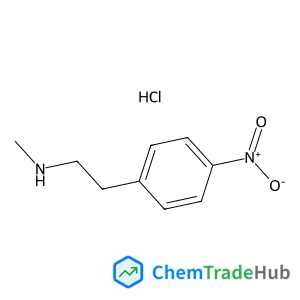
N-Methyl-2-(4-nitrophenyl)ethanamine hydrochloride (1:1)
CAS Number:
166943-39-1
Molecular Formula:
C9H13ClN2O2

5,7-Dihydroxy-2-(4-hydroxyphenyl)-4-oxo-4H-chromen-3-yl 2-O-(6-deoxy-alpha-L-mannopyranosyl)-beta-D-glucopyranoside
CAS Number:
32602-81-6
Molecular Formula:
C27H30O15
Recommended Suppliers







Disclaimer
This page provides academic journal information for reference and research purposes only. We are not affiliated with any journal publishers and do not handle publication submissions. For publication-related inquiries, please contact the respective journal publishers directly.
If you notice any inaccuracies in the information displayed, please contact us at support@chemtradehub.com. We will promptly review and address your concerns.