












The role played by ethanol in achieving the successive versus simultaneous mechanism of excited-state double proton transfer in dipyrido[2,3-a:3′,2′-i]carbazole
Literature Information
Publication Date
2018-10-03
DOI
10.1039/C8CP05716H
Impact Factor
3.676
Authors
Jianhui Han, Xiaochun Liu, Hui Li, Hang Yin, Huifang Zhao, Lina Ma, Yaodong Song, Ying Shi
View Original
Abstract
The excited-state double proton transfer (ESDPT) process of dipyrido[2,3-a:3′,2′-i]carbazole (DPC) in ethanol (EtOH) solvent is investigated using density functional theory (DFT) and time-dependent density functional theory (TDDFT). The computational results provide convincing evidence that proton transfer did not occur spontaneously for the DPC monomer due to the lack of hydrogen bonds. Interestingly, after adding EtOH to DPC, two intermolecular hydrogen bonds were formed in the ground-state, and the intermolecular hydrogen bonds were strengthened in the excited-state, as confirmed by comparing the changes in the primary bond parameters. In addition, the charge transfer was observed in the DPC–EtOH complex compared with the DPC monomer. In particular, a reliable ESDPT process occurs within the system upon photoexcitation, which was monitored by the formation and disappearance of characteristic peaks in the IR spectrum. All results adequately proved that the participation of EtOH exerts a remarkable effect on the ESDPT process. Overall, our work not only comprehensively elaborated the simultaneous mechanism of ESDPT but can also pave the way towards the design and synthesis of novel molecules.
Related Literature
Prediction of many-electron wavefunctions using atomic potentials: extended basis sets and molecular dissociation
2019-09-12
Paper
DOI: 10.1039/C9CP02450F
Ion speciation: a key for the understanding of the solution properties of ionic liquid mixtures
Kiki Adi Kurnia, Ana M. Fernandes, João A. P. Coutinho
2019-09-13
Paper
DOI: 10.1039/C9CP04533C
Improved SERS activity of non-stoichiometric copper sulfide nanostructures related to charge-transfer resonance
Chaocang Weng, Lei Gao, Guotao Duan
2020-02-01
Paper
DOI: 10.1039/C9CP05930J
Raman shift, Néel temperature, and optical band gap of NiO nanoparticles
Bai Pan, Xianshang Meng, Yidong Xia, Haiming Lu, Hui Li
2020-02-20
Paper
DOI: 10.1039/C9CP06989E
Novel inorganic aromatic mixed-valent superalkali electride CaN3Ca: an alkaline-earth-based high-sensitivity multi-state nonlinear optical molecular switch
Yin-Feng Wang, Tian Qin, Jia-Min Tang, Yan-Jiao Liu, Miao Xie, Jia Li, Jiangen Huang, Zhi-Ru Li
2020-02-19
Paper
DOI: 10.1039/C9CP06848A
Comparison study of carbon clusters formation during thermal decomposition of 1,3,5-triamino-2,4,6-trinitrobenzene and benzotrifuroxan: a ReaxFF based sequential molecular dynamics simulation
Xuefeng Zhao, Xinping Long, Xiaogan Dai, Kaili Zhang, Ming Li, Feng Guo, Zhiqiang Qiao, Yushi Wen
2020-01-22
Paper
DOI: 10.1039/C9CP05734J
Molecular dynamics investigations of oligosaccharides recognized by family 16 and 22 carbohydrate binding modules
Ruihan Wang
2019-09-05
Paper
DOI: 10.1039/C9CP04673A
You might also like
Compound Q&A
Is 6-(3-Fluorophenyl)picolinic acid (CAS: 887982-40-3) safe?
6-(3-Fluorophenyl)picolinic acid is generally considered safe for laboratory use...
887982-40-36-(3-Fluorophenyl)pi...
Compound Q&A
What industries use (3R)-3-Pyrrolidinol (CAS: 2799-21-5)?
(3R)-3-Pyrrolidinol is used in the pharmaceutical industry as a precursor for dr...
2799-21-5(3R)-3-Pyrrolidinol
Compound Q&A
What precautions should be taken when handling (4R,5R)-4,5-Diethoxycarbonyl-2,2-dimethyldioxolane (CAS: 59779-75-8)?
When handling (4R,5R)-4,5-Diethoxycarbonyl-2,2-dimethyldioxolane (CAS: 59779-75-...
59779-75-8(4R,5R)-4,5-Diethoxy...
Compound Q&A
How is 1-(6-Chloroimidazo[1,2-b]pyridazin-3-yl)ethanone (CAS: 90734-71-7) typically synthesized?
1-(6-Chloroimidazo[1,2-b]pyridazin-3-yl)ethanone is often synthesized via a mult...
90734-71-71-(6-Chloroimidazo[1...
Compound Q&A
What is the market or research trend for N-Ethyl-3,4-dimethylbenzylamine (CAS: 39180-83-1)?
The market for N-Ethyl-3,4-dimethylbenzylamine (CAS: 39180-83-1) remains steady,...
39180-83-1N-Ethyl-3,4-dimethyl...
Compound Q&A
What is Tert-butyl 3-(pyrrolidin-1-yl)azetidine-1-carboxylate (CAS: 1019008-21-9)?
Tert-butyl 3-(pyrrolidin-1-yl)azetidine-1-carboxylate is a chemical compound wit...
1019008-21-9Tert-butyl 3-(pyrrol...
Compound Q&A
What regulatory guidelines apply to 1-Bromo-3-chloro-2,4-dimethoxybenzene (CAS: 1228956-93-1)?
1-Bromo-3-chloro-2,4-dimethoxybenzene (CAS: 1228956-93-1) falls under the classi...
1228956-93-11-Bromo-3-chloro-2,4...
Compound Q&A
Is 8-Bromo-2-methyl-3,4-dihydroisoquinolin-1(2H)-one (CAS: 1368622-07-4) safe?
The safety of 8-Bromo-2-methyl-3,4-dihydroisoquinolin-1(2H)-one (CAS: 1368622-07...
1368622-07-48-Bromo-2-methyl-3,4...
Compound Q&A
Is Benzyl [(3S)-2,6-dioxo-3-piperidinyl]carbamate (CAS: 22785-43-9) safe?
Benzyl [(3S)-2,6-dioxo-3-piperidinyl]carbamate is generally safe when handled wi...
22785-43-9Benzyl [(3S)-2,6-dio...
Compound Q&A
How should 1-{[4-(4,4,5,5-Tetramethyl-1,3,2-dioxaborolan-2-yl)phenyl]sulfonyl}pyrrolidine (CAS: 928657-21-0) be stored?
1-{[4-(4,4,5,5-Tetramethyl-1,3,2-dioxaborolan-2-yl)phenyl]sulfonyl}pyrrolidine s...
928657-21-01-{[4-(4,4,5,5-Tetra...
Source Journal
Physical Chemistry Chemical Physics

CiteScore:
5.5
Self-citation Rate:
10.3%
Articles per Year:
3036
Physical Chemistry Chemical Physics (PCCP) is an international journal co-owned by 19 physical chemistry and physics societies from around the world. This journal publishes original, cutting-edge research in physical chemistry, chemical physics and biophysical chemistry. To be suitable for publication in PCCP, articles must include significant innovation and/or insight into physical chemistry; this is the most important criterion that reviewers and Editors will judge against when evaluating submissions. The journal has a broad scope and welcomes contributions spanning experiment, theory, computation and data science. Topical coverage includes spectroscopy, dynamics, kinetics, statistical mechanics, thermodynamics, electrochemistry, catalysis, surface science, quantum mechanics, quantum computing and machine learning. Interdisciplinary research areas such as polymers and soft matter, materials, nanoscience, energy, surfaces/interfaces, and biophysical chemistry are welcomed if they demonstrate significant innovation and/or insight into physical chemistry. Joined experimental/theoretical studies are particularly appreciated when complementary and based on up-to-date approaches.
Recommended Compounds
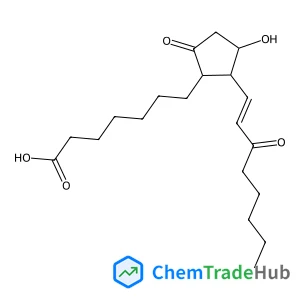
(11alpha,13E)-11-Hydroxy-9,15-dioxoprost-13-en-1-oic acid
CAS Number:
22973-19-9
Molecular Formula:
C20H32O5
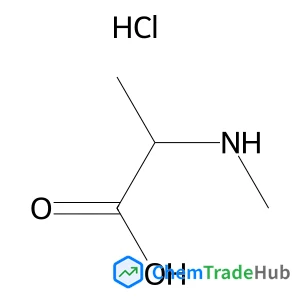
(R)-2-(Methylamino)propanoic acid hydrochloride
CAS Number:
1155878-14-0
Molecular Formula:
C4H10ClNO2
Recommended Suppliers






Disclaimer
This page provides academic journal information for reference and research purposes only. We are not affiliated with any journal publishers and do not handle publication submissions. For publication-related inquiries, please contact the respective journal publishers directly.
If you notice any inaccuracies in the information displayed, please contact us at support@chemtradehub.com. We will promptly review and address your concerns.