













Ultrafast fluorescence dynamics of DNA-based silver clusters
Literature Information
Publication Date
2018-10-11
DOI
10.1039/C8CP05727C
Impact Factor
3.676
Authors
Zakhar Reveguk, Roman Lysenko, Ruslan Ramazanov, Alexei Kononov
View Original
Abstract
Atomic-level understanding of the nature of the electronically excited states in ligand-stabilized metal nanoclusters (NCs) is a prerequisite for the design of new NCs with desired properties. In this study, we investigate the emission dynamics of a Ag–DNA complex using the fluorescence up-conversion technique. We show that most of the relaxation from the Franck–Condon state to the emissive state takes place in less than 100 fs, in spite of a relatively large Stokes shift of 4500 cm−1. This relaxation is much faster than typical solvent/DNA relaxation rates. A further small relaxation occurs with time constants ranging from a few to hundreds of picoseconds. We also calculate the Stokes shift for model complexes of a small three-atom Ag3+ cluster with cytosine and guanine. The results of our calculations show that a substantial geometry change of the Ag3+ cluster is observed in the S1 state of both complexes, which results in Stokes shifts comparable with the experimental value. We conclude that the Stokes shift in the Ag–DNA complex arises mostly due to the change in the geometry of the Ag cluster in the excited state rather than to the solvent/DNA reorganization. Also, a different structure of the Ag–DNA complex (“dark cluster”), the excited state of which decays in 200 fs, is observed. The nature of this ultrafast deactivation is unclear, which requires further investigations.
Related Literature
Enhanced electromagnon excitations in Nd-doped BiFeO3 nanoparticles near morphotropic phase boundaries
Yuan Zhang, Yi Zhang, Quan Guo, Dongwen Zhang, Shuaizhi Zheng, Ming Feng, Xiangli Zhong, Congbing Tan, Zhihui Lu, Jinbin Wang, Pengfei Hou, Yichun Zhou, Jianmin Yuan
2019-09-16
Paper
DOI: 10.1039/C9CP04194J
A DNP-hyperpolarized solid-state water NMR MASER: observation and qualitative analysis
Emmanuelle M. M. Weber, Dennis Kurzbach, Daniel Abergel
2019-09-11
Paper
DOI: 10.1039/C9CP03334C
A theoretical investigation on boron–ligand cooperation to activate molecular hydrogen by a frustrated Lewis pair and subsequent reduction of carbon dioxide
Manas Ghara, Sudip Pan
2019-09-05
Paper
DOI: 10.1039/C9CP03756J
Photoexcited triplet states of twisted acenes investigated by Electron Paramagnetic Resonance
Claudia E. Tait, Anjan Bedi, Ori Gidron, Jan Behrends
2019-09-20
Paper
DOI: 10.1039/C9CP04135D
Novel inorganic aromatic mixed-valent superalkali electride CaN3Ca: an alkaline-earth-based high-sensitivity multi-state nonlinear optical molecular switch
Yin-Feng Wang, Tian Qin, Jia-Min Tang, Yan-Jiao Liu, Miao Xie, Jia Li, Jiangen Huang, Zhi-Ru Li
2020-02-19
Paper
DOI: 10.1039/C9CP06848A
Phase transition and electronic properties of skutterudite-type IrP3 under high pressure
Xuejiao Ma, Dan Zhou, Yan Yan, Jing Xu, Siyuan Liu, Yulan Wang, Manai Cui, Yuheng Cheng, Yu Miao, Yanhui Liu
2019-08-27
Paper
DOI: 10.1039/C9CP02422K
Seeking minimum entropy production for a tree-like flow-field in a fuel cell
Marco Sauermoser, Signe Kjelstrup, Bruno G. Pollet, Eirik G. Flekkøy
2020-03-18
Paper
DOI: 10.1039/C9CP05394H
Band alignment control in a blue phosphorus/C2N van der Waals heterojunction using an electric field
Zhihui Zhang, Zifeng Xie, Jian Liu, Ye Tian, Yan Zhang, Xing Wei, Tingting Guo, Lei Ni, Jibin Fan, Yijun Weng, Zhengdi Zha, Li Duan
2020-02-25
Paper
DOI: 10.1039/C9CP06696A
A quantum chemical study of hydrogen adsorption on carbon-supported palladium clusters
Lisa Warczinski, Christof Hättig
2019-09-10
Paper
DOI: 10.1039/C9CP04606B
You might also like
Compound Q&A
Is 6-(3-Fluorophenyl)picolinic acid (CAS: 887982-40-3) safe?
6-(3-Fluorophenyl)picolinic acid is generally considered safe for laboratory use...
887982-40-36-(3-Fluorophenyl)pi...
Compound Q&A
What industries use (3R)-3-Pyrrolidinol (CAS: 2799-21-5)?
(3R)-3-Pyrrolidinol is used in the pharmaceutical industry as a precursor for dr...
2799-21-5(3R)-3-Pyrrolidinol
Compound Q&A
What precautions should be taken when handling (4R,5R)-4,5-Diethoxycarbonyl-2,2-dimethyldioxolane (CAS: 59779-75-8)?
When handling (4R,5R)-4,5-Diethoxycarbonyl-2,2-dimethyldioxolane (CAS: 59779-75-...
59779-75-8(4R,5R)-4,5-Diethoxy...
Compound Q&A
How is 1-(6-Chloroimidazo[1,2-b]pyridazin-3-yl)ethanone (CAS: 90734-71-7) typically synthesized?
1-(6-Chloroimidazo[1,2-b]pyridazin-3-yl)ethanone is often synthesized via a mult...
90734-71-71-(6-Chloroimidazo[1...
Compound Q&A
What is the market or research trend for N-Ethyl-3,4-dimethylbenzylamine (CAS: 39180-83-1)?
The market for N-Ethyl-3,4-dimethylbenzylamine (CAS: 39180-83-1) remains steady,...
39180-83-1N-Ethyl-3,4-dimethyl...
Compound Q&A
What is Tert-butyl 3-(pyrrolidin-1-yl)azetidine-1-carboxylate (CAS: 1019008-21-9)?
Tert-butyl 3-(pyrrolidin-1-yl)azetidine-1-carboxylate is a chemical compound wit...
1019008-21-9Tert-butyl 3-(pyrrol...
Compound Q&A
What regulatory guidelines apply to 1-Bromo-3-chloro-2,4-dimethoxybenzene (CAS: 1228956-93-1)?
1-Bromo-3-chloro-2,4-dimethoxybenzene (CAS: 1228956-93-1) falls under the classi...
1228956-93-11-Bromo-3-chloro-2,4...
Compound Q&A
Is 8-Bromo-2-methyl-3,4-dihydroisoquinolin-1(2H)-one (CAS: 1368622-07-4) safe?
The safety of 8-Bromo-2-methyl-3,4-dihydroisoquinolin-1(2H)-one (CAS: 1368622-07...
1368622-07-48-Bromo-2-methyl-3,4...
Compound Q&A
Is Benzyl [(3S)-2,6-dioxo-3-piperidinyl]carbamate (CAS: 22785-43-9) safe?
Benzyl [(3S)-2,6-dioxo-3-piperidinyl]carbamate is generally safe when handled wi...
22785-43-9Benzyl [(3S)-2,6-dio...
Compound Q&A
How should 1-{[4-(4,4,5,5-Tetramethyl-1,3,2-dioxaborolan-2-yl)phenyl]sulfonyl}pyrrolidine (CAS: 928657-21-0) be stored?
1-{[4-(4,4,5,5-Tetramethyl-1,3,2-dioxaborolan-2-yl)phenyl]sulfonyl}pyrrolidine s...
928657-21-01-{[4-(4,4,5,5-Tetra...
Source Journal
Physical Chemistry Chemical Physics

CiteScore:
5.5
Self-citation Rate:
10.3%
Articles per Year:
3036
Physical Chemistry Chemical Physics (PCCP) is an international journal co-owned by 19 physical chemistry and physics societies from around the world. This journal publishes original, cutting-edge research in physical chemistry, chemical physics and biophysical chemistry. To be suitable for publication in PCCP, articles must include significant innovation and/or insight into physical chemistry; this is the most important criterion that reviewers and Editors will judge against when evaluating submissions. The journal has a broad scope and welcomes contributions spanning experiment, theory, computation and data science. Topical coverage includes spectroscopy, dynamics, kinetics, statistical mechanics, thermodynamics, electrochemistry, catalysis, surface science, quantum mechanics, quantum computing and machine learning. Interdisciplinary research areas such as polymers and soft matter, materials, nanoscience, energy, surfaces/interfaces, and biophysical chemistry are welcomed if they demonstrate significant innovation and/or insight into physical chemistry. Joined experimental/theoretical studies are particularly appreciated when complementary and based on up-to-date approaches.
Recommended Compounds

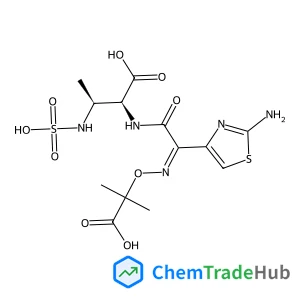
Aztreonam USP Related Compound A (Open-ring Aztreonam)
CAS Number:
87500-74-1
Molecular Formula:
C13H19N5O9S2
Recommended Suppliers






Disclaimer
This page provides academic journal information for reference and research purposes only. We are not affiliated with any journal publishers and do not handle publication submissions. For publication-related inquiries, please contact the respective journal publishers directly.
If you notice any inaccuracies in the information displayed, please contact us at support@chemtradehub.com. We will promptly review and address your concerns.