











Mesoscale simulations of two nucleosome-repeat length oligonucleosomes
Literature Information
Publication Date
2009-10-20
DOI
10.1039/B918629H
Impact Factor
3.676
Authors
Tamar Schlick, Ognjen Perišić
View Original
Abstract
The compaction of chromatin, accessed through coarse-grained modeling and simulation, reveals different folding patterns as a function of the nucleosome repeat length (NRL), the presence of the linker histone, and the ionic strength. Our results indicate that the linker histone has negligible influence on short NRL fibers, whereas for longer NRL fibers it works like, and in tandem with, concentrated positive counterions to condense the chromatin fiber. Longer NRL fibers also exhibit structural heterogeneity, with solenoid-like conformations viable in addition to irregular zigzags. These features of chromatin and associated internucleosomal patterns presented here help interpret structural dependencies of the chromatin fiber on internal and external factors. In particular, we suggest that longer-NRL are more advantageous for packing and achieving various levels of fiber compaction throughout the cell cycle.
Recommended Journals
Related Literature
First observation in the gas phase of the ultrafast electronic relaxation pathways of the S2 states of heme and hemin
Minh-Huong Ha-Thi, Niloufar Shafizadeh, Lionel Poisson, Benoit Soep
2010-10-15
Paper
DOI: 10.1039/C0CP00687D
Evolution of self-diffusion and local structure in some amines over a wide temperature range at high pressures: a molecular dynamics simulation study
Huajie Feng, Xin Liu, Wei Gao, Xiaojuan Chen, Jing Wang, Liuping Chen, Hans-Dietrich Lüdemann
2010-10-18
Paper
DOI: 10.1039/C0CP00337A
The origin of the conformational preference of N,N′-diaryl-N,N′-dimethyl ureas
Jonathan Clayden, Ulrich Hennecke, Mark A. Vincent, Ian H. Hillier, Madeleine Helliwell
2010-10-18
Paper
DOI: 10.1039/C0CP00571A
Ionic liquids and reactions at the electrochemical interface
2010-01-14
Perspective
DOI: 10.1039/B923053J
High anion conductivity in a ternary non-equilibrium phase of BaF2 and CaF2 with mixed cations
B. Ruprecht, M. Wilkening, A. Feldhoff, S. Steuernagel, P. Heitjans
2009-03-19
Paper
DOI: 10.1039/B901293A
Site-specific Xe additions into Cu–ZSM-5 zeolite
Takashi Yumura, Hiroki Yamashita, Hiroe Torigoe, Hisayoshi Kobayashi, Yasushige Kuroda
2010-01-19
Paper
DOI: 10.1039/B919032E
Metal–organic frameworks as high-potential adsorbents for liquid-phase separations of olefins, alkylnaphthalenes and dichlorobenzenes
Luc Alaerts, Michael Maes, Monique A. van der Veen, Pierre A. Jacobs, Dirk E. De Vos
2009-03-05
Paper
DOI: 10.1039/B823233D
Electrical and optical characterization of undoped BaTiO3 in the quenched state
K.-D. Becker, M. Schrader, H.-S. Kwon, H.-I. Yoo
2009-03-20
Paper
DOI: 10.1039/B823174E
Exploring wavepacket dynamics behind strong-field momentum-dependent photodissociation in CH2BrI+
Jesús González-Vázquez, Leticia González, Sarah R. Nichols, Thomas C. Weinacht, Tamás Rozgonyi
2010-09-29
Paper
DOI: 10.1039/C0CP00303D
Rotation dynamics of 2-methyl butane and n-pentane in MCM-22 zeolite: a molecular dynamics simulation study‡
Shiping Huang, Vincent Finsy, Jeroen Persoons, Mark T.F. Telling, Gino V. Baron, Joeri F.M. Denayer
2009-03-10
Paper
DOI: 10.1039/B819334G
You might also like
Compound Q&A
Is 6-(3-Fluorophenyl)picolinic acid (CAS: 887982-40-3) safe?
6-(3-Fluorophenyl)picolinic acid is generally considered safe for laboratory use...
887982-40-36-(3-Fluorophenyl)pi...
Compound Q&A
What industries use (3R)-3-Pyrrolidinol (CAS: 2799-21-5)?
(3R)-3-Pyrrolidinol is used in the pharmaceutical industry as a precursor for dr...
2799-21-5(3R)-3-Pyrrolidinol
Compound Q&A
What precautions should be taken when handling (4R,5R)-4,5-Diethoxycarbonyl-2,2-dimethyldioxolane (CAS: 59779-75-8)?
When handling (4R,5R)-4,5-Diethoxycarbonyl-2,2-dimethyldioxolane (CAS: 59779-75-...
59779-75-8(4R,5R)-4,5-Diethoxy...
Compound Q&A
How is 1-(6-Chloroimidazo[1,2-b]pyridazin-3-yl)ethanone (CAS: 90734-71-7) typically synthesized?
1-(6-Chloroimidazo[1,2-b]pyridazin-3-yl)ethanone is often synthesized via a mult...
90734-71-71-(6-Chloroimidazo[1...
Compound Q&A
What is the market or research trend for N-Ethyl-3,4-dimethylbenzylamine (CAS: 39180-83-1)?
The market for N-Ethyl-3,4-dimethylbenzylamine (CAS: 39180-83-1) remains steady,...
39180-83-1N-Ethyl-3,4-dimethyl...
Compound Q&A
What is Tert-butyl 3-(pyrrolidin-1-yl)azetidine-1-carboxylate (CAS: 1019008-21-9)?
Tert-butyl 3-(pyrrolidin-1-yl)azetidine-1-carboxylate is a chemical compound wit...
1019008-21-9Tert-butyl 3-(pyrrol...
Compound Q&A
What regulatory guidelines apply to 1-Bromo-3-chloro-2,4-dimethoxybenzene (CAS: 1228956-93-1)?
1-Bromo-3-chloro-2,4-dimethoxybenzene (CAS: 1228956-93-1) falls under the classi...
1228956-93-11-Bromo-3-chloro-2,4...
Compound Q&A
Is 8-Bromo-2-methyl-3,4-dihydroisoquinolin-1(2H)-one (CAS: 1368622-07-4) safe?
The safety of 8-Bromo-2-methyl-3,4-dihydroisoquinolin-1(2H)-one (CAS: 1368622-07...
1368622-07-48-Bromo-2-methyl-3,4...
Compound Q&A
Is Benzyl [(3S)-2,6-dioxo-3-piperidinyl]carbamate (CAS: 22785-43-9) safe?
Benzyl [(3S)-2,6-dioxo-3-piperidinyl]carbamate is generally safe when handled wi...
22785-43-9Benzyl [(3S)-2,6-dio...
Compound Q&A
How should 1-{[4-(4,4,5,5-Tetramethyl-1,3,2-dioxaborolan-2-yl)phenyl]sulfonyl}pyrrolidine (CAS: 928657-21-0) be stored?
1-{[4-(4,4,5,5-Tetramethyl-1,3,2-dioxaborolan-2-yl)phenyl]sulfonyl}pyrrolidine s...
928657-21-01-{[4-(4,4,5,5-Tetra...
Source Journal
Physical Chemistry Chemical Physics

CiteScore:
5.5
Self-citation Rate:
10.3%
Articles per Year:
3036
Physical Chemistry Chemical Physics (PCCP) is an international journal co-owned by 19 physical chemistry and physics societies from around the world. This journal publishes original, cutting-edge research in physical chemistry, chemical physics and biophysical chemistry. To be suitable for publication in PCCP, articles must include significant innovation and/or insight into physical chemistry; this is the most important criterion that reviewers and Editors will judge against when evaluating submissions. The journal has a broad scope and welcomes contributions spanning experiment, theory, computation and data science. Topical coverage includes spectroscopy, dynamics, kinetics, statistical mechanics, thermodynamics, electrochemistry, catalysis, surface science, quantum mechanics, quantum computing and machine learning. Interdisciplinary research areas such as polymers and soft matter, materials, nanoscience, energy, surfaces/interfaces, and biophysical chemistry are welcomed if they demonstrate significant innovation and/or insight into physical chemistry. Joined experimental/theoretical studies are particularly appreciated when complementary and based on up-to-date approaches.
Recommended Compounds
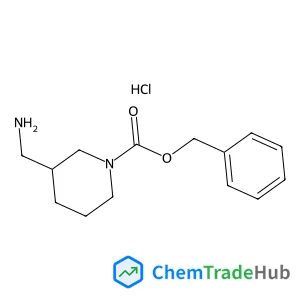
Benzyl 3-(aminomethyl)piperidine-1-carboxylate hydrochloride
CAS Number:
1186663-23-9
Molecular Formula:
C14H21ClN2O2
Recommended Suppliers



Disclaimer
This page provides academic journal information for reference and research purposes only. We are not affiliated with any journal publishers and do not handle publication submissions. For publication-related inquiries, please contact the respective journal publishers directly.
If you notice any inaccuracies in the information displayed, please contact us at support@chemtradehub.com. We will promptly review and address your concerns.