












Electrical and optical characterization of undoped BaTiO3 in the quenched state
Literature Information
Publication Date
2009-03-20
DOI
10.1039/B823174E
Impact Factor
3.676
Authors
K.-D. Becker, M. Schrader, H.-S. Kwon, H.-I. Yoo
View Original
Abstract
On undoped polycrystalline BaTiO3−δ (99.9% nominal purity), that had been equilibrated and quenched at 1000 °C under different oxygen activities in the range of −19.4 ≤ log aO2 < 0.1, were measured optical reflectance spectra at 298 K and ac conductivity at 473, 523 and 573 K, respectively. It was observed that all specimens quenched at log aO2 > −17 are electrically insulating and white in color, once powdered, and show optical absorption only at the absorption edge at ∼3 eV. In contrast, those quenched at log aO2 < −17 are electronically conducting and dark and exhibit a significant absorption in the IR region. This demarcating oxygen activity for the conductivity transition is ca. 13 orders of magnitude lower than that for the n-to-p type transition (δ = 0) in the equilibrium state, contrary to expectation. It is, thus, suggested that contrary to the textbook knowledge, the hole traps responsible for the conductivity transition in undoped BaTiO3 may be variable-valent acceptor defects like MnTi. The strong IR absorption in the semiconducting state is ascribed to small-polaron (Ti′Ti) hopping processes.
Related Literature
Ultrafast fluorescence dynamics of DNA-based silver clusters
Zakhar Reveguk, Roman Lysenko, Ruslan Ramazanov, Alexei Kononov
2018-10-11
Paper
DOI: 10.1039/C8CP05727C
Experimental strategies for 13C–15N dipolar NMR spectroscopy in liquid crystals at the natural isotopic abundance
Lukas Jackalin, Boris B. Kharkov, Andrei V. Komolkin
2018-08-08
Paper
DOI: 10.1039/C8CP04161J
Linear humidity response of carbon dot-modified molybdenum disulfide
Guili He, Da Huang, Zhi Yang, Yutong Han, Jun Hu, Nantao Hu, Yanjie Su, Zhihua Zhou, Yafei Zhang, Yan Zhang
2018-01-04
Paper
DOI: 10.1039/C7CP07125F
Polydopamine and eumelanin models in various oxidation states
Chun-Teh Chen, Markus J. Buehler
2018-10-09
Paper
DOI: 10.1039/C8CP05037F
Effects of surface hydroxylation on adhesion at zinc/silica interfaces
Alexey Koltsov, Jean-Michel Mataigne
2018-05-18
Paper
DOI: 10.1039/C8CP02139B
Atomistic insights into the exothermic self-sustained alloying of Al-shell/Ni-core nanoparticle triggered by laser irradiation
Yiming Rong, Pengfei Ji, Mengzhe He, Yuwen Zhang, Yong Tang
2018-07-12
Paper
DOI: 10.1039/C8CP03017K
Phase transition-like behavior of the water monolayer close to the polarized surface of a nanotube
Li Zeng, Xiaoyan Zhou, Xiao Huang, Hangjun Lu
2018-07-17
Paper
DOI: 10.1039/C8CP03083A
Ab initio calculations of heavy-actinide hexahalide compounds: do these heavy actinides behave like their isoelectronic lanthanide analogues?
Cristian Celis-Barros, María J. Beltrán-Leiva
2017-12-22
Paper
DOI: 10.1039/C7CP06585J
A photoelectron imaging and quantum chemistry study of the deprotonated indole anion
Michael A. Parkes, Jonathan Crellin, Alice Henley, Helen H. Fielding
2018-05-21
Paper
DOI: 10.1039/C8CP01902A
You might also like
Compound Q&A
Is 6-(3-Fluorophenyl)picolinic acid (CAS: 887982-40-3) safe?
6-(3-Fluorophenyl)picolinic acid is generally considered safe for laboratory use...
887982-40-36-(3-Fluorophenyl)pi...
Compound Q&A
What industries use (3R)-3-Pyrrolidinol (CAS: 2799-21-5)?
(3R)-3-Pyrrolidinol is used in the pharmaceutical industry as a precursor for dr...
2799-21-5(3R)-3-Pyrrolidinol
Compound Q&A
What precautions should be taken when handling (4R,5R)-4,5-Diethoxycarbonyl-2,2-dimethyldioxolane (CAS: 59779-75-8)?
When handling (4R,5R)-4,5-Diethoxycarbonyl-2,2-dimethyldioxolane (CAS: 59779-75-...
59779-75-8(4R,5R)-4,5-Diethoxy...
Compound Q&A
How is 1-(6-Chloroimidazo[1,2-b]pyridazin-3-yl)ethanone (CAS: 90734-71-7) typically synthesized?
1-(6-Chloroimidazo[1,2-b]pyridazin-3-yl)ethanone is often synthesized via a mult...
90734-71-71-(6-Chloroimidazo[1...
Compound Q&A
What is the market or research trend for N-Ethyl-3,4-dimethylbenzylamine (CAS: 39180-83-1)?
The market for N-Ethyl-3,4-dimethylbenzylamine (CAS: 39180-83-1) remains steady,...
39180-83-1N-Ethyl-3,4-dimethyl...
Compound Q&A
What is Tert-butyl 3-(pyrrolidin-1-yl)azetidine-1-carboxylate (CAS: 1019008-21-9)?
Tert-butyl 3-(pyrrolidin-1-yl)azetidine-1-carboxylate is a chemical compound wit...
1019008-21-9Tert-butyl 3-(pyrrol...
Compound Q&A
What regulatory guidelines apply to 1-Bromo-3-chloro-2,4-dimethoxybenzene (CAS: 1228956-93-1)?
1-Bromo-3-chloro-2,4-dimethoxybenzene (CAS: 1228956-93-1) falls under the classi...
1228956-93-11-Bromo-3-chloro-2,4...
Compound Q&A
Is 8-Bromo-2-methyl-3,4-dihydroisoquinolin-1(2H)-one (CAS: 1368622-07-4) safe?
The safety of 8-Bromo-2-methyl-3,4-dihydroisoquinolin-1(2H)-one (CAS: 1368622-07...
1368622-07-48-Bromo-2-methyl-3,4...
Compound Q&A
Is Benzyl [(3S)-2,6-dioxo-3-piperidinyl]carbamate (CAS: 22785-43-9) safe?
Benzyl [(3S)-2,6-dioxo-3-piperidinyl]carbamate is generally safe when handled wi...
22785-43-9Benzyl [(3S)-2,6-dio...
Compound Q&A
How should 1-{[4-(4,4,5,5-Tetramethyl-1,3,2-dioxaborolan-2-yl)phenyl]sulfonyl}pyrrolidine (CAS: 928657-21-0) be stored?
1-{[4-(4,4,5,5-Tetramethyl-1,3,2-dioxaborolan-2-yl)phenyl]sulfonyl}pyrrolidine s...
928657-21-01-{[4-(4,4,5,5-Tetra...
Source Journal
Physical Chemistry Chemical Physics

CiteScore:
5.5
Self-citation Rate:
10.3%
Articles per Year:
3036
Physical Chemistry Chemical Physics (PCCP) is an international journal co-owned by 19 physical chemistry and physics societies from around the world. This journal publishes original, cutting-edge research in physical chemistry, chemical physics and biophysical chemistry. To be suitable for publication in PCCP, articles must include significant innovation and/or insight into physical chemistry; this is the most important criterion that reviewers and Editors will judge against when evaluating submissions. The journal has a broad scope and welcomes contributions spanning experiment, theory, computation and data science. Topical coverage includes spectroscopy, dynamics, kinetics, statistical mechanics, thermodynamics, electrochemistry, catalysis, surface science, quantum mechanics, quantum computing and machine learning. Interdisciplinary research areas such as polymers and soft matter, materials, nanoscience, energy, surfaces/interfaces, and biophysical chemistry are welcomed if they demonstrate significant innovation and/or insight into physical chemistry. Joined experimental/theoretical studies are particularly appreciated when complementary and based on up-to-date approaches.
Recommended Compounds
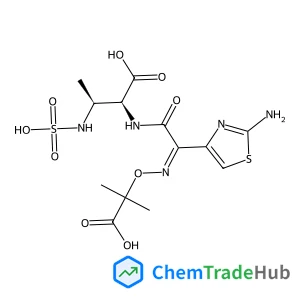
Aztreonam USP Related Compound A (Open-ring Aztreonam)
CAS Number:
87500-74-1
Molecular Formula:
C13H19N5O9S2
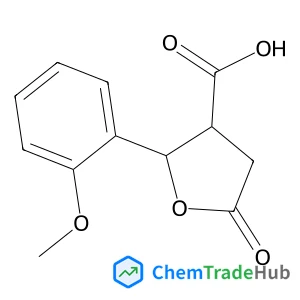
trans-2-(2-Methoxyphenyl)-5-oxotetrahydrofuran-3-carboxylic acid
CAS Number:
99226-02-5
Molecular Formula:
C12H12O5
Recommended Suppliers






Disclaimer
This page provides academic journal information for reference and research purposes only. We are not affiliated with any journal publishers and do not handle publication submissions. For publication-related inquiries, please contact the respective journal publishers directly.
If you notice any inaccuracies in the information displayed, please contact us at support@chemtradehub.com. We will promptly review and address your concerns.