












Real time monitoring of the in situgrowth of silver nanoparticles in a polymer film under ambient conditions
Literature Information
Publication Date
2009-09-11
DOI
10.1039/B913931A
Impact Factor
3.676
Authors
G. V. Ramesh, B. Sreedhar, T. P. Radhakrishnan
View Original
Abstract
Direct monitoring of the formation and growth of nanoparticles by microscopy in real time is of fundamental interest in understanding the chemical and self assembly processes involved. Such studies are difficult to implement in solution, but have been carried out on solid substrates, mostly under specialized conditions, including ultra high vacuum. The present study illustrates the facility with which in situgrowth of metal nanoparticles in thin polymer films under ambient conditions can be monitored by real time atomic force microscopy. Formation of silver nanoparticles inside spin-coated thin films of poly(vinylpyrrolidone) containing silver nitrate, under ambient conditions, is revealed by the emergence and growth of surface plasmon resonance absorption extending over several hours. Atomic force microscopy allows ‘direct observation’ of structures growing near the surface; individual nanostructures can be monitored in the case of very thin films. A plausible mechanism is proposed for the chemical reactions occurring inside the film with the polymer itself acting as the reducing agent leading to the formation and growth of the nanoparticles. The present study opens up new avenues to carry out investigations into the mechanisms and kinetics of nanoparticle growth.
Related Literature
Confinement effects on excitation energies and regioselectivity as probed by the Fukui function and the molecular electrostatic potential
Alex Borgoo, David J. Tozer, Paul Geerlings, Frank De Proft
2009-03-12
Paper
DOI: 10.1039/B820114E
The influence of π–π-stacking on the light-harvesting properties of perylene bisimide antennas that are covalently linked to a [60]fullerene
Christiane C. Hofmann, Stefan M. Lindner, Michaela Ruppert, Andreas Hirsch, Saif A. Haque, Mukundan Thelakkat, Jürgen Köhler
2010-10-07
Paper
DOI: 10.1039/C0CP01200A
Design of functional ionic liquids using magneto- and luminescent-active anions
Yukihiro Yoshida, Gunzi Saito
2009-12-22
Perspective
DOI: 10.1039/B920046K
Reply to the ‘Comment on “An explanation for the charge on water's surface”’ by R. Vácha, D. Horinek, R. Buchner, B. Winter and P. Jungwirth, Phys. Chem. Chem. Phys., 2010, 12, DOI: 10.1039/c001492c
Angus Gray-Weale, James K. Beattie
2010-09-23
Comment
DOI: 10.1039/C0CP00688B
Accelerating the discovery of biocompatible ionic liquids
Nicola Wood
2010-01-12
Perspective
DOI: 10.1039/B923429B
Mg(OOCCH3)2 as an electrolyte additive for quasi-solid dye-sensitized solar cells: with the purpose of enhancing both the photovoltage and photocurrent by modifying the TiO2/dye/electrolyte interfaces
Yifeng Zhu, Yantao Shi, Liduo Wang, Rui Gao, Beibei Ma, Yi Geng, Yong Qiu
2010-10-18
Paper
DOI: 10.1039/C004372A
Selective removal of acetylenes from olefin mixtures through specific physicochemical interactions of ionic liquids with acetylenes
Jung Min Lee, Jelliarko Palgunadi, Jin Hyung Kim, Srun Jung, Young-seop Choi, Minserk Cheong, Hoon Sik Kim
2009-11-07
Paper
DOI: 10.1039/B915989D
Bulk defect chemistry and surface electronic behavior of Zn,Sn codoped In2O3 transparent conducting oxides
Steven P. Harvey, Thomas O. Mason, Christoph Körber, Andreas Klein
2009-03-10
Paper
DOI: 10.1039/B822149A
High anion conductivity in a ternary non-equilibrium phase of BaF2 and CaF2 with mixed cations
B. Ruprecht, M. Wilkening, A. Feldhoff, S. Steuernagel, P. Heitjans
2009-03-19
Paper
DOI: 10.1039/B901293A
You might also like
Compound Q&A
Is 6-(3-Fluorophenyl)picolinic acid (CAS: 887982-40-3) safe?
6-(3-Fluorophenyl)picolinic acid is generally considered safe for laboratory use...
887982-40-36-(3-Fluorophenyl)pi...
Compound Q&A
What industries use (3R)-3-Pyrrolidinol (CAS: 2799-21-5)?
(3R)-3-Pyrrolidinol is used in the pharmaceutical industry as a precursor for dr...
2799-21-5(3R)-3-Pyrrolidinol
Compound Q&A
What precautions should be taken when handling (4R,5R)-4,5-Diethoxycarbonyl-2,2-dimethyldioxolane (CAS: 59779-75-8)?
When handling (4R,5R)-4,5-Diethoxycarbonyl-2,2-dimethyldioxolane (CAS: 59779-75-...
59779-75-8(4R,5R)-4,5-Diethoxy...
Compound Q&A
How is 1-(6-Chloroimidazo[1,2-b]pyridazin-3-yl)ethanone (CAS: 90734-71-7) typically synthesized?
1-(6-Chloroimidazo[1,2-b]pyridazin-3-yl)ethanone is often synthesized via a mult...
90734-71-71-(6-Chloroimidazo[1...
Compound Q&A
What is the market or research trend for N-Ethyl-3,4-dimethylbenzylamine (CAS: 39180-83-1)?
The market for N-Ethyl-3,4-dimethylbenzylamine (CAS: 39180-83-1) remains steady,...
39180-83-1N-Ethyl-3,4-dimethyl...
Compound Q&A
What is Tert-butyl 3-(pyrrolidin-1-yl)azetidine-1-carboxylate (CAS: 1019008-21-9)?
Tert-butyl 3-(pyrrolidin-1-yl)azetidine-1-carboxylate is a chemical compound wit...
1019008-21-9Tert-butyl 3-(pyrrol...
Compound Q&A
What regulatory guidelines apply to 1-Bromo-3-chloro-2,4-dimethoxybenzene (CAS: 1228956-93-1)?
1-Bromo-3-chloro-2,4-dimethoxybenzene (CAS: 1228956-93-1) falls under the classi...
1228956-93-11-Bromo-3-chloro-2,4...
Compound Q&A
Is 8-Bromo-2-methyl-3,4-dihydroisoquinolin-1(2H)-one (CAS: 1368622-07-4) safe?
The safety of 8-Bromo-2-methyl-3,4-dihydroisoquinolin-1(2H)-one (CAS: 1368622-07...
1368622-07-48-Bromo-2-methyl-3,4...
Compound Q&A
Is Benzyl [(3S)-2,6-dioxo-3-piperidinyl]carbamate (CAS: 22785-43-9) safe?
Benzyl [(3S)-2,6-dioxo-3-piperidinyl]carbamate is generally safe when handled wi...
22785-43-9Benzyl [(3S)-2,6-dio...
Compound Q&A
How should 1-{[4-(4,4,5,5-Tetramethyl-1,3,2-dioxaborolan-2-yl)phenyl]sulfonyl}pyrrolidine (CAS: 928657-21-0) be stored?
1-{[4-(4,4,5,5-Tetramethyl-1,3,2-dioxaborolan-2-yl)phenyl]sulfonyl}pyrrolidine s...
928657-21-01-{[4-(4,4,5,5-Tetra...
Source Journal
Physical Chemistry Chemical Physics

CiteScore:
5.5
Self-citation Rate:
10.3%
Articles per Year:
3036
Physical Chemistry Chemical Physics (PCCP) is an international journal co-owned by 19 physical chemistry and physics societies from around the world. This journal publishes original, cutting-edge research in physical chemistry, chemical physics and biophysical chemistry. To be suitable for publication in PCCP, articles must include significant innovation and/or insight into physical chemistry; this is the most important criterion that reviewers and Editors will judge against when evaluating submissions. The journal has a broad scope and welcomes contributions spanning experiment, theory, computation and data science. Topical coverage includes spectroscopy, dynamics, kinetics, statistical mechanics, thermodynamics, electrochemistry, catalysis, surface science, quantum mechanics, quantum computing and machine learning. Interdisciplinary research areas such as polymers and soft matter, materials, nanoscience, energy, surfaces/interfaces, and biophysical chemistry are welcomed if they demonstrate significant innovation and/or insight into physical chemistry. Joined experimental/theoretical studies are particularly appreciated when complementary and based on up-to-date approaches.
Recommended Compounds
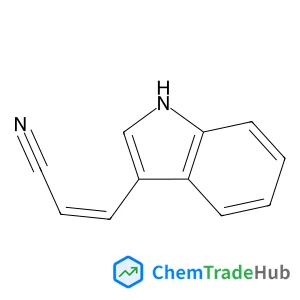


(11alpha,13E)-11-Hydroxy-9,15-dioxoprost-13-en-1-oic acid
CAS Number:
22973-19-9
Molecular Formula:
C20H32O5
Recommended Suppliers






Disclaimer
This page provides academic journal information for reference and research purposes only. We are not affiliated with any journal publishers and do not handle publication submissions. For publication-related inquiries, please contact the respective journal publishers directly.
If you notice any inaccuracies in the information displayed, please contact us at support@chemtradehub.com. We will promptly review and address your concerns.