


![(2E)-4-[(1R,2S,8R,19S,21R)-14-Hydroxy-11-isopropenyl-8,23,23-trimethyl-5-(3-methyl-2-buten-1-yl)-16,20-dioxo-3,7,22-trioxaheptacyclo[17.4.1.1~8,12~.0~2,17~.0~2,21~.0~4,15~.0~6,13~]pentacosa-4(15),5,13
,17-tetraen-21-yl]-2-methyl-2-butenoic acid structure](https://static.chemtradehub.com/structs/173/173867-04-4-d2d3.webp "(2E)-4-[(1R,2S,8R,19S,21R)-14-Hydroxy-11-isopropenyl-8,23,23-trimethyl-5-(3-methyl-2-buten-1-yl)-16,20-dioxo-3,7,22-trioxaheptacyclo[17.4.1.1~8,12~.0~2,17~.0~2,21~.0~4,15~.0~6,13~]pentacosa-4(15),5,13
,17-tetraen-21-yl]-2-methyl-2-butenoic acid structure")
Water-mediated conformer optimization in benzo-18-crown-6-ether/water system
Literature Information
Publication Date
2009-08-06
DOI
10.1039/B909618C
Impact Factor
3.676
Authors
Ryoji Kusaka, Yoshiya Inokuchi, Takayuki Ebata
View Original
Abstract
The conformation of benzo-18-crown-6-ether (B18C6) and its encapsulation of water molecules in a supersonic beam are investigated by laser induced fluorescence (LIF), UV–UV hole-burning, IR–UV double resonance (IR–UV DR), and resonance-enhanced multiphoton ionization (REMPI) spectroscopy with the aid of density functional theory (DFT) calculations at the B3LYP/6-31+G* level. At least four B18C6 conformers and nine B18C6–(H2O)n (n = 1–4) clusters are identified in the supersonic beam. IR–UV DR spectra in the CH stretching region suggest that the four B18C6 conformers have different conformations from each other. In contrast, most of the nine B18C6–(H2O)nclusters have a very similar B18C6 conformation. IR–UV DR spectra in the OH stretching region provide quite clear pictures of the hydration networks formed on B18C6. In all four B18C6–(H2O)1 isomers, the water molecule is H-bonded to the two O atoms adjacent to the benzene ring in “bidentate” and “bifurcated” manners. One of the four B18C6–(H2O)1 isomers exhibits a large population, and further hydration networks are preferentially grown on this specific isomer.
Recommended Journals

Angewandte Chemie International Edition

Photochemical & Photobiological Sciences

Journal of Enzyme inhibition and Medicinal Chemistry

Green Chemistry

CrystEngComm

Molecular Diversity

European Journal of Organic Chemistry

Environmental Toxicology and Pharmacology

Mini-Reviews in Medicinal Chemistry

Advanced Engineering Materials
Related Literature
Disproportionation of thermoelectric bismuth telluridenanowires as a result of the annealing process‡
Andreas Berger, Laurent Cagnon, Ulrich Gösele, Kornelius Nielsch
2010-11-02
Paper
DOI: 10.1039/C0CP00749H
A highly efficient growth mechanism of polycyclic aromatic hydrocarbons
Bikau Shukla, Mitsuo Koshi
2010-01-21
Paper
DOI: 10.1039/B919644G
Ab initio study of the antiferromagnetic coupling in the wheel-shaped [Cu20Cl(OH)24(H2O)12(P8W48O184)]25– anion
Xavier López, José Luis Ramos, Josep M. Poblet
2010-01-27
Paper
DOI: 10.1039/B920442C
Nitrile-functionalized pyrrolidinium ionic liquids as solvents for cross-coupling reactions involving in situ generated nanoparticlecatalyst reservoirs
Ilaria Biondi, Manish Chaubey, Zhaofu Fei, Rosario Scopelliti, Christian G. Hartinger, Yongdan Li, Cinzia Chiappe, Paul J. Dyson
2009-12-21
Paper
DOI: 10.1039/B920025H
Site-specific Xe additions into Cu–ZSM-5 zeolite
Takashi Yumura, Hiroki Yamashita, Hiroe Torigoe, Hisayoshi Kobayashi, Yasushige Kuroda
2010-01-19
Paper
DOI: 10.1039/B919032E
Mg(OOCCH3)2 as an electrolyte additive for quasi-solid dye-sensitized solar cells: with the purpose of enhancing both the photovoltage and photocurrent by modifying the TiO2/dye/electrolyte interfaces
Yifeng Zhu, Yantao Shi, Liduo Wang, Rui Gao, Beibei Ma, Yi Geng, Yong Qiu
2010-10-18
Paper
DOI: 10.1039/C004372A
First observation in the gas phase of the ultrafast electronic relaxation pathways of the S2 states of heme and hemin
Minh-Huong Ha-Thi, Niloufar Shafizadeh, Lionel Poisson, Benoit Soep
2010-10-15
Paper
DOI: 10.1039/C0CP00687D
The influence of the chemical compression on the electric properties of molecular systems within the supermolecular approximation: the LiH molecule as a case study
Anna Kaczmarek, Wojciech Bartkowiak
2009-03-12
Paper
DOI: 10.1039/B819346K
Oxidation states of Co and Fe in Ba1−xSrxCo1−yFeyO3−δ (x, y = 0.2–0.8) and oxygen desorption in the temperature range 300–1273 K
Ashley S. Harvey, F. Jochen Litterst, Zhen Yang, Jennifer L. M. Rupp, Anna Infortuna, Ludwig J. Gauckler
2009-02-11
Paper
DOI: 10.1039/B819414A
Electronic view on ethene adsorption in Cu(i) exchanged zeolites
Pawel Rejmak, Mariusz Mitoraj, Ewa Broclawik
2010-01-19
Paper
DOI: 10.1039/B920551A
You might also like
Compound Q&A
Is 6-(3-Fluorophenyl)picolinic acid (CAS: 887982-40-3) safe?
6-(3-Fluorophenyl)picolinic acid is generally considered safe for laboratory use...
887982-40-36-(3-Fluorophenyl)pi...
Compound Q&A
What industries use (3R)-3-Pyrrolidinol (CAS: 2799-21-5)?
(3R)-3-Pyrrolidinol is used in the pharmaceutical industry as a precursor for dr...
2799-21-5(3R)-3-Pyrrolidinol
Compound Q&A
What precautions should be taken when handling (4R,5R)-4,5-Diethoxycarbonyl-2,2-dimethyldioxolane (CAS: 59779-75-8)?
When handling (4R,5R)-4,5-Diethoxycarbonyl-2,2-dimethyldioxolane (CAS: 59779-75-...
59779-75-8(4R,5R)-4,5-Diethoxy...
Compound Q&A
How is 1-(6-Chloroimidazo[1,2-b]pyridazin-3-yl)ethanone (CAS: 90734-71-7) typically synthesized?
1-(6-Chloroimidazo[1,2-b]pyridazin-3-yl)ethanone is often synthesized via a mult...
90734-71-71-(6-Chloroimidazo[1...
Compound Q&A
What is the market or research trend for N-Ethyl-3,4-dimethylbenzylamine (CAS: 39180-83-1)?
The market for N-Ethyl-3,4-dimethylbenzylamine (CAS: 39180-83-1) remains steady,...
39180-83-1N-Ethyl-3,4-dimethyl...
Compound Q&A
What is Tert-butyl 3-(pyrrolidin-1-yl)azetidine-1-carboxylate (CAS: 1019008-21-9)?
Tert-butyl 3-(pyrrolidin-1-yl)azetidine-1-carboxylate is a chemical compound wit...
1019008-21-9Tert-butyl 3-(pyrrol...
Compound Q&A
What regulatory guidelines apply to 1-Bromo-3-chloro-2,4-dimethoxybenzene (CAS: 1228956-93-1)?
1-Bromo-3-chloro-2,4-dimethoxybenzene (CAS: 1228956-93-1) falls under the classi...
1228956-93-11-Bromo-3-chloro-2,4...
Compound Q&A
Is 8-Bromo-2-methyl-3,4-dihydroisoquinolin-1(2H)-one (CAS: 1368622-07-4) safe?
The safety of 8-Bromo-2-methyl-3,4-dihydroisoquinolin-1(2H)-one (CAS: 1368622-07...
1368622-07-48-Bromo-2-methyl-3,4...
Compound Q&A
Is Benzyl [(3S)-2,6-dioxo-3-piperidinyl]carbamate (CAS: 22785-43-9) safe?
Benzyl [(3S)-2,6-dioxo-3-piperidinyl]carbamate is generally safe when handled wi...
22785-43-9Benzyl [(3S)-2,6-dio...
Compound Q&A
How should 1-{[4-(4,4,5,5-Tetramethyl-1,3,2-dioxaborolan-2-yl)phenyl]sulfonyl}pyrrolidine (CAS: 928657-21-0) be stored?
1-{[4-(4,4,5,5-Tetramethyl-1,3,2-dioxaborolan-2-yl)phenyl]sulfonyl}pyrrolidine s...
928657-21-01-{[4-(4,4,5,5-Tetra...
Source Journal
Physical Chemistry Chemical Physics

CiteScore:
5.5
Self-citation Rate:
10.3%
Articles per Year:
3036
Physical Chemistry Chemical Physics (PCCP) is an international journal co-owned by 19 physical chemistry and physics societies from around the world. This journal publishes original, cutting-edge research in physical chemistry, chemical physics and biophysical chemistry. To be suitable for publication in PCCP, articles must include significant innovation and/or insight into physical chemistry; this is the most important criterion that reviewers and Editors will judge against when evaluating submissions. The journal has a broad scope and welcomes contributions spanning experiment, theory, computation and data science. Topical coverage includes spectroscopy, dynamics, kinetics, statistical mechanics, thermodynamics, electrochemistry, catalysis, surface science, quantum mechanics, quantum computing and machine learning. Interdisciplinary research areas such as polymers and soft matter, materials, nanoscience, energy, surfaces/interfaces, and biophysical chemistry are welcomed if they demonstrate significant innovation and/or insight into physical chemistry. Joined experimental/theoretical studies are particularly appreciated when complementary and based on up-to-date approaches.
Recommended Compounds


Ethyl 6-(trifluoromethyl)pyridazine-3-carboxylate
CAS Number:
1192155-06-8
Molecular Formula:
C8H7F3N2O2
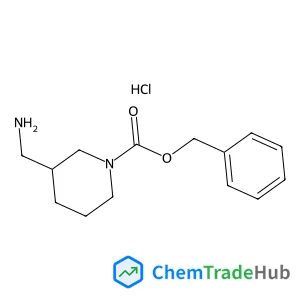
Benzyl 3-(aminomethyl)piperidine-1-carboxylate hydrochloride
CAS Number:
1186663-23-9
Molecular Formula:
C14H21ClN2O2
Recommended Suppliers






Disclaimer
This page provides academic journal information for reference and research purposes only. We are not affiliated with any journal publishers and do not handle publication submissions. For publication-related inquiries, please contact the respective journal publishers directly.
If you notice any inaccuracies in the information displayed, please contact us at support@chemtradehub.com. We will promptly review and address your concerns.