












Kinetics of phase separation in polymer blends revealed by resonance light scattering spectroscopy
Literature Information
Publication Date
2010-01-19
DOI
10.1039/B918069A
Impact Factor
3.676
Authors
Jin Yang, Xudong Chen, Ruowen Fu, Wei-ang Luo, Yunbo Li, Mingqiu Zhang
View Original
Abstract
In this work, kinetics of phase separation in the blends of polystyrene (PS) and poly(vinyl methyl ether) (PVME) was investigated by a simple and sensitive method, i.e., resonance light scattering (RLS) spectroscopy. Owing to the aggregation of chromophores (phenyl rings) in the systems when phase separation occurred, RLS intensities were drastically enhanced and hence acted as a characteristic indicator. At the early stage of phase separation, two different RLS behaviors corresponding to spinodal decomposition (SD) and nucleation and growth (NG) were observed. The Cahn-Hilliard (C–H) linearization theory was found not applicable for kinetics analysis of the scattering data at λ < 346 nm due to RLS effect near the absorption band. Based on a decomposition reaction model, the apparent activation energy of SD phase separation was estimated by the Arrhenius equation. In view of its simplicity and sensitivity of measurement, affordability and availability of instrument, and wide application range of polymer blends, RLS proved to be an effective means for characterization of microstructural variation in polymer blends.
Related Literature
Effect of hydrogenation on the structure and magnetic properties of an iron oxide cluster
G. L. Gutsev, K. G. Belay, L. G. Gutsev, B. R. Ramachandran, P. Jena
2018-01-22
Paper
DOI: 10.1039/C7CP08224J
Secondary relaxation in ultrastable etoricoxib: evidence of correlation with structural relaxation
K. L. Ngai, Javier Rodríguez-Viejo
2018-01-23
Paper
DOI: 10.1039/C7CP06445D
High-resolution broadband sum frequency generation vibrational spectroscopy using intrapulse interference
Yang Wang, Xiangyun Ma, Huijie Wang, Da Chen, Keng C. Chou, Qifeng Li
2018-07-31
Communication
DOI: 10.1039/C8CP02519C
On the mechanism of rapid metal exchange between thiolate-protected gold and gold/silver clusters: a time-resolved in situ XAFS study
Bei Zhang, Olga V. Safonova, Stephan Pollitt, Giovanni Salassa, Annelies Sels, Rania Kazan, Yuming Wang, Günther Rupprechter, Noelia Barrabés, Thomas Bürgi
2018-01-29
Paper
DOI: 10.1039/C7CP08272J
Anionic merocyanine dyes based on thiazol-2-hydrazides: reverse solvatochromism, preferential solvation and multiparametric approaches to spectral shifts
Arindam Mukhopadhyay, Krishna J. Mandal, Jarugu Narasimha Moorthy
2018-01-15
Paper
DOI: 10.1039/C7CP06766F
Modulation of the carrier mobility enhancement in Si/Ge core–shell nanowires under different interface confinements
Yan He, Gang Ouyang
2018-01-10
Communication
DOI: 10.1039/C7CP08259B
Thermodynamic evidence of flexibility in H2O and CO2 absorption of transition metal ion exchanged zeolite LTA
Xin Guo, Lili Wu, Alexandra Navrotsky
2018-01-11
Paper
DOI: 10.1039/C7CP08188J
Triplet electron transfer and spin polarization in a palladium porphyrin–fullerene conjugate
Prashanth K. Poddutoori, Yuri E. Kandrashkin, Christopher O. Obondi, Francis D'Souza, Art van der Est
2018-10-29
Paper
DOI: 10.1039/C8CP04937H
Enhancing electrical energy storage capability of dielectric polymer nanocomposites via the room temperature Coulomb blockade effect of ultra-small platinum nanoparticles
Liwei Wang, Xingyi Huang, Yingke Zhu, Pingkai Jiang
2018-01-17
Paper
DOI: 10.1039/C7CP07990G
You might also like
Compound Q&A
Is 6-(3-Fluorophenyl)picolinic acid (CAS: 887982-40-3) safe?
6-(3-Fluorophenyl)picolinic acid is generally considered safe for laboratory use...
887982-40-36-(3-Fluorophenyl)pi...
Compound Q&A
What industries use (3R)-3-Pyrrolidinol (CAS: 2799-21-5)?
(3R)-3-Pyrrolidinol is used in the pharmaceutical industry as a precursor for dr...
2799-21-5(3R)-3-Pyrrolidinol
Compound Q&A
What precautions should be taken when handling (4R,5R)-4,5-Diethoxycarbonyl-2,2-dimethyldioxolane (CAS: 59779-75-8)?
When handling (4R,5R)-4,5-Diethoxycarbonyl-2,2-dimethyldioxolane (CAS: 59779-75-...
59779-75-8(4R,5R)-4,5-Diethoxy...
Compound Q&A
How is 1-(6-Chloroimidazo[1,2-b]pyridazin-3-yl)ethanone (CAS: 90734-71-7) typically synthesized?
1-(6-Chloroimidazo[1,2-b]pyridazin-3-yl)ethanone is often synthesized via a mult...
90734-71-71-(6-Chloroimidazo[1...
Compound Q&A
What is the market or research trend for N-Ethyl-3,4-dimethylbenzylamine (CAS: 39180-83-1)?
The market for N-Ethyl-3,4-dimethylbenzylamine (CAS: 39180-83-1) remains steady,...
39180-83-1N-Ethyl-3,4-dimethyl...
Compound Q&A
What is Tert-butyl 3-(pyrrolidin-1-yl)azetidine-1-carboxylate (CAS: 1019008-21-9)?
Tert-butyl 3-(pyrrolidin-1-yl)azetidine-1-carboxylate is a chemical compound wit...
1019008-21-9Tert-butyl 3-(pyrrol...
Compound Q&A
What regulatory guidelines apply to 1-Bromo-3-chloro-2,4-dimethoxybenzene (CAS: 1228956-93-1)?
1-Bromo-3-chloro-2,4-dimethoxybenzene (CAS: 1228956-93-1) falls under the classi...
1228956-93-11-Bromo-3-chloro-2,4...
Compound Q&A
Is 8-Bromo-2-methyl-3,4-dihydroisoquinolin-1(2H)-one (CAS: 1368622-07-4) safe?
The safety of 8-Bromo-2-methyl-3,4-dihydroisoquinolin-1(2H)-one (CAS: 1368622-07...
1368622-07-48-Bromo-2-methyl-3,4...
Compound Q&A
Is Benzyl [(3S)-2,6-dioxo-3-piperidinyl]carbamate (CAS: 22785-43-9) safe?
Benzyl [(3S)-2,6-dioxo-3-piperidinyl]carbamate is generally safe when handled wi...
22785-43-9Benzyl [(3S)-2,6-dio...
Compound Q&A
How should 1-{[4-(4,4,5,5-Tetramethyl-1,3,2-dioxaborolan-2-yl)phenyl]sulfonyl}pyrrolidine (CAS: 928657-21-0) be stored?
1-{[4-(4,4,5,5-Tetramethyl-1,3,2-dioxaborolan-2-yl)phenyl]sulfonyl}pyrrolidine s...
928657-21-01-{[4-(4,4,5,5-Tetra...
Source Journal
Physical Chemistry Chemical Physics

CiteScore:
5.5
Self-citation Rate:
10.3%
Articles per Year:
3036
Physical Chemistry Chemical Physics (PCCP) is an international journal co-owned by 19 physical chemistry and physics societies from around the world. This journal publishes original, cutting-edge research in physical chemistry, chemical physics and biophysical chemistry. To be suitable for publication in PCCP, articles must include significant innovation and/or insight into physical chemistry; this is the most important criterion that reviewers and Editors will judge against when evaluating submissions. The journal has a broad scope and welcomes contributions spanning experiment, theory, computation and data science. Topical coverage includes spectroscopy, dynamics, kinetics, statistical mechanics, thermodynamics, electrochemistry, catalysis, surface science, quantum mechanics, quantum computing and machine learning. Interdisciplinary research areas such as polymers and soft matter, materials, nanoscience, energy, surfaces/interfaces, and biophysical chemistry are welcomed if they demonstrate significant innovation and/or insight into physical chemistry. Joined experimental/theoretical studies are particularly appreciated when complementary and based on up-to-date approaches.
Recommended Compounds
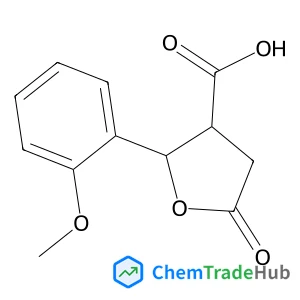
trans-2-(2-Methoxyphenyl)-5-oxotetrahydrofuran-3-carboxylic acid
CAS Number:
99226-02-5
Molecular Formula:
C12H12O5

4-Cyclohexene-1,2-dicarboxylic acid, 1,2-dimethyl ester, (1R,2R)-rel-
CAS Number:
17673-68-6
Molecular Formula:
C10H14O4
Recommended Suppliers







Disclaimer
This page provides academic journal information for reference and research purposes only. We are not affiliated with any journal publishers and do not handle publication submissions. For publication-related inquiries, please contact the respective journal publishers directly.
If you notice any inaccuracies in the information displayed, please contact us at support@chemtradehub.com. We will promptly review and address your concerns.