


New technology for in situ visualization, monitoring and controlling microwave chemical reaction progress using a focused microwave high pressure–temperature closed-vessel digestion system
Literature Information
Publication Date
2009-04-20
DOI
10.1039/B901244C
Impact Factor
4.616
Authors
Henryk Matusiewicz
View Original
Abstract
An experimental model has been developed for studying microwave energy transfer to a sample/solution placed in a high-pressure closed-vessel focused microwave-heated digestion system. The absorption of microwave radiation with a frequency of 2.45 GHz in sample solutions was studied as a function of the efficiency of sample decomposition by measuring the incident and reflected power, temperature and pressure. Experimental measurements of incident/reflected power were carried out with a microwave detector for one type of reagent classically used in wet digestion techniques, namely nitric acid. HNO3 had been chosen as a digesting reagent to reduce the complexity of the observations to a single power-absorbing component. Results obtained by examining pressure, temperature, incident and reflected power graphs were compared with treatment efficiencies determined by measuring total organic carbon variation, arsenobetaine and arsenic content as well as trace element (Cu, Fe, Mn, Zn) recovery in the digests. The reflected power of a sample after microwave-assisted digestion was successfully used as an indicator to evaluate the digestion efficiency. Methodology was developed using the powdered biological certified reference material (DORM-2).
Recommended Journals

Current Opinion in Solid State & Materials Science

Russian Journal of General Chemistry

Current Opinion in Colloid & Interface Science

Saudi Pharmaceutical Journal

New Journal of Chemistry

Russian Journal of Coordination Chemistry

Journal of Peptide Science

Chemistry Education Research and Practice

Drug Discovery Today

Journal of Saudi Chemical Society
Related Literature
Diffusion-influenced reactions in a hollow nano-reactor with a circular hole
2015-02-25
Paper
DOI: 10.1039/C4CP05605A
Electromers of the benzene dimer radical cation
Anna Błoch-Mechkour, Thomas Bally
2015-03-25
Paper
DOI: 10.1039/C4CP05784H
Effect of TiO2 particles on normal and resonance Raman spectra of coumarin 343: a theoretical investigation
Linzhi Yang, Wenpeng Wu, Yi Zhao
2015-03-20
Paper
DOI: 10.1039/C4CP05794E
Design of PAMAM-COO dendron-grafted surfaces to promote Pb(ii) ion adsorption
Leebyn Chong, Meenakshi Dutt
2015-03-17
Paper
DOI: 10.1039/C5CP00309A
Electronic structure of graphene nanoribbons doped with nitrogen atoms: a theoretical insight
A. E. Torres, S. Fomine
2015-03-16
Paper
DOI: 10.1039/C5CP00227C
Interactions of CO2 with various functional molecules
Han Myoung Lee, Il Seung Youn, Muhammad Saleh, Jung Woo Lee, Kwang S. Kim
2015-03-20
Paper
DOI: 10.1039/C5CP00673B
Fragmentation mechanisms of cytosine, adenine and guanine ionized bases
Leila Sadr-Arani, Pierre Mignon, Henry Chermette, Hassan Abdoul-Carime, Bernadette Farizon, Michel Farizon
2015-03-31
Paper
DOI: 10.1039/C5CP00104H
Luminescent properties of 2-mercaptobenzothiazolates of trivalent lanthanides
Roman V. Rumyantcev, Dmitry F. Grishin
2015-03-23
Paper
DOI: 10.1039/C4CP05928J
Rydberg and valence state excitation dynamics: a velocity map imaging study involving the E–V state interaction in HBr
Dimitris Zaouris, Andreas Kartakoullis, Pavle Glodic, Peter C. Samartzis, Helgi Rafn Hróðmarsson, Ágúst Kvaran
2015-03-16
Paper
DOI: 10.1039/C5CP00748H
Order and disorder around Cr3+ in chromium doped persistent luminescent AB2O4 spinels
Neelima Basavaraju, Kaustubh R. Priolkar, Didier Gourier, Aurélie Bessière, Bruno Viana
2015-03-24
Paper
DOI: 10.1039/C5CP01097G
You might also like
Compound Q&A
Is 2-(2-chloroacetamido)-3-phenylpropanoic acid (CAS: 7765-11-9) safe?
2-(2-Chloroacetamido)-3-phenylpropanoic acid (CAS: 7765-11-9) is generally consi...
7765-11-92-(2-chloroacetamido...
Compound Q&A
Is 2-(Benzyloxy)-5-bromobenzoic acid (CAS: 62176-31-2) safe?
2-(Benzyloxy)-5-bromobenzoic acid can be handled safely if appropriate precautio...
62176-31-22-(Benzyloxy)-5-brom...
Compound Q&A
What is (4-Methyl-1,2,5-oxadiazol-3-yl)methanamine hydrochloride (CAS: 1159825-48-5)?
(4-Methyl-1,2,5-oxadiazol-3-yl)methanamine hydrochloride is a chemical compound ...
1159825-48-5(4-Methyl-1,2,5-oxad...
Compound Q&A
What is 2-(5-Hexylthiophen-2-yl)-4,4,5,5-tetramethyl-1,3,2-dioxaborolane (CAS: 917985-54-7)?
2-(5-Hexylthiophen-2-yl)-4,4,5,5-tetramethyl-1,3,2-dioxaborolane (CAS: 917985-54...
917985-54-72-(5-Hexylthiophen-2...
Compound Q&A
Are there alternatives to 4-(8-Methyl-9H-1,3-dioxolo[4,5-h][2,3]benzodiazepin-5-yl)benzenamine (CAS: 102771-26-6) in synthesis?
While 4-(8-Methyl-9H-1,3-dioxolo[4,5-h][2,3]benzodiazepin-5-yl)benzenamine (CAS:...
102771-26-64-(8-Methyl-9H-1,3-d...
Compound Q&A
What is the market or research trend for tert-butyl 3-hydroxy-4,5,7,8-tetrahydro-2H-pyrazolo[3,4-d]azepine-6-carboxylate (CAS: 851376-80-2)?
The market for tert-butyl 3-hydroxy-4,5,7,8-tetrahydro-2H-pyrazolo[3,4-d]azepine...
851376-80-2tert-butyl 3-hydroxy...
Compound Q&A
How should waste containing 3,5-Diamino-1H-pyrazole-4-carbonitrile (CAS: 6844-58-2) be handled?
Waste containing 3,5-Diamino-1H-pyrazole-4-carbonitrile (CAS: 6844-58-2) should ...
6844-58-23,5-Diamino-1H-pyraz...
Compound Q&A
How is (6-Fluoro-3-pyridinyl)boronic acid (CAS: 351019-18-6) typically synthesized?
(6-Fluoro-3-pyridinyl)boronic acid can be synthesized through the reaction of 6-...
351019-18-6(6-Fluoro-3-pyridiny...
Compound Q&A
What industries use Dibenzyl carbonimidoylbiscarbamate (CAS: 10065-79-9)?
Dibenzyl carbonimidoylbiscarbamate (CAS: 10065-79-9) finds applications in vario...
10065-79-9Dibenzyl carbonimido...
Compound Q&A
What is the market or research trend for (beta,beta,2,3,4,5,6-~2~H_7_)Phenylalanine (CAS: 74228-83-4)?
The market for (beta,beta,2,3,4,5,6-~2~H_7_)Phenylalanine (CAS: 74228-83-4) is g...
74228-83-4(beta,beta,2,3,4,5,6...
Source Journal
Analyst

CiteScore:
7.8
Self-citation Rate:
5.6%
Articles per Year:
653
Analyst publishes analytical and bioanalytical research that reports premier fundamental discoveries and inventions, and the applications of those discoveries, unconfined by traditional discipline barriers.
Recommended Compounds
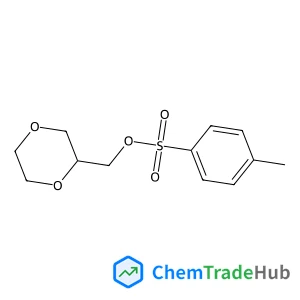
(S)-(1,4-Dioxan-2-yl)methyl 4-methylbenzenesulfonate
CAS Number:
917882-64-5
Molecular Formula:
C12H16O5S

![(3S,4aS,8aS)-2-[(2R,3S)-3-Amino-2-hydroxy-4-phenylbutyl]-N-(2-methyl-2-propanyl)decahydro-3-isoquinolinecarboxamide structure](https://static.chemtradehub.com/structs/136/136522-17-3-4d77.webp "(3S,4aS,8aS)-2-[(2R,3S)-3-Amino-2-hydroxy-4-phenylbutyl]-N-(2-methyl-2-propanyl)decahydro-3-isoquinolinecarboxamide structure")
(3S,4aS,8aS)-2-[(2R,3S)-3-Amino-2-hydroxy-4-phenylbutyl]-N-(2-methyl-2-propanyl)decahydro-3-isoquinolinecarboxamide
CAS Number:
136522-17-3
Molecular Formula:
C24H39N3O2
Recommended Suppliers





Disclaimer
This page provides academic journal information for reference and research purposes only. We are not affiliated with any journal publishers and do not handle publication submissions. For publication-related inquiries, please contact the respective journal publishers directly.
If you notice any inaccuracies in the information displayed, please contact us at support@chemtradehub.com. We will promptly review and address your concerns.