












Diffusion-influenced reactions in a hollow nano-reactor with a circular hole
Literature Information
Publication Date
2015-02-25
DOI
10.1039/C4CP05605A
Impact Factor
3.676
Authors
View Original
Abstract
Hollow nanostructures are paid increasing attention in many nanotechnology-related communities in view of their numerous applications in chemistry and biotechnology, e.g. as smart nanoreactors or drug-delivery systems. In this paper we consider irreversible, diffusion-influenced reactions occurring within a hollow spherical cavity endowed with a circular hole on its surface. Importantly, our model is not limited to small sizes of the aperture. In our scheme, reactants can freely diffuse inside and outside the cavity through the hole, and react at a spherical boundary of given size encapsulated in the chamber and endowed with a given intrinsic rate constant. We work out the solution of the above problem, enabling one to compute the reaction rate constant to any desired accuracy. Remarkably, we show that, in the case of narrow holes, the rate constant is extremely well-approximated by a simple formula that can be derived on the basis of simple physical arguments and that can be readily employed to analyze experimental data.
Recommended Journals
Related Literature
Peptides@mica: from affinity to adhesion mechanism
T. Gladytz, R. Hassert, M. Pagel, H. J. Risselada, S. Naumov, A. G. Beck-Sickinger
2016-07-22
Paper
DOI: 10.1039/C6CP03325C
Retracted Article: Comprehensive insights into the charge dynamics process and excellent photoelectric properties of heterojunction solar cells
Xiangyang Liu, Shun Wang, Haiwu Zheng, Xiuying Cheng, Yuzong Gu
2016-07-27
Paper
DOI: 10.1039/C6CP02656G
From bulk to plasmonic nanoparticle surfaces: the behavior of two potent therapeutic peptides, octreotide and pasireotide
Belén Hernández, Eduardo López-Tobar, Santiago Sanchez-Cortes, Yves-Marie Coïc, Bruno Baron, Alexandre Chenal, Fernando Pflüger, Régis Cohen, Mahmoud Ghomi
2016-08-03
Paper
DOI: 10.1039/C6CP04421B
The involvement of triplet receiver states in the ultrafast excited state processes of small esters
A. B. Stephansen, M. A. B. Larsen, T. I. Sølling
2016-08-12
Paper
DOI: 10.1039/C6CP04046B
First hyperpolarizability of para-aminoaniline induced by a variety of gold nano particles
Stine T. Olsen, Kurt V. Mikkelsen
2016-08-18
Paper
DOI: 10.1039/C6CP01078D
Prediction of two-photon absorption enhancement in red fluorescent protein chromophores made from non-canonical amino acids
M. Alaraby Salem, Isaac Twelves, Alex Brown
2016-08-10
Paper
DOI: 10.1039/C6CP03865D
Why are sec-alkylperoxyl bimolecular self-reactions orders of magnitude faster than the analogous reactions of tert-alkylperoxyls? The unanticipated role of CH hydrogen bond donation
Richmond Lee, Ganna Gryn'ova, K. U. Ingold, Michelle L. Coote
2016-08-03
Paper
DOI: 10.1039/C6CP04670C
The light–matter interaction of a single semiconducting AlGaN nanowire and noble metal Au nanoparticles in the sub-diffraction limit
A. K. Sivadasan, Kishore K. Madapu, Sandip Dhara
2016-08-02
Paper
DOI: 10.1039/C6CP04681A
Lipid bilayer permeation of aliphatic amine and carboxylic acid drugs: rates of insertion, translocation and dissociation from MD simulations
Tuğçe Oruç, Sami Emre Küçük, Deniz Sezer
2016-08-10
Paper
DOI: 10.1039/C6CP05278A
Excitonic and vibrational coherence in artificial photosynthetic systems studied by negative-time ultrafast laser spectroscopy
Dongjia Han, Bing Xue, Juan Du, Tomohiro Miyatake, Hitoshi Tamiaki, Xin Xing, Wei Yuan, Yanyan Li
2016-08-02
Paper
DOI: 10.1039/C6CP03540J
You might also like
Compound Q&A
Is 2-(2-chloroacetamido)-3-phenylpropanoic acid (CAS: 7765-11-9) safe?
2-(2-Chloroacetamido)-3-phenylpropanoic acid (CAS: 7765-11-9) is generally consi...
7765-11-92-(2-chloroacetamido...
Compound Q&A
Is 2-(Benzyloxy)-5-bromobenzoic acid (CAS: 62176-31-2) safe?
2-(Benzyloxy)-5-bromobenzoic acid can be handled safely if appropriate precautio...
62176-31-22-(Benzyloxy)-5-brom...
Compound Q&A
What is (4-Methyl-1,2,5-oxadiazol-3-yl)methanamine hydrochloride (CAS: 1159825-48-5)?
(4-Methyl-1,2,5-oxadiazol-3-yl)methanamine hydrochloride is a chemical compound ...
1159825-48-5(4-Methyl-1,2,5-oxad...
Compound Q&A
What is 2-(5-Hexylthiophen-2-yl)-4,4,5,5-tetramethyl-1,3,2-dioxaborolane (CAS: 917985-54-7)?
2-(5-Hexylthiophen-2-yl)-4,4,5,5-tetramethyl-1,3,2-dioxaborolane (CAS: 917985-54...
917985-54-72-(5-Hexylthiophen-2...
Compound Q&A
Are there alternatives to 4-(8-Methyl-9H-1,3-dioxolo[4,5-h][2,3]benzodiazepin-5-yl)benzenamine (CAS: 102771-26-6) in synthesis?
While 4-(8-Methyl-9H-1,3-dioxolo[4,5-h][2,3]benzodiazepin-5-yl)benzenamine (CAS:...
102771-26-64-(8-Methyl-9H-1,3-d...
Compound Q&A
What is the market or research trend for tert-butyl 3-hydroxy-4,5,7,8-tetrahydro-2H-pyrazolo[3,4-d]azepine-6-carboxylate (CAS: 851376-80-2)?
The market for tert-butyl 3-hydroxy-4,5,7,8-tetrahydro-2H-pyrazolo[3,4-d]azepine...
851376-80-2tert-butyl 3-hydroxy...
Compound Q&A
How should waste containing 3,5-Diamino-1H-pyrazole-4-carbonitrile (CAS: 6844-58-2) be handled?
Waste containing 3,5-Diamino-1H-pyrazole-4-carbonitrile (CAS: 6844-58-2) should ...
6844-58-23,5-Diamino-1H-pyraz...
Compound Q&A
How is (6-Fluoro-3-pyridinyl)boronic acid (CAS: 351019-18-6) typically synthesized?
(6-Fluoro-3-pyridinyl)boronic acid can be synthesized through the reaction of 6-...
351019-18-6(6-Fluoro-3-pyridiny...
Compound Q&A
What industries use Dibenzyl carbonimidoylbiscarbamate (CAS: 10065-79-9)?
Dibenzyl carbonimidoylbiscarbamate (CAS: 10065-79-9) finds applications in vario...
10065-79-9Dibenzyl carbonimido...
Compound Q&A
What is the market or research trend for (beta,beta,2,3,4,5,6-~2~H_7_)Phenylalanine (CAS: 74228-83-4)?
The market for (beta,beta,2,3,4,5,6-~2~H_7_)Phenylalanine (CAS: 74228-83-4) is g...
74228-83-4(beta,beta,2,3,4,5,6...
Source Journal
Physical Chemistry Chemical Physics

CiteScore:
5.5
Self-citation Rate:
10.3%
Articles per Year:
3036
Physical Chemistry Chemical Physics (PCCP) is an international journal co-owned by 19 physical chemistry and physics societies from around the world. This journal publishes original, cutting-edge research in physical chemistry, chemical physics and biophysical chemistry. To be suitable for publication in PCCP, articles must include significant innovation and/or insight into physical chemistry; this is the most important criterion that reviewers and Editors will judge against when evaluating submissions. The journal has a broad scope and welcomes contributions spanning experiment, theory, computation and data science. Topical coverage includes spectroscopy, dynamics, kinetics, statistical mechanics, thermodynamics, electrochemistry, catalysis, surface science, quantum mechanics, quantum computing and machine learning. Interdisciplinary research areas such as polymers and soft matter, materials, nanoscience, energy, surfaces/interfaces, and biophysical chemistry are welcomed if they demonstrate significant innovation and/or insight into physical chemistry. Joined experimental/theoretical studies are particularly appreciated when complementary and based on up-to-date approaches.
Recommended Compounds
![(1S)-1,5-Anhydro-2-O-alpha-L-arabinopyranosyl-1-[5-hydroxy-7-({6-O-[3-(4-hydroxy-3-methoxyphenyl)propanoyl]-beta-D-glucopyranosyl}oxy)-2-(4-hydroxyphenyl)-4-oxo-4H-chromen-6-yl]-D-glucitol structure](https://static.chemtradehub.com/structs/225/2252345-81-4-bcff.webp "(1S)-1,5-Anhydro-2-O-alpha-L-arabinopyranosyl-1-[5-hydroxy-7-({6-O-[3-(4-hydroxy-3-methoxyphenyl)propanoyl]-beta-D-glucopyranosyl}oxy)-2-(4-hydroxyphenyl)-4-oxo-4H-chromen-6-yl]-D-glucitol structure")
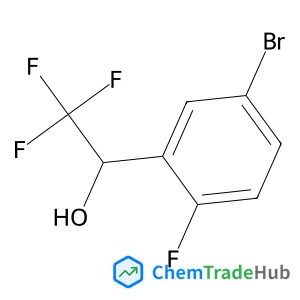
1-(5-Bromo-2-fluorophenyl)-2,2,2-trifluoroethanol
CAS Number:
1039827-16-1
Molecular Formula:
C8H5BrF4O
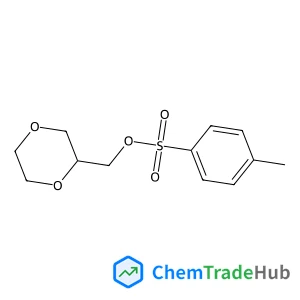
(S)-(1,4-Dioxan-2-yl)methyl 4-methylbenzenesulfonate
CAS Number:
917882-64-5
Molecular Formula:
C12H16O5S
Recommended Suppliers





Disclaimer
This page provides academic journal information for reference and research purposes only. We are not affiliated with any journal publishers and do not handle publication submissions. For publication-related inquiries, please contact the respective journal publishers directly.
If you notice any inaccuracies in the information displayed, please contact us at support@chemtradehub.com. We will promptly review and address your concerns.