


Fragmentation mechanisms of cytosine, adenine and guanine ionized bases
Literature Information
Publication Date
2015-03-31
DOI
10.1039/C5CP00104H
Impact Factor
3.676
Authors
Leila Sadr-Arani, Pierre Mignon, Henry Chermette, Hassan Abdoul-Carime, Bernadette Farizon, Michel Farizon
View Original
Abstract
The different fragmentation channels of cytosine, adenine and guanine have been studied through DFT calculations. The electronic structure of bases, their cations, and the fragments obtained by breaking bonds provides a good understanding of the fragmentation process that can complete the experimental approach. The calculations allow assigning various fragments to the given peaks. The comparison between the energy required for the formation of fragments and the peak intensity in the mass spectrum is used. For cytosine and guanine the elimination of the HNCO molecule is a major route of dissociation, while for adenine multiple loss of HCN or HNC can be followed up to small fragments. For cytosine, this corresponds to the initial bond cleavage of N3–C4/N1–C2, which represents the main dissociation route. For guanine the release of HNCO is obtained through the N1–C2/C5–C6 bond cleavage (reverse order also possible) leading to the largest peak of the spectrum. The corresponding energies of 3.5 and 3.9 eV are typically in the range available in the experiments. The loss of NH3 or HCN is also possible but requires more energy. For adenine, fragmentation consists of multiple loss of the HCN molecule and the main route corresponding to HC8N9 loss is followed by the release of HC2N1.
Recommended Journals

Current Opinion in Colloid & Interface Science

Russian Chemical Bulletin

Russian Journal of Coordination Chemistry

Russian Journal of General Chemistry

Russian Journal of Bioorganic Chemistry

Drug Discovery Today

Journal of Natural Medicines

Russian Journal of Applied Chemistry

Crystallography Reports

New Journal of Chemistry
Related Literature
Hard magnetism in structurally engineered silica nanocomposite
Jeffrey I. Zink
2016-08-02
Paper
DOI: 10.1039/C6CP04843A
Water adsorption and O-defect formation on Fe2O3(0001) surfaces
Roman Ovcharenko, Elena Voloshina, Joachim Sauer
2016-08-31
Paper
DOI: 10.1039/C6CP05313K
Adsorption thermodynamics of two-domain antifreeze proteins: theory and Monte Carlo simulations
Claudio F. Narambuena, Fabricio O. Sanchez Varretti, Antonio J. Ramirez-Pastor
2016-08-19
Paper
DOI: 10.1039/C6CP03924C
The photochemistry of sodium ion pump rhodopsin observed by watermarked femto- to submillisecond stimulated Raman spectroscopy
Yusaku Hontani, Miroslav Kloz, Yoshitaka Kato, John T. M. Kennis
2016-08-17
Paper
DOI: 10.1039/C6CP05240A
Stepwise collapse of highly overlapping electrical double layers
N. D. Spencer
2016-08-12
Paper
DOI: 10.1039/C6CP04222H
Insight into the pseudo π-hole interactions in the M3H6⋯(NCF)n (M = C, Si, Ge, Sn, Pb; n = 1, 2, 3) complexes
Yanli Zeng, Xiaoyan Li, Zheng Sun, Lingpeng Meng
2016-08-08
Paper
DOI: 10.1039/C6CP03713E
First hyperpolarizability of para-aminoaniline induced by a variety of gold nano particles
Stine T. Olsen, Kurt V. Mikkelsen
2016-08-18
Paper
DOI: 10.1039/C6CP01078D
Local environment of metal ions in phthalocyanines: K-edge X-ray absorption spectra
F. d'Acapito, M. Pedio
2016-07-28
Paper
DOI: 10.1039/C6CP04022E
From bulk to plasmonic nanoparticle surfaces: the behavior of two potent therapeutic peptides, octreotide and pasireotide
Belén Hernández, Eduardo López-Tobar, Santiago Sanchez-Cortes, Yves-Marie Coïc, Bruno Baron, Alexandre Chenal, Fernando Pflüger, Régis Cohen, Mahmoud Ghomi
2016-08-03
Paper
DOI: 10.1039/C6CP04421B
Is the manifestation of the local dynamics in the spin–lattice NMR relaxation in dendrimers sensitive to excluded volume interactions?
2016-08-17
Paper
DOI: 10.1039/C6CP01520D
You might also like
Compound Q&A
Is 2-(2-chloroacetamido)-3-phenylpropanoic acid (CAS: 7765-11-9) safe?
2-(2-Chloroacetamido)-3-phenylpropanoic acid (CAS: 7765-11-9) is generally consi...
7765-11-92-(2-chloroacetamido...
Compound Q&A
Is 2-(Benzyloxy)-5-bromobenzoic acid (CAS: 62176-31-2) safe?
2-(Benzyloxy)-5-bromobenzoic acid can be handled safely if appropriate precautio...
62176-31-22-(Benzyloxy)-5-brom...
Compound Q&A
What is (4-Methyl-1,2,5-oxadiazol-3-yl)methanamine hydrochloride (CAS: 1159825-48-5)?
(4-Methyl-1,2,5-oxadiazol-3-yl)methanamine hydrochloride is a chemical compound ...
1159825-48-5(4-Methyl-1,2,5-oxad...
Compound Q&A
What is 2-(5-Hexylthiophen-2-yl)-4,4,5,5-tetramethyl-1,3,2-dioxaborolane (CAS: 917985-54-7)?
2-(5-Hexylthiophen-2-yl)-4,4,5,5-tetramethyl-1,3,2-dioxaborolane (CAS: 917985-54...
917985-54-72-(5-Hexylthiophen-2...
Compound Q&A
Are there alternatives to 4-(8-Methyl-9H-1,3-dioxolo[4,5-h][2,3]benzodiazepin-5-yl)benzenamine (CAS: 102771-26-6) in synthesis?
While 4-(8-Methyl-9H-1,3-dioxolo[4,5-h][2,3]benzodiazepin-5-yl)benzenamine (CAS:...
102771-26-64-(8-Methyl-9H-1,3-d...
Compound Q&A
What is the market or research trend for tert-butyl 3-hydroxy-4,5,7,8-tetrahydro-2H-pyrazolo[3,4-d]azepine-6-carboxylate (CAS: 851376-80-2)?
The market for tert-butyl 3-hydroxy-4,5,7,8-tetrahydro-2H-pyrazolo[3,4-d]azepine...
851376-80-2tert-butyl 3-hydroxy...
Compound Q&A
How should waste containing 3,5-Diamino-1H-pyrazole-4-carbonitrile (CAS: 6844-58-2) be handled?
Waste containing 3,5-Diamino-1H-pyrazole-4-carbonitrile (CAS: 6844-58-2) should ...
6844-58-23,5-Diamino-1H-pyraz...
Compound Q&A
How is (6-Fluoro-3-pyridinyl)boronic acid (CAS: 351019-18-6) typically synthesized?
(6-Fluoro-3-pyridinyl)boronic acid can be synthesized through the reaction of 6-...
351019-18-6(6-Fluoro-3-pyridiny...
Compound Q&A
What industries use Dibenzyl carbonimidoylbiscarbamate (CAS: 10065-79-9)?
Dibenzyl carbonimidoylbiscarbamate (CAS: 10065-79-9) finds applications in vario...
10065-79-9Dibenzyl carbonimido...
Compound Q&A
What is the market or research trend for (beta,beta,2,3,4,5,6-~2~H_7_)Phenylalanine (CAS: 74228-83-4)?
The market for (beta,beta,2,3,4,5,6-~2~H_7_)Phenylalanine (CAS: 74228-83-4) is g...
74228-83-4(beta,beta,2,3,4,5,6...
Source Journal
Physical Chemistry Chemical Physics

CiteScore:
5.5
Self-citation Rate:
10.3%
Articles per Year:
3036
Physical Chemistry Chemical Physics (PCCP) is an international journal co-owned by 19 physical chemistry and physics societies from around the world. This journal publishes original, cutting-edge research in physical chemistry, chemical physics and biophysical chemistry. To be suitable for publication in PCCP, articles must include significant innovation and/or insight into physical chemistry; this is the most important criterion that reviewers and Editors will judge against when evaluating submissions. The journal has a broad scope and welcomes contributions spanning experiment, theory, computation and data science. Topical coverage includes spectroscopy, dynamics, kinetics, statistical mechanics, thermodynamics, electrochemistry, catalysis, surface science, quantum mechanics, quantum computing and machine learning. Interdisciplinary research areas such as polymers and soft matter, materials, nanoscience, energy, surfaces/interfaces, and biophysical chemistry are welcomed if they demonstrate significant innovation and/or insight into physical chemistry. Joined experimental/theoretical studies are particularly appreciated when complementary and based on up-to-date approaches.
Recommended Compounds
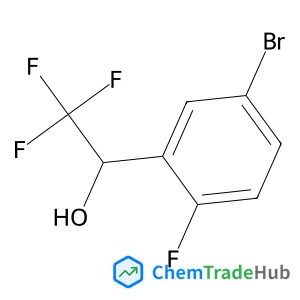
1-(5-Bromo-2-fluorophenyl)-2,2,2-trifluoroethanol
CAS Number:
1039827-16-1
Molecular Formula:
C8H5BrF4O
![Ethyl thieno[3,2-f]quinoline-2-carboxylate structure](https://static.chemtradehub.com/structs/299/29948-26-3-f62b.webp "Ethyl thieno[3,2-f]quinoline-2-carboxylate structure")
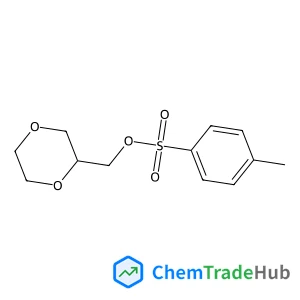
(S)-(1,4-Dioxan-2-yl)methyl 4-methylbenzenesulfonate
CAS Number:
917882-64-5
Molecular Formula:
C12H16O5S
![19-[Chloro(dideuterio)methyl]-19-deuterio-20,20-dideuteriooxyoctatriacontane-18,21-dione structure](https://static.chemtradehub.com/structs/124/1246818-85-8-6244.webp "19-[Chloro(dideuterio)methyl]-19-deuterio-20,20-dideuteriooxyoctatriacontane-18,21-dione structure")
19-[Chloro(dideuterio)methyl]-19-deuterio-20,20-dideuteriooxyoctatriacontane-18,21-dione
CAS Number:
1246818-85-8
Molecular Formula:
C39H75ClO4
Recommended Suppliers







Disclaimer
This page provides academic journal information for reference and research purposes only. We are not affiliated with any journal publishers and do not handle publication submissions. For publication-related inquiries, please contact the respective journal publishers directly.
If you notice any inaccuracies in the information displayed, please contact us at support@chemtradehub.com. We will promptly review and address your concerns.