












The structure of oxotitanium phthalocyanine: a gas-phase electron diffraction and computational study
Literature Information
Publication Date
2009-03-06
DOI
10.1039/B820914F
Impact Factor
3.676
Authors
Alexander V. Zakharov, Sergei A. Shlykov, Yuriy A. Zhabanov, Georgy V. Girichev
View Original
Abstract
The gas-phase molecular structure of oxotitanium phthalocyanine (TiOPc) has been studied by a synchronous gas electron diffraction and mass spectrometric experiment, and density functional theory calculations using the B3LYP hybrid method and cc-pVTZ basis sets. The molecule has an equilibrium structure of C4v symmetry with a convex macrocycle. The titanium atom is out-of-the-plane of the four central nitrogen atoms and forms a square pyramid with them, with the following parameters: r(Ti–N) = 2.090(5) Å, r(N⋯N) = 2.813(9) Å (the side of the pyramid base), z(Ti)–z(N) = 0.614 Å (the height of the pyramid). Compared to solid-state crystal structures, the Ti–O distance in gas-phase TiOPc is shortened and the Ti–N distance is elongated, which can be attributed to significant intermolecular interaction in the crystals.
Related Literature
Spatially resolved investigation into the coke formation and chemical states of nickel during autothermal reforming of acetic acid over Ni/CeO2–ZrO2 catalysts
Nat Phongprueksathat, Thanakorn Thanasujaree, Thirasak Rirksomboon
2022-02-15
Paper
DOI: 10.1039/D1RE00561H
Catalytic conversion of carbon-containing impurity methyldichlorosilane to purify raw material trichlorosilane of polysilicon production
Qiang Geng, Guoqiang Huang
2022-04-07
Paper
DOI: 10.1039/D1RE00569C
The assembly of integrated continuous flow platform for on-demand rosiglitazone and pioglitazone synthesis
2022-08-12
Communication
DOI: 10.1039/D2RE00228K
Convenient and accurate insight into solution-phase equilibria from FlowNMR titrations
Ian Clegg, Anna Codina
2022-06-09
Paper
DOI: 10.1039/D2RE00123C
Autonomous model-based experimental design for rapid reaction development
Sebastian Knoll, Martin Horn
2022-08-02
Paper
DOI: 10.1039/D2RE00208F
Analysis of n-hexane, 1-hexene, cyclohexane and cyclohexene catalytic cracking over HZSM-5 zeolites: effects of molecular structure
Zhenzhou Ma, Bochong Chen, Liu Zhao, Enxian Yuan, Tingting Cui
2022-05-04
Paper
DOI: 10.1039/D1RE00532D
Microwave modification of iron supported on beta silicon carbide catalysts for Fischer–Tropsch synthesis
Christel Olivier Lenge Mbuya, Chike George Okoye-Chine, Katu Ramutsindela, Linda L. Jewell, Mike Scurrell
2022-03-17
Paper
DOI: 10.1039/D2RE00024E
Promoting effects of indium doped Cu/CeO2 catalysts on CO2 hydrogenation to methanol
Marco A. Rossi, Letícia F. Rasteiro, Marco A. Fraga, José M. Assaf, Elisabete M. Assaf
2022-04-07
Paper
DOI: 10.1039/D2RE00033D
Catalyst and reactor design considerations for selective production of acids by oxidative cleavage of alkenes and unsaturated fatty acids with H2O2
Danim Yun, Zhongyao Zhang, David W. Flaherty
2022-06-10
Paper
DOI: 10.1039/D2RE00160H
You might also like
Compound Q&A
What industries use (1R,3S)-1,3-Cyclopentanediol (CAS: 16326-97-9)?
(1R,3S)-1,3-Cyclopentanediol finds applications in various industries. In the ph...
16326-97-9(1R,3S)-1,3-Cyclopen...
Compound Q&A
What precautions should be taken when handling N'-[4-(Dimethylamino)phenyl]-N,N-dimethyl-1,4-benzenediamine (CAS: 637-31-0)?
When handling N'-[4-(Dimethylamino)phenyl]-N,N-dimethyl-1,4-benzenediamine, it i...
637-31-0N'-[4-(Dimethylamino...
Compound Q&A
Are there alternatives to 5-(2,4-Difluorophenyl)-2-methoxypyrimidine (CAS: 1352318-16-1) in synthesis?
There are several alternatives to 5-(2,4-Difluorophenyl)-2-methoxypyrimidine in ...
1352318-16-15-(2,4-Difluoropheny...
Compound Q&A
What regulatory guidelines apply to 1-(3-Methoxyphenoxy)propan-2-ol (CAS: 382141-68-6)?
1-(3-Methoxyphenoxy)propan-2-ol (CAS: 382141-68-6) must comply with the Globally...
382141-68-61-(3-Methoxyphenoxy)...
Compound Q&A
Is Tetrodotoxin Citrate (CAS: 18660-81-6) safe?
Tetrodotoxin Citrate is extremely dangerous and should be handled with extreme c...
18660-81-6Tetrodotoxin Citrate
Compound Q&A
What are the main uses of 2-Methyl-2-propanyl [(1R,3S)-3-hydroxycyclopentyl]carbamate (CAS: 225641-84-9)?
2-Methyl-2-propanyl [(1R,3S)-3-hydroxycyclopentyl]carbamate (CAS: 225641-84-9) i...
225641-84-92-Methyl-2-propanyl ...
Compound Q&A
How should waste containing 4-(2-Hydroxyhexafluoroisopropyl)Benzoic Acid (CAS: 16261-80-6) be handled?
Waste containing 4-(2-Hydroxyhexafluoroisopropyl)Benzoic Acid (CAS: 16261-80-6) ...
16261-80-64-(2-Hydroxyhexafluo...
Compound Q&A
How is 2-Methyl-2-proanyl {(2S)-1-[(benzyloxy)amino]-3-hydroxy-3-methyl-1-oxo-2-butanyl}carbamate (CAS: 102507-19-7) typically synthesized?
2-Methyl-2-proanyl {(2S)-1-[(benzyloxy)amino]-3-hydroxy-3-methyl-1-oxo-2-butanyl...
102507-19-72-Methyl-2-propanyl ...
Compound Q&A
What is Benzeneethanamine, α-ethyl-, hydrochloride (1:1) (CAS: 20735-15-3)?
Benzeneethanamine, α-ethyl-, hydrochloride (1:1) is an organic compound with the...
20735-15-3Benzeneethanamine, α...
Compound Q&A
Are there alternatives to 3-{(E)-[4-(Dimethylamino)phenyl]diazenyl}benzoic acid (CAS: 20691-84-3) in synthesis?
In the synthesis of compounds similar to 3-{(E)-[4-(Dimethylamino)phenyl]diazeny...
20691-84-33-{(E)-[4-(Dimethyla...
Source Journal
Physical Chemistry Chemical Physics

CiteScore:
5.5
Self-citation Rate:
10.3%
Articles per Year:
3036
Physical Chemistry Chemical Physics (PCCP) is an international journal co-owned by 19 physical chemistry and physics societies from around the world. This journal publishes original, cutting-edge research in physical chemistry, chemical physics and biophysical chemistry. To be suitable for publication in PCCP, articles must include significant innovation and/or insight into physical chemistry; this is the most important criterion that reviewers and Editors will judge against when evaluating submissions. The journal has a broad scope and welcomes contributions spanning experiment, theory, computation and data science. Topical coverage includes spectroscopy, dynamics, kinetics, statistical mechanics, thermodynamics, electrochemistry, catalysis, surface science, quantum mechanics, quantum computing and machine learning. Interdisciplinary research areas such as polymers and soft matter, materials, nanoscience, energy, surfaces/interfaces, and biophysical chemistry are welcomed if they demonstrate significant innovation and/or insight into physical chemistry. Joined experimental/theoretical studies are particularly appreciated when complementary and based on up-to-date approaches.
Recommended Compounds
![N-[(9H-Fluoren-9-ylmethoxy)carbonyl]-beta-phenyl-L-phenylalanine structure](https://static.chemtradehub.com/structs/201/201484-50-6-c2fc.webp "N-[(9H-Fluoren-9-ylmethoxy)carbonyl]-beta-phenyl-L-phenylalanine structure")
N-[(9H-Fluoren-9-ylmethoxy)carbonyl]-beta-phenyl-L-phenylalanine
CAS Number:
201484-50-6
Molecular Formula:
C30H25NO4
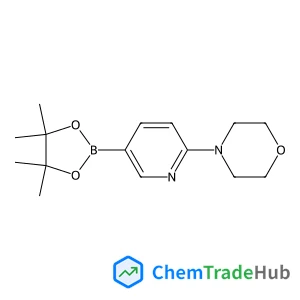
4-(5-(4,4,5,5-tetramethyl-1,3,2-dioxaborolan-2-yl)pyridin-2-yl)morpholine
CAS Number:
485799-04-0
Molecular Formula:
C15H23BN2O3
Recommended Suppliers






Disclaimer
This page provides academic journal information for reference and research purposes only. We are not affiliated with any journal publishers and do not handle publication submissions. For publication-related inquiries, please contact the respective journal publishers directly.
If you notice any inaccuracies in the information displayed, please contact us at support@chemtradehub.com. We will promptly review and address your concerns.