












Promoting effects of indium doped Cu/CeO2 catalysts on CO2 hydrogenation to methanol
Literature Information
Publication Date
2022-04-07
DOI
10.1039/D2RE00033D
Impact Factor
4.239
Authors
Marco A. Rossi, Letícia F. Rasteiro, Marco A. Fraga, José M. Assaf, Elisabete M. Assaf
View Original
Abstract
Cu-Based materials have been extensively reported as promising catalysts to convert CO2 into value-added chemicals and fuels. Herein, we report In-promoted Cu/CeO2 catalysts (CuCeIn5 and CuCeIn10) prepared by a surfactant-assisted co-precipitation method and applied in the CO2 hydrogenation to methanol. Structural characterization indicated that catalysts were formed in an inverse configuration, consisting of small single-domains of CeO2 particles (5–7 nm) deposited over large Cu particles (55–70 nm). The presence of highly dispersed indium induced a decrease in CeO2 particle size, increasing the interface areas that acted as CO2 adsorption sites, as observed by spectroscopic and temperature-programmed analysis. During CO2 hydrogenation, indium-promoted catalysts led to a remarkable increase of 66% in methanol selectivity compared to the unpromoted system. In situ DRIFTS revealed the formate route as the preferred route for methanol formation. After temperature, pressure, and space velocity optimization through chemometric tools, the In-doped Cu/CeO2 (CuCeIn5) catalyst achieved a methanol selectivity of 99.3% with no CO formation.
Recommended Journals
Related Literature
Complex diffusion-based kinetics of photoluminescence in semiconductor nanoplatelets
A. A. Kurilovich, V. N. Mantsevich, K. J. Stevenson, V. V. Palyulin
2020-10-19
Paper
DOI: 10.1039/D0CP03744C
Towards developing efficient metalloporphyrin-based hybrid photocatalysts for CO2 reduction; an ab initio study
Azar Ostovan, Nick Papior, Mansour Zahedi
2020-09-16
Paper
DOI: 10.1039/D0CP03279D
Kinetic study of the OH + HO2 → H2O + O2 reaction using ring polymer molecular dynamics and quantum dynamics
Yang Liu, Hongwei Song, Jun Li
2020-09-28
Paper
DOI: 10.1039/D0CP04120C
Energetics of non-heme iron reactivity: can ab initio calculations provide the right answer?
Milica Feldt, Carlos Martín-Fernández, Jeremy N. Harvey
2020-10-12
Paper
DOI: 10.1039/D0CP04401F
Free volume, gas permeation, and proton conductivity in MIL-101-SO3H/Nafion composite membranes
Chongshan Yin, Chunqing He, Qicheng Liu, Bangyun Xiong, Xiaowei Zhang, Libing Qian, Jingjing Li, Yawei Zhou
2019-10-19
Paper
DOI: 10.1039/C9CP04832D
Generating transition states of isomerization reactions with deep learning
Lagnajit Pattanaik, John B. Ingraham, Colin A. Grambow, William H. Green
2020-10-05
Paper
DOI: 10.1039/D0CP04670A
Geometry, induced magnetism and modified electronic behaviors for magnetic atom adsorption on antimonene nanotubes
X. He, Z. Q. Fan, Z. H. Zhang
2020-09-28
Paper
DOI: 10.1039/D0CP04346J
Correction: The influence of diameter of multiwalled carbon nanotubes on mechanical, optical and electrical properties of Langmuir–Schaefer films
Karol Rytel, Kamil Kędzierski, Bolesław Barszcz, Małgorzata Widelicka, Alicja Stachowiak, Andrzej Biadasz, Łukasz Majchrzycki, Emerson Coy, Danuta Wróbel
2020-10-15
Correction
DOI: 10.1039/D0CP90227F
Synthesis and characterization of a strong ferromagnetic and high hardness intermetallic compound Fe2B
Xingbin Zhao, Li Li, Kuo Bao, Pinwen Zhu, Qiang Tao, Shuailing Ma, Bo Liu, Yufei Ge, Da Li
2020-10-22
Paper
DOI: 10.1039/D0CP03380D
Superconductivity in an organometallic compound
Liu-Cheng Chen, Hui Yang, Ming-An Fu, Jia Cheng, Xiao-Lin Wu, Yun Gao, Zhong-Bing Huang, Xiao-Jia Chen
2019-10-14
Paper
DOI: 10.1039/C9CP04227J
You might also like
Compound Q&A
How should waste containing 2-Ethyl-4-Methyl-1H-Imidazole-5-Carbaldehyde (CAS: 88634-80-4) be handled?
Waste containing 2-Ethyl-4-Methyl-1H-Imidazole-5-Carbaldehyde (CAS: 88634-80-4) ...
88634-80-42-Ethyl-4-Methyl-1H-...
Compound Q&A
What industries use Triethoxy(octyl)silane (CAS: 1385031-14-0)?
Triethoxy(octyl)silane (CAS: 1385031-14-0) is widely used in the pharmaceuticals...
1385031-14-0Triethoxy(octyl)sila...
Compound Q&A
Are there alternatives to 3-iodo-7-nitro-1H-indazole (CAS: 864724-64-1) in synthesis?
Several alternatives to 3-iodo-7-nitro-1H-indazole (CAS: 864724-64-1) exist in t...
864724-64-13-iodo-7-nitro-1H-in...
Compound Q&A
Are there alternatives to Benzene, bis[(trimethoxysilyl)ethyl] (CAS: 266317-71-9) in synthesis?
Yes, there are alternatives to Benzene, bis[(trimethoxysilyl)ethyl] (CAS: 266317...
266317-71-9Benzene, bis[(trimet...
Compound Q&A
Is Isothiazole-3-carbonitrile (CAS: 1452-17-1) safe?
Isothiazole-3-carbonitrile (CAS: 1452-17-1) is generally considered safe when us...
1452-17-1Isothiazole-3-carbon...
Compound Q&A
Is (3-Chlorophenyl)methanol (CAS: 873-63-2) safe?
(3-Chlorophenyl)methanol (CAS: 873-63-2) is considered low to moderately toxic. ...
873-63-2(3-Chlorophenyl)meth...
Compound Q&A
How is (2S,3S)-2-Hydroxy-3-({[(2-methyl-2-propanyl)oxy]carbonyl}amino)-3-(2-naphthyl)propanoic acid (CAS: 959583-98-3) typically synthesized?
(2S,3S)-2-Hydroxy-3-({[(2-methyl-2-propanyl)oxy]carbonyl}amino)-3-(2-naphthyl)pr...
959583-98-3(2S,3S)-2-Hydroxy-3-...
Compound Q&A
What precautions should be taken when handling Methyl 2-(bromomethyl)-5-methoxybenzoate (CAS: 788081-99-2)?
Proper handling of methyl 2-(bromomethyl)-5-methoxybenzoate requires the use of ...
788081-99-2Methyl 2-(bromomethy...
Compound Q&A
What is 6,8-Dibromoimidazo[1,2-a]pyridine-2-carboxylic acid (CAS: 904805-36-3)?
6,8-Dibromoimidazo[1,2-a]pyridine-2-carboxylic acid (CAS: 904805-36-3) is an aro...
904805-36-36,8-Dibromoimidazo[1...
Compound Q&A
Is 3-Amino-5-bromo-2-pyridinecarbonitrile (CAS: 573675-27-1) safe?
3-Amino-5-bromo-2-pyridinecarbonitrile is considered safe when handled under pro...
573675-27-13-Amino-5-bromo-2-py...
Source Journal
Reaction Chemistry & Engineering

CiteScore:
0
Self-citation Rate:
8.8%
Articles per Year:
284
Reaction Chemistry & Engineering is an interdisciplinary journal reporting cutting-edge research focused on enhancing the understanding and efficiency of reactions. Reaction engineering leverages the interface where fundamental molecular chemistry meets chemical engineering and technology. Challenges in chemistry can be overcome by the application of new technologies, while engineers may find improved solutions for process development from the latest developments in reaction chemistry. Reaction Chemistry & Engineering is a unique forum for researchers whose interests span the broad areas of chemical engineering and chemical sciences to come together in solving problems of importance to wider society. All papers should be written to be approachable by readers across the engineering and chemical sciences. Papers that consider multiple scales, from the laboratory up to and including plant scale, are particularly encouraged.
Recommended Compounds
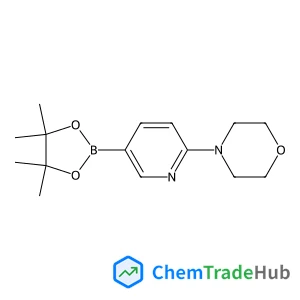
4-(5-(4,4,5,5-tetramethyl-1,3,2-dioxaborolan-2-yl)pyridin-2-yl)morpholine
CAS Number:
485799-04-0
Molecular Formula:
C15H23BN2O3
Recommended Suppliers






Disclaimer
This page provides academic journal information for reference and research purposes only. We are not affiliated with any journal publishers and do not handle publication submissions. For publication-related inquiries, please contact the respective journal publishers directly.
If you notice any inaccuracies in the information displayed, please contact us at support@chemtradehub.com. We will promptly review and address your concerns.