












Probing lipase/esterase libraries for lipid A hydrolases—discovery of biocatalysts for the detoxification of bacterially-expressed recombinant protein
Literature Information
Publication Date
2004-01-19
DOI
10.1039/B312662E
Impact Factor
6.222
Authors
Jung-Mo Ahn, Paul Wentworth, Jr., Kim D. Janda
View Original
Abstract
In our ongoing efforts to develop new methods for lipopolysaccharide (LPS) detoxification, we have screened lipase/esterase libraries for the ability to deacylate the 2′- and 3′-fatty acid chains from lipid A: the most active esterases were successfully employed to inactivate LPSs in a crude concentrated cell supernatant of E. Coli containing a recombinant single chain antibody (scFv).
Related Literature
Acetyl protected thiol methacrylic polymers as effective ligands to keep quantum dots in luminescent standby mode
Marta Liras, Isabel Quijada-Garrido, Marta Palacios-Cuesta, Sonia Muñoz-Durieux, Olga García
2013-08-30
Paper
DOI: 10.1039/C3PY00987D
Glutathione-triggered disassembly of isothermally responsive polymer nanoparticles obtained by nanoprecipitation of hydrophilic polymers
Daniel J. Phillips, Joseph P. Patterson, Rachel K. O'Reilly, Matthew I. Gibson
2013-08-15
Paper
DOI: 10.1039/C3PY00991B
Combining oxyanionic polymerization and click-chemistry: a general strategy for the synthesis of polyether polyol macromonomers
Anja Thomas, Kerstin Niederer, Frederik Wurm, Holger Frey
2013-09-26
Paper
DOI: 10.1039/C3PY01078C
A novel route for polymerisation of thiophene based conducting polymers using trace-free oxidants
Jimy Hadiono So, David Mayevsky, Orawan Winther-Jensen, Bjorn Winther-Jensen
2013-10-10
Communication
DOI: 10.1039/C3PY01265D
Polymer patchy colloids with sticky patches
Yi Zhao, Rüdiger Berger, Katharina Landfester, Daniel Crespy
2013-09-12
Paper
DOI: 10.1039/C3PY01096A
Poly(methacrylic acid) complexation of amphotericin B to treat neglected diseases
Ji-won Choi, Denis Martin, Vanessa Yardley, Keith Powell, Antony Godwin
2013-10-08
Paper
DOI: 10.1039/C3PY01051A
Copper-mediated living radical polymerization (SET-LRP) of lipophilic monomers from multi-functional initiators: reducing star–star coupling at high molecular weights and high monomer conversions
Christopher Waldron, Athina Anastasaki, Ronan McHale, Paul Wilson, Zaidong Li, Tim Smith, David M. Haddleton
2013-10-01
Paper
DOI: 10.1039/C3PY01241G
Manganese(iii) acetylacetonate initiated RAFT polymerizations: an alternative and versatile RAFT initiator
Zhigui Zheng, Yuan Zhou, Zhengbiao Zhang, Xiulin Zhu
2013-07-31
Communication
DOI: 10.1039/C3PY00879G
You might also like
Compound Q&A
What are the main uses of 1H-Indazole-6-carbonitrile (CAS: 141290-59-7)?
1H-Indazole-6-carbonitrile finds applications in pharmaceuticals, where it serve...
141290-59-71H-Indazole-6-carbon...
Compound Q&A
How should waste containing Dioctyl (2E)-2-butenedioate (CAS: 2997-85-5) be handled?
Waste containing Dioctyl (2E)-2-butenedioate (CAS: 2997-85-5) should be collecte...
2997-85-5Dioctyl (2E)-2-buten...
Compound Q&A
What industries use Sodium [(1,2-benzoxazol-3-ylmethyl)sulfonyl]azanide (CAS: 68291-98-5)?
Sodium [(1,2-benzoxazol-3-ylmethyl)sulfonyl]azanide is primarily used in pharmac...
68291-98-5Sodium [(1,2-benzoxa...
Compound Q&A
Are there alternatives to Dimethyl 4-(4,4,5,5-tetramethyl-1,3,2-dioxaborolan-2-yl)-2,6-pyridinedicarboxylate (CAS: 741709-66-0) in synthesis?
Dimethyl 4-(4,4,5,5-tetramethyl-1,3,2-dioxaborolan-2-yl)-2,6-pyridinedicarboxyla...
741709-66-0Dimethyl 4-(4,4,5,5-...
Compound Q&A
How should waste containing 2-Fluoro-6-hydrazinopyridine (CAS: 80714-39-2) be handled?
Waste containing 2-Fluoro-6-hydrazinopyridine (CAS: 80714-39-2) should be manage...
80714-39-22-Fluoro-6-hydrazino...
Compound Q&A
What is 6-Formyl-2-pyridinecarboxylic acid (CAS: 499214-11-8)?
6-Formyl-2-pyridinecarboxylic acid is an organic compound with the molecular for...
499214-11-86-Formyl-2-pyridinec...
Compound Q&A
What is the market or research trend for 3-(3,4-dimethoxyphenyl)-2,5-dimethyl-N-(2-morpholin-4-ylethyl)pyrazolo[1,5-a]pyrimidin-7-amine (CAS: 900874-91-1)?
Research trends for this compound indicate a focus on its potential applications...
900874-91-13-(3,4-dimethoxyphen...
Compound Q&A
How is 9H-Tribenzo[b,d,f]azepine (CAS: 29875-73-8) typically synthesized?
9H-Tribenzo[b,d,f]azepine is typically synthesized via a multi-step process invo...
29875-73-89H-Tribenzo[b,d,f]az...
Compound Q&A
How is 1-Cyclopropyl-7-ethoxy-6-fluoro-8-methoxy-4-oxo-1,4-dihydro-3-quinolinecarboxylic acid (CAS: 1797982-51-4) typically synthesized?
1-Cyclopropyl-7-ethoxy-6-fluoro-8-methoxy-4-oxo-1,4-dihydro-3-quinolinecarboxyli...
1797982-51-41-Cyclopropyl-7-etho...
Compound Q&A
How should waste containing Methyl 3-oxo-1,2,3,4-tetrahydro-6-quinoxalinecarboxylate (CAS: 671820-52-3) be handled?
Waste containing Methyl 3-oxo-1,2,3,4-tetrahydro-6-quinoxalinecarboxylate (CAS: ...
671820-52-3Methyl 3-oxo-1,2,3,4...
Source Journal
Chemical Communications

CiteScore:
8.6
Self-citation Rate:
4.7%
Articles per Year:
2458
ChemComm publishes urgent research which is of outstanding significance and interest to experts in the field, while also appealing to the journal’s broad chemistry readership. Our communication format is ideally suited to short, urgent studies that are of such importance that they require accelerated publication. Our scope covers all topics in chemistry, and research at the interface of chemistry and other disciplines (such as materials science, nanoscience, physics, engineering and biology) where there is a significant novelty in the chemistry aspects. Major topic areas covered include: Analytical Chemistry Catalysis Chemical Biology and medicinal chemistry Computational Chemistry and Machine Learning Energy and sustainable chemistry Environmental Chemistry Green Chemistry Inorganic Chemistry Materials Chemistry Nanoscience Organic Chemistry Physical Chemistry Polymer Chemistry Supramolecular Chemistry
Recommended Compounds
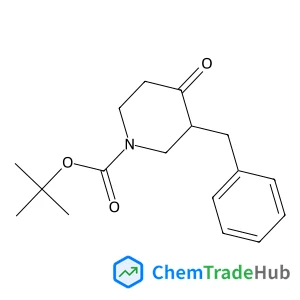
2-Methyl-2-propanyl 3-benzyl-4-oxo-1-piperidinecarboxylate
CAS Number:
193274-82-7
Molecular Formula:
C17H23NO3
Recommended Suppliers





Disclaimer
This page provides academic journal information for reference and research purposes only. We are not affiliated with any journal publishers and do not handle publication submissions. For publication-related inquiries, please contact the respective journal publishers directly.
If you notice any inaccuracies in the information displayed, please contact us at support@chemtradehub.com. We will promptly review and address your concerns.