![tert-Butyl N-[(2-chloropyridin-4-yl)methyl]carbamate structure](https://static.chemtradehub.com/structs/916/916210-27-0-9f95.webp "tert-Butyl N-[(2-chloropyridin-4-yl)methyl]carbamate structure")
tert-Butyl N-[(2-chloropyridin-4-yl)methyl]carbamate
CAS Number:
916210-27-0
Molecular Formula:
C11H15ClN2O2
Jari Konu, Tristram Chivers
Two-electron oxidation of the [C(PPh2S)2]2− dianion with iodine afforded an unexpected mixture of a dimeric Li–I carbenoid [(Et2O)(μ-Li)][(μ4-Li){IC(PPh2S)2}2] and a novel, unsaturated six-membered C2P2S2 ring in [(SPh2P)2C2(PPh2)2S2].
Yi-Ting Tsai, Cong-Wei Huang
DOI: 10.1039/D1CP03243G
Delu Gao, Dunyou Wang
DOI: 10.1039/D1CP04212B
J. J. Pais Pereda
DOI: 10.1039/D1CP04806F
Mohammad Mahdi Kalantarian, Amir Haghipour
DOI: 10.1039/D1CP04800G
Mrinmoy Roy, Vikram, Bhawna, Aftab Alam, M. Aslam
DOI: 10.1039/D1CP03529K
Alexander Zech
DOI: 10.1039/D1CP04587C
Jelena Belić, Arno Förster, Jan Paul Menzel, Francesco Buda, Lucas Visscher
DOI: 10.1039/D1CP04218A
Jie Yang, Yifei Zhang, Ting-Fang He, Yangyi Lu, Lijuan Wang, Bei Ding
DOI: 10.1039/D1CP04445A
A. Martín Pendás, E. Francisco
DOI: 10.1039/D1CP03485E
This compound is mainly used as an intermediate in the synthesis of antipsychoti...
Waste containing 1-(D-Ribofuranosyl)-1,4-dihydro-3-pyridinecarboxamide (CAS: 191...
2-Methyl-2-propanyl 3-bromo-3-(hydroxymethyl)-1-azetidinecarboxylate (CAS: 20079...
N-(4-Chloro-2-pyridinyl)acetamide (CAS: 245056-66-0) is a chemical compound with...
5-Chloro-2-hydroxybenzoic acid, also known as 5-chlorosalicylic acid, is an arom...
When handling 1,1-Dichloro-1-fluoroethane (CAS: 1717-00-6), it is important to u...
Fmoc-(2S,3R)-3-phenylpyrrolidine-2-carboxylic acid is a white crystalline solid ...
4-Amino-5-bromo-2-pyridinecarboxylic acid is primarily used as a precursor in th...
Handling this compound should be done with personal protective equipment (PPE) i...
When handling 8-bromo-2,2-dimethyl-3,4-dihydro-2H-1,4-benzoxazin-3-one, use prop...

ChemComm publishes urgent research which is of outstanding significance and interest to experts in the field, while also appealing to the journal’s broad chemistry readership. Our communication format is ideally suited to short, urgent studies that are of such importance that they require accelerated publication. Our scope covers all topics in chemistry, and research at the interface of chemistry and other disciplines (such as materials science, nanoscience, physics, engineering and biology) where there is a significant novelty in the chemistry aspects. Major topic areas covered include: Analytical Chemistry Catalysis Chemical Biology and medicinal chemistry Computational Chemistry and Machine Learning Energy and sustainable chemistry Environmental Chemistry Green Chemistry Inorganic Chemistry Materials Chemistry Nanoscience Organic Chemistry Physical Chemistry Polymer Chemistry Supramolecular Chemistry
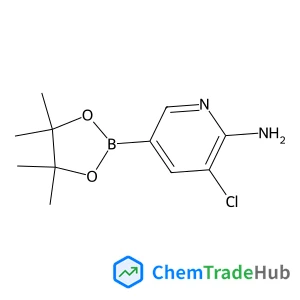
![2,6-Bis({(2R)-2-[hydroxy(diphenyl)methyl]-1-pyrrolidinyl}methyl)-4-methylphenol structure](https://static.chemtradehub.com/structs/877/877395-58-9-70bf.webp "2,6-Bis({(2R)-2-[hydroxy(diphenyl)methyl]-1-pyrrolidinyl}methyl)-4-methylphenol structure")