












The effect of temperature on the kinetics of enhanced amide bond formation from lactic acid and valine driven by deep eutectic solvents
Literature Information
Publication Date
2021-11-24
DOI
10.1039/D1CP03243G
Impact Factor
3.676
Authors
Yi-Ting Tsai, Cong-Wei Huang
View Original
Abstract
Deep eutectic solvents have been found to facilitate the copolymerization of hydroxy acids and amino acids through an ester–amide exchange reaction, and to drive the formation of amino acid-enriched oligomers with peptide backbones. The complexity of oligomer distribution is significantly reduced in deep eutectic solvents and amide-linked oligomers can be selectively produced. In the present study, we investigated the kinetics of amide bond formation in deep eutectic solvents to understand how the solvents regulate the pathways of complex copolymerization. A mathematical model successfully simulated the reaction of a lactic acid/valine mixture in deep eutectic solvents at different temperatures and provided insight into the activation energy of each step. Our findings indicated that the esterification and the evaporation of hydroxy acids were greatly suppressed in deep eutectic solvents because of the strong interaction between the quaternary ammonium salts and the hydroxy acids. In contrast, the ester–amide exchange reaction in deep eutectic solvents was significantly enhanced by lowering the activation entropies. The synergic effect of reduced esterification and increased exchange leads to amino acid-enriched oligomers with high yield and high selectivity. Furthermore, the reduced evaporation of hydroxy acids in deep eutectic solvents may preserve limited reactants in the prebiotic scenario. These results reveal deep eutectic solvents as sustainable media for the simple synthesis of amide bonds.
Related Literature
Correction: Eu2+–Eu3+ valence transition in double, Eu-, and Na-doped PbSe from transport, magnetic, and electronic structure studies
SunPhil Kim, Yeseul Lee, Bin He, Gloria Lehr, Mercouri G. Kanatzidis, Donald T. Morelli
2017-06-12
Correction
DOI: 10.1039/C7CP90127E
The mechanism of ammonium bisulfate formation and decomposition over V/WTi catalysts for NH3-selective catalytic reduction at various temperatures
Chenxu Li, Jianqiang Wang, Jun Wang, Yanping Zhai
2017-05-05
Paper
DOI: 10.1039/C7CP02324C
Chiral differentiation of d- and l-alanine by permethylated β-cyclodextrin: IRMPD spectroscopy and DFT methods
Sung-Sik Lee, Soojin Park, Jae-ung Lee, Jun-Hyeok Kim, Dongkyung Yoon, Sungyul Lee, Han Bin Oh
2017-05-10
Paper
DOI: 10.1039/C7CP01085K
Gate-controlled heat generation in ZnO nanowire FETs
Andrea Pescaglini, Davide Cammi, Carsten Ronning, Daniela Iacopino
2017-05-02
Paper
DOI: 10.1039/C7CP01356F
Structural and electronic properties of defects at grain boundaries in CuInSe2
D. Lamoen
2017-05-12
Paper
DOI: 10.1039/C7CP02033C
Evolution of the structural, energetic, and electronic properties of the 3d, 4d, and 5d transition-metal clusters (30 TMn systems for n = 2–15): a density functional theory investigation
Maurício J. Piotrowski, Juarez L. F. Da Silva
2017-05-18
Paper
DOI: 10.1039/C7CP02240A
On the underestimated impact of the gelation temperature on macro- and mesoporosity in monolithic silica
Ulrich Tallarek
2017-05-26
Paper
DOI: 10.1039/C7CP01846K
Elastic properties and short-range structural order in mixed network former glasses
Weimin Wang, Randilynn Christensen, Brittany Curtis, David Hynek, Sydney Keizer, James Wang, Steve Feller, Steve W. Martin, John Kieffer
2017-05-15
Paper
DOI: 10.1039/C6CP08939A
Evaluation of electronic polarization energy in oligoacene molecular crystals using the solvated supermolecular approach
Tao Xu, Wenliang Wang, Shiwei Yin, Yun Wang
2017-05-08
Paper
DOI: 10.1039/C7CP01534H
Investigating the effect of ionic strength on the suppression of dendrite formation during metal electrodeposition
Andrew K. Pearson, Pon Kao, Anthony P. O'Mullane, Anand I. Bhatt
2017-05-11
Paper
DOI: 10.1039/C7CP00839B
You might also like
Compound Q&A
What are the main uses of 1-(3-Aminophenyl)-3-[(3R)-1-(3,3-dimethyl-2-oxobutyl)-2-oxo-5-(2-pyridinyl)-2,3-dihydro-1H-1,4-benzodiazepin-3-yl]urea (CAS: 155412-88-7)?
This compound is mainly used as an intermediate in the synthesis of antipsychoti...
155412-88-71-(3-Aminophenyl)-3-...
Compound Q&A
How should waste containing 1-(D-Ribofuranosyl)-1,4-dihydro-3-pyridinecarboxamide (CAS: 19132-12-8) be handled?
Waste containing 1-(D-Ribofuranosyl)-1,4-dihydro-3-pyridinecarboxamide (CAS: 191...
19132-12-81-(D-Ribofuranosyl)-...
Compound Q&A
What regulatory guidelines apply to 2-Methyl-2-propanyl 3-bromo-3-(hydroxymethyl)-1-azetidinecarboxylate (CAS: 2007919-81-3)?
2-Methyl-2-propanyl 3-bromo-3-(hydroxymethyl)-1-azetidinecarboxylate (CAS: 20079...
2007919-81-32-Methyl-2-propanyl ...
Compound Q&A
What is N-(4-Chloro-2-pyridinyl)acetamide (CAS: 245056-66-0)?
N-(4-Chloro-2-pyridinyl)acetamide (CAS: 245056-66-0) is a chemical compound with...
245056-66-0N-(4-Chloro-2-pyridi...
Compound Q&A
What is 5-Chloro-2-hydroxybenzoic acid (CAS: 321-14-2)?
5-Chloro-2-hydroxybenzoic acid, also known as 5-chlorosalicylic acid, is an arom...
321-14-25-Chloro-2-hydroxybe...
Compound Q&A
What precautions should be taken when handling 1,1-Dichloro-1-fluoroethane (CAS: 1717-00-6)?
When handling 1,1-Dichloro-1-fluoroethane (CAS: 1717-00-6), it is important to u...
1717-00-61,1-Dichloro-1-fluor...
Compound Q&A
What are the physical and chemical properties of Fmoc-(2S,3R)-3-phenylpyrrolidine-2-carboxylic acid (CAS: 281655-32-1)?
Fmoc-(2S,3R)-3-phenylpyrrolidine-2-carboxylic acid is a white crystalline solid ...
281655-32-1Fmoc-(2S,3R)-3-pheny...
Compound Q&A
What are the main uses of 4-Amino-5-bromo-2-pyridinecarboxylic acid (CAS: 1363381-01-4)?
4-Amino-5-bromo-2-pyridinecarboxylic acid is primarily used as a precursor in th...
1363381-01-44-Amino-5-bromo-2-py...
Compound Q&A
What precautions should be taken when handling (S)-tert-butyl 2-((2-(4-bromophenyl)-2-oxoethyl)carbamoyl)pyrrolidine-1-carboxylate (CAS: 1007881-98-2)?
Handling this compound should be done with personal protective equipment (PPE) i...
1007881-98-2(S)-tert-butyl 2-((2...
Compound Q&A
What precautions should be taken when handling 8-bromo-2,2-dimethyl-3,4-dihydro-2H-1,4-benzoxazin-3-one (CAS: 688363-73-7)?
When handling 8-bromo-2,2-dimethyl-3,4-dihydro-2H-1,4-benzoxazin-3-one, use prop...
688363-73-78-bromo-2,2-dimethyl...
Source Journal
Physical Chemistry Chemical Physics

CiteScore:
5.5
Self-citation Rate:
10.3%
Articles per Year:
3036
Physical Chemistry Chemical Physics (PCCP) is an international journal co-owned by 19 physical chemistry and physics societies from around the world. This journal publishes original, cutting-edge research in physical chemistry, chemical physics and biophysical chemistry. To be suitable for publication in PCCP, articles must include significant innovation and/or insight into physical chemistry; this is the most important criterion that reviewers and Editors will judge against when evaluating submissions. The journal has a broad scope and welcomes contributions spanning experiment, theory, computation and data science. Topical coverage includes spectroscopy, dynamics, kinetics, statistical mechanics, thermodynamics, electrochemistry, catalysis, surface science, quantum mechanics, quantum computing and machine learning. Interdisciplinary research areas such as polymers and soft matter, materials, nanoscience, energy, surfaces/interfaces, and biophysical chemistry are welcomed if they demonstrate significant innovation and/or insight into physical chemistry. Joined experimental/theoretical studies are particularly appreciated when complementary and based on up-to-date approaches.
Recommended Compounds
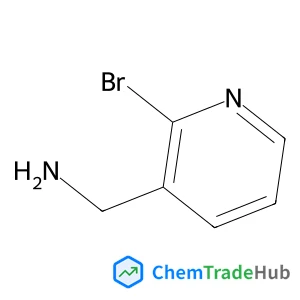

![Pyrazolo[1,5-a]pyridine-3-carbothioamide structure](https://static.chemtradehub.com/structs/885/885275-44-5-aae0.webp "Pyrazolo[1,5-a]pyridine-3-carbothioamide structure")

Recommended Suppliers





Disclaimer
This page provides academic journal information for reference and research purposes only. We are not affiliated with any journal publishers and do not handle publication submissions. For publication-related inquiries, please contact the respective journal publishers directly.
If you notice any inaccuracies in the information displayed, please contact us at support@chemtradehub.com. We will promptly review and address your concerns.