












Estimation of electrochemical cell potentials and reaction energies using Fermi energies
Literature Information
Publication Date
2021-11-22
DOI
10.1039/D1CP04800G
Impact Factor
3.676
Authors
Mohammad Mahdi Kalantarian, Amir Haghipour
View Original
Abstract
This paper suggests that cell voltage and reaction energy can be estimated using the difference between the Fermi energies of the products and reactants. DFT calculations for important Li-ion cathode case studies show that the Fermi approach is adequate. The GGA method makes better approximations than the GGA+U and internal energy approaches.
Related Literature
Cyanophenyl vs. pyridine substituent: impact on the adlayer structure and formation on HOPG and Au(111)
B. Eggers, M. Metzler, D. Künzel, A. Groß, T. Jacob, U. Ziener
2016-02-01
Paper
DOI: 10.1039/C5CP07853A
Performance of a modified hybrid functional in the simultaneous description of stoichiometric and reduced TiO2 polymorphs
Oriol Lamiel-García, Jin Yong Lee, Francesc Illas
2016-04-01
Paper
DOI: 10.1039/C6CP00912C
Insights into the allosteric regulation of Syk association with receptor ITAM, a multi-state equilibrium
Chao Feng, Carol Beth Post
2015-10-08
Paper
DOI: 10.1039/C5CP05417F
Extreme population inversion in the fragments formed by UV photoinduced S–H bond fission in 2-thiophenethiol
Rebecca A. Ingle, Tolga N. V. Karsili, Gregg J. Dennis, Michael Staniforth, Vasilios G. Stavros, Michael N. R. Ashfold
2016-03-24
Paper
DOI: 10.1039/C6CP01593J
Molecular structure and vibrations of NTCDA monolayers on Ag(111) from density-functional theory and infrared absorption spectroscopy
Phil Rosenow
2016-02-03
Paper
DOI: 10.1039/C5CP06619K
Vibronic coupling in the excited-states of carotenoids
Takeshi Miki, Tiago Buckup, Marie S. Krause, June Southall, Richard J. Cogdell, Marcus Motzkus
2016-03-23
Paper
DOI: 10.1039/C5CP07542D
A PYP chromophore acts as a ‘photoacid’ in an isolated hydrogen bonded complex
Lars H. Andersen, Jørgen Houmøller, Hjalte V. Kiefer, Elie Lattouf, Mark H. Stockett
2016-03-09
Communication
DOI: 10.1039/C6CP00433D
Underlying mechanisms of the synergistic role of Li2MnO3 and LiNi1/3Co1/3Mn1/3O2 in high-Mn, Li-rich oxides
Jin-Myoung Lim, Duho Kim, Maenghyo Cho
2016-03-18
Paper
DOI: 10.1039/C6CP00088F
The crystallization of metal soaps and fatty acids in oil paint model systems
Joen J. Hermans, Annelies van Loon, Piet D. Iedema
2016-03-07
Paper
DOI: 10.1039/C6CP00487C
CdSe-sensitized branched CdS hierarchical nanostructures for efficient photoelectrochemical solar hydrogen generation
Zonghu Han, Meng Wang, Xiangyan Chen, Shaohua Shen
2016-03-29
Paper
DOI: 10.1039/C6CP00692B
You might also like
Compound Q&A
What are the main uses of 1-(3-Aminophenyl)-3-[(3R)-1-(3,3-dimethyl-2-oxobutyl)-2-oxo-5-(2-pyridinyl)-2,3-dihydro-1H-1,4-benzodiazepin-3-yl]urea (CAS: 155412-88-7)?
This compound is mainly used as an intermediate in the synthesis of antipsychoti...
155412-88-71-(3-Aminophenyl)-3-...
Compound Q&A
How should waste containing 1-(D-Ribofuranosyl)-1,4-dihydro-3-pyridinecarboxamide (CAS: 19132-12-8) be handled?
Waste containing 1-(D-Ribofuranosyl)-1,4-dihydro-3-pyridinecarboxamide (CAS: 191...
19132-12-81-(D-Ribofuranosyl)-...
Compound Q&A
What regulatory guidelines apply to 2-Methyl-2-propanyl 3-bromo-3-(hydroxymethyl)-1-azetidinecarboxylate (CAS: 2007919-81-3)?
2-Methyl-2-propanyl 3-bromo-3-(hydroxymethyl)-1-azetidinecarboxylate (CAS: 20079...
2007919-81-32-Methyl-2-propanyl ...
Compound Q&A
What is N-(4-Chloro-2-pyridinyl)acetamide (CAS: 245056-66-0)?
N-(4-Chloro-2-pyridinyl)acetamide (CAS: 245056-66-0) is a chemical compound with...
245056-66-0N-(4-Chloro-2-pyridi...
Compound Q&A
What is 5-Chloro-2-hydroxybenzoic acid (CAS: 321-14-2)?
5-Chloro-2-hydroxybenzoic acid, also known as 5-chlorosalicylic acid, is an arom...
321-14-25-Chloro-2-hydroxybe...
Compound Q&A
What precautions should be taken when handling 1,1-Dichloro-1-fluoroethane (CAS: 1717-00-6)?
When handling 1,1-Dichloro-1-fluoroethane (CAS: 1717-00-6), it is important to u...
1717-00-61,1-Dichloro-1-fluor...
Compound Q&A
What are the physical and chemical properties of Fmoc-(2S,3R)-3-phenylpyrrolidine-2-carboxylic acid (CAS: 281655-32-1)?
Fmoc-(2S,3R)-3-phenylpyrrolidine-2-carboxylic acid is a white crystalline solid ...
281655-32-1Fmoc-(2S,3R)-3-pheny...
Compound Q&A
What are the main uses of 4-Amino-5-bromo-2-pyridinecarboxylic acid (CAS: 1363381-01-4)?
4-Amino-5-bromo-2-pyridinecarboxylic acid is primarily used as a precursor in th...
1363381-01-44-Amino-5-bromo-2-py...
Compound Q&A
What precautions should be taken when handling (S)-tert-butyl 2-((2-(4-bromophenyl)-2-oxoethyl)carbamoyl)pyrrolidine-1-carboxylate (CAS: 1007881-98-2)?
Handling this compound should be done with personal protective equipment (PPE) i...
1007881-98-2(S)-tert-butyl 2-((2...
Compound Q&A
What precautions should be taken when handling 8-bromo-2,2-dimethyl-3,4-dihydro-2H-1,4-benzoxazin-3-one (CAS: 688363-73-7)?
When handling 8-bromo-2,2-dimethyl-3,4-dihydro-2H-1,4-benzoxazin-3-one, use prop...
688363-73-78-bromo-2,2-dimethyl...
Source Journal
Physical Chemistry Chemical Physics

CiteScore:
5.5
Self-citation Rate:
10.3%
Articles per Year:
3036
Physical Chemistry Chemical Physics (PCCP) is an international journal co-owned by 19 physical chemistry and physics societies from around the world. This journal publishes original, cutting-edge research in physical chemistry, chemical physics and biophysical chemistry. To be suitable for publication in PCCP, articles must include significant innovation and/or insight into physical chemistry; this is the most important criterion that reviewers and Editors will judge against when evaluating submissions. The journal has a broad scope and welcomes contributions spanning experiment, theory, computation and data science. Topical coverage includes spectroscopy, dynamics, kinetics, statistical mechanics, thermodynamics, electrochemistry, catalysis, surface science, quantum mechanics, quantum computing and machine learning. Interdisciplinary research areas such as polymers and soft matter, materials, nanoscience, energy, surfaces/interfaces, and biophysical chemistry are welcomed if they demonstrate significant innovation and/or insight into physical chemistry. Joined experimental/theoretical studies are particularly appreciated when complementary and based on up-to-date approaches.
Recommended Compounds
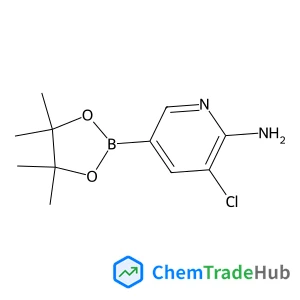
3-Chloro-5-(4,4,5,5-tetramethyl-1,3,2-dioxaborolan-2-yl)-2-pyridinamine
CAS Number:
1032758-99-8
Molecular Formula:
C11H16BClN2O2
![2,6-Bis({(2R)-2-[hydroxy(diphenyl)methyl]-1-pyrrolidinyl}methyl)-4-methylphenol structure](https://static.chemtradehub.com/structs/877/877395-58-9-70bf.webp "2,6-Bis({(2R)-2-[hydroxy(diphenyl)methyl]-1-pyrrolidinyl}methyl)-4-methylphenol structure")
2,6-Bis({(2R)-2-[hydroxy(diphenyl)methyl]-1-pyrrolidinyl}methyl)-4-methylphenol
CAS Number:
877395-58-9
Molecular Formula:
C43H46N2O3
Recommended Suppliers






Disclaimer
This page provides academic journal information for reference and research purposes only. We are not affiliated with any journal publishers and do not handle publication submissions. For publication-related inquiries, please contact the respective journal publishers directly.
If you notice any inaccuracies in the information displayed, please contact us at support@chemtradehub.com. We will promptly review and address your concerns.