












Anhydrous proton-conducting properties of triazole–phosphonic acidcopolymers: a combined study with MAS NMR‡
Literature Information
Publication Date
2008-08-20
DOI
10.1039/B807659F
Impact Factor
3.676
Authors
Sevim Ü. Çelik, Ümit Akbey, Robert Graf, Ayhan Bozkurt, Hans W. Spiess
View Original
Abstract
The synthesis, thermal and proton conducting properties of copolymers based on vinylphosphonic acid (VPA) and 1-vinyl-1,2,4-triazole (VTri) were investigated. The copolymers were synthesized by free-radical copolymerization of the corresponding monomers at several monomer feed ratios to obtain poly(VPA-co-VTri) copolymer electrolytes. The final structures of the copolymers were confirmed by spectroscopic methods. The composition of the low molecular weight copolymers was varied with the feed ratio of the monomers. The presence of triazole units in the copolymers suppresses the formation of phosphonic acid anhydrides up to 150 °C, as verified by both 31P NMR and TGA. The observation of defined glass transition temperatures indicated that the ionic interactions do not prevent segmental relaxations of the polymer chains. In the absence of humidity, the copolymer electrolyte, poly(VPA-co-VTri), S2 (with 33% triazole content) showed proton conductivity of 10−3 S cm−1 at 120 °C, which is far higher than in imidazole based copolymers. Two different types of hydrogen-bonded protons were detected by 1H MAS NMR in the solid copolymer systems, due to different arrangements of triazole and phosphonic acid units.
Recommended Journals
Related Literature
Interrelationship between TiO2 nanoparticle size and kind/size of dyes in the mechanism and conversion efficiency of dye sensitized solar cells
Pooya Tahay, Meisam Babapour Gol Afshani, Ali Alavi, Zahra Parsa, Nasser Safari
2017-03-31
Paper
DOI: 10.1039/C7CP01159H
Understanding iridium oxide nanoparticle surface sites by their interaction with catechol
Maxime Fournier, Dalvin D. Méndez-Hernández, Chengchen Guo, Thomas A. Moore, Ana L. Moore, Devens Gust, Jeffery L. Yarger
2017-05-24
Paper
DOI: 10.1039/C7CP01516J
Multi-level quantum mechanics theories and molecular mechanics study of the double-inversion mechanism of the F− + CH3I reaction in aqueous solution
Peng Liu, Jingxue Zhang, Dunyou Wang
2017-05-25
Paper
DOI: 10.1039/C7CP02313H
The role of the long-range tail of the potential in O2 + N2 collisional inelastic vibrational energy transfers
Ernesto Garcia, Fernando Pirani, Antonio Laganà, Carles Martí
2017-03-29
Paper
DOI: 10.1039/C7CP01340J
The effect of chemical ordering and lattice mismatch on structural transitions in phase segregating nanoalloys
Kevin Rossi, Francesca Baletto
2017-04-03
Paper
DOI: 10.1039/C7CP01397C
The effect of STW defects on the mechanical properties and fracture toughness of pristine and hydrogenated graphene
Akarsh Verma, Avinash Parashar
2017-05-31
Paper
DOI: 10.1039/C7CP02366A
Synergistic effects of plasma–catalyst interactions for CH4 activation
Jongsik Kim, Jason C. Hicks
2017-04-28
Paper
DOI: 10.1039/C7CP01322A
Femtosecond time-resolved photoelectron spectroscopy of the benzyl radical
L. Poisson
2017-04-12
Paper
DOI: 10.1039/C7CP01437F
Ultrafast energy transfer within the photosystem II core complex
Jie Pan, Vladimir Chorošajev, Mikas Vengris, S. Seckin Senlik, Jian-Ren Shen, Darius Abramavicius, Jennifer P. Ogilvie
2017-05-23
Paper
DOI: 10.1039/C7CP01673E
You might also like
Compound Q&A
Are there alternatives to 1-(4-Chlorophenyl)-N-hydroxymethanimine (CAS: 3848-36-0) in synthesis?
When considering alternatives to 1-(4-Chlorophenyl)-N-hydroxymethanimine (CAS: 3...
3848-36-01-(4-Chlorophenyl)-N...
Compound Q&A
How should (1R,9S,10S,12S,14E,16S,19R,20R,21S,22R)-3,9,21-Trihydroxy-5,10,12,14,16,20,22-heptamethyl-23,24-dioxatetracyclo[17.3.1.1~6,9~.0~2,7~]tetracosa-2,5,7,14-tetraen-4-one (CAS: 183202-73-5) be stored?
This compound should be stored in a cool, dry place away from direct sunlight. I...
183202-73-5(1R,9S,10S,12S,14E,1...
Compound Q&A
How is 3-(4-Bromophenyl)-5-(2-fluorophenyl)-1,2,4-oxadiazole (CAS: 419553-16-5) typically synthesized?
3-(4-Bromophenyl)-5-(2-fluorophenyl)-1,2,4-oxadiazole is synthesized through a m...
419553-16-53-(4-Bromophenyl)-5-...
Compound Q&A
How is 5-Chloro-2-(4-chlorophenyl)-4-methyl-6-[3-(1-piperidinyl)propoxy]pyrimidine (CAS: 1639220-19-1) typically synthesized?
5-Chloro-2-(4-chlorophenyl)-4-methyl-6-[3-(1-piperidinyl)propoxy]pyrimidine (CAS...
1639220-19-15-Chloro-2-(4-chloro...
Compound Q&A
What industries use 2-Chloro-4-(difluoromethoxy)pyridine (CAS: 1206978-15-5)?
2-Chloro-4-(difluoromethoxy)pyridine is used in the pharmaceutical industry for ...
1206978-15-52-Chloro-4-(difluoro...
Compound Q&A
What regulatory guidelines apply to 3-Chloro-6-methylpyridazine (CAS: 1121-79-5)?
3-Chloro-6-methylpyridazine (CAS: 1121-79-5) is classified under the Globally Ha...
1121-79-53-Chloro-6-methylpyr...
Compound Q&A
Are there alternatives to Methyl 4,5-dimethyl-2-nitrobenzoate in synthesis?
Several alternatives can be used in the synthesis of Methyl 4,5-dimethyl-2-nitro...
90922-74-0Methyl 4,5-dimethyl-...
Compound Q&A
Are there alternatives to (2E,2'E)-3,3'-(1,4-Phenylene)bisacrylaldehyde in synthesis?
Alternatives to (2E,2'E)-3,3'-(1,4-Phenylene)bisacrylaldehyde include other acry...
63405-68-5(2E,2'E)-3,3'-(1,4-P...
Compound Q&A
What is 3-Amino-5-chloropyridin-2-ol hydrochloride (CAS: 1261906-29-9)?
3-Amino-5-chloropyridin-2-ol hydrochloride is an organic compound with the CAS n...
1261906-29-93-Amino-5-chloropyri...
Compound Q&A
What precautions should be taken when handling 6,7-Difluoro-2,3-dihydro-4H-chromen-4-one (CAS: 1092349-93-3)?
When handling 6,7-Difluoro-2,3-dihydro-4H-chromen-4-one, it is essential to wear...
1092349-93-36,7-Difluoro-2,3-dih...
Source Journal
Physical Chemistry Chemical Physics

CiteScore:
5.5
Self-citation Rate:
10.3%
Articles per Year:
3036
Physical Chemistry Chemical Physics (PCCP) is an international journal co-owned by 19 physical chemistry and physics societies from around the world. This journal publishes original, cutting-edge research in physical chemistry, chemical physics and biophysical chemistry. To be suitable for publication in PCCP, articles must include significant innovation and/or insight into physical chemistry; this is the most important criterion that reviewers and Editors will judge against when evaluating submissions. The journal has a broad scope and welcomes contributions spanning experiment, theory, computation and data science. Topical coverage includes spectroscopy, dynamics, kinetics, statistical mechanics, thermodynamics, electrochemistry, catalysis, surface science, quantum mechanics, quantum computing and machine learning. Interdisciplinary research areas such as polymers and soft matter, materials, nanoscience, energy, surfaces/interfaces, and biophysical chemistry are welcomed if they demonstrate significant innovation and/or insight into physical chemistry. Joined experimental/theoretical studies are particularly appreciated when complementary and based on up-to-date approaches.
Recommended Compounds
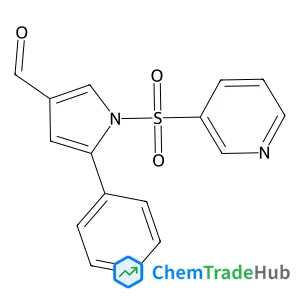
5-Phenyl-1-(pyridin-3-ylsulfonyl)-1H-pyrrole-3-carbaldehyde
CAS Number:
881676-90-0
Molecular Formula:
C16H12N2O3S
Recommended Suppliers





Disclaimer
This page provides academic journal information for reference and research purposes only. We are not affiliated with any journal publishers and do not handle publication submissions. For publication-related inquiries, please contact the respective journal publishers directly.
If you notice any inaccuracies in the information displayed, please contact us at support@chemtradehub.com. We will promptly review and address your concerns.