


The effect of STW defects on the mechanical properties and fracture toughness of pristine and hydrogenated graphene
Literature Information
Publication Date
2017-05-31
DOI
10.1039/C7CP02366A
Impact Factor
3.676
Authors
Akarsh Verma, Avinash Parashar
View Original
Abstract
Graphene is emerging as a versatile material with a diverse field of applications. Synthesis techniques for graphene introduce several topological defects such as vacancies, dislocations and Stone–Thrower–Wales (STW) defects. Among them STW defects are generated without deleting any atom from the lattice position, but are introduced by rotating single C–C bonds. In this article, molecular dynamics based simulations have been performed to study the effect of STW defects on the fracture toughness of pristine graphene as well as graphene with crack edges passivated with hydrogen atoms. STW defects help in generating out of plane displacement in conjunction with redistribution of stress around the crack edges that can be used to improve the fracture toughness of brittle graphene. An overall improvement in the fracture toughness of pristine graphene as well as graphene containing hydrogen at the crack edges was predicted in this work.
Recommended Journals

Chemistry Education Research and Practice

Russian Journal of Coordination Chemistry

Journal of Saudi Chemical Society

Current Opinion in Solid State & Materials Science

Chemical Communications

Drug Discovery Today

New Journal of Chemistry

Saudi Pharmaceutical Journal

Crystallography Reports

Russian Chemical Bulletin
Related Literature
Design of equidistant and revert type precipitation patterns in reaction–diffusion systems
Ferenc Molnár Jr
2008-03-06
Paper
DOI: 10.1039/B715775D
Poly(phenylene) block copolymers bearing tri-sulfonated aromatic pendant groups for polymer electrolyte fuel cell applications
Ryousuke Hara, Kangcheng Chen, Nobutaka Endo, Mitsuru Higa, Ken-ichi Okamoto, Lianjun Wang
2013-05-08
Paper
DOI: 10.1039/C3TA11190C
Common processes drive the thermochemical pretreatment of lignocellulosic biomass
Marcus Foston, Yoshiharu Nishiyama, B. Leif Hanson, Shane Harton, William T. Heller, Barbara R. Evans, S. Gnanakaran, Arthur J. Ragauskas, Brian H. Davison
2013-10-29
Communication
DOI: 10.1039/C3GC41962B
Near-infrared light-responsive, diselenide containing core-cross-linked micelles prepared by the Diels–Alder click reaction for photocontrollable drug release application
Sabrina Aufar Salma, Dong Woo Kim, Cuong Minh Quoc Le, Byung-Hyun Ahn, Gun-Do Kim, Kwon Taek Lim
2018-09-06
Paper
DOI: 10.1039/C8PY00961A
Isoreticular zirconium-based metal–organic frameworks: discovering mechanical trends and elastic anomalies controlling chemical structure stability
Matthew R. Ryder, Bartolomeo Civalleri, Jin-Chong Tan
2016-03-04
Paper
DOI: 10.1039/C6CP00864J
Use of poly(methyl methacrylate) with an unsaturated chain end as a macroinitiator precursor in organocatalyzed living radical block polymerization
Jun Jie Chang, Longqiang Xiao, Chen-Gang Wang, Hiroshi Niino, Shunsuke Chatani, Atsushi Goto
2018-09-05
Paper
DOI: 10.1039/C8PY01066H
Quantum-dot-encapsulated core–shell barcode particles from droplet microfluidics
Feika Bian, Huan Wang, Lingyu Sun, Yuxiao Liu, Yuanjin Zhao
2018-07-19
Paper
DOI: 10.1039/C8TB00946E
Kinetics of α hydrogen abstractions from thiols, sulfides and thiocarbonyl compounds
Aäron G. Vandeputte, Maarten K. Sabbe, Marie-Françoise Reyniers, Guy B. Marin
2012-06-29
Paper
DOI: 10.1039/C2CP41114H
You might also like
Compound Q&A
Are there alternatives to 1-(4-Chlorophenyl)-N-hydroxymethanimine (CAS: 3848-36-0) in synthesis?
When considering alternatives to 1-(4-Chlorophenyl)-N-hydroxymethanimine (CAS: 3...
3848-36-01-(4-Chlorophenyl)-N...
Compound Q&A
How should (1R,9S,10S,12S,14E,16S,19R,20R,21S,22R)-3,9,21-Trihydroxy-5,10,12,14,16,20,22-heptamethyl-23,24-dioxatetracyclo[17.3.1.1~6,9~.0~2,7~]tetracosa-2,5,7,14-tetraen-4-one (CAS: 183202-73-5) be stored?
This compound should be stored in a cool, dry place away from direct sunlight. I...
183202-73-5(1R,9S,10S,12S,14E,1...
Compound Q&A
How is 3-(4-Bromophenyl)-5-(2-fluorophenyl)-1,2,4-oxadiazole (CAS: 419553-16-5) typically synthesized?
3-(4-Bromophenyl)-5-(2-fluorophenyl)-1,2,4-oxadiazole is synthesized through a m...
419553-16-53-(4-Bromophenyl)-5-...
Compound Q&A
How is 5-Chloro-2-(4-chlorophenyl)-4-methyl-6-[3-(1-piperidinyl)propoxy]pyrimidine (CAS: 1639220-19-1) typically synthesized?
5-Chloro-2-(4-chlorophenyl)-4-methyl-6-[3-(1-piperidinyl)propoxy]pyrimidine (CAS...
1639220-19-15-Chloro-2-(4-chloro...
Compound Q&A
What industries use 2-Chloro-4-(difluoromethoxy)pyridine (CAS: 1206978-15-5)?
2-Chloro-4-(difluoromethoxy)pyridine is used in the pharmaceutical industry for ...
1206978-15-52-Chloro-4-(difluoro...
Compound Q&A
What regulatory guidelines apply to 3-Chloro-6-methylpyridazine (CAS: 1121-79-5)?
3-Chloro-6-methylpyridazine (CAS: 1121-79-5) is classified under the Globally Ha...
1121-79-53-Chloro-6-methylpyr...
Compound Q&A
Are there alternatives to Methyl 4,5-dimethyl-2-nitrobenzoate in synthesis?
Several alternatives can be used in the synthesis of Methyl 4,5-dimethyl-2-nitro...
90922-74-0Methyl 4,5-dimethyl-...
Compound Q&A
Are there alternatives to (2E,2'E)-3,3'-(1,4-Phenylene)bisacrylaldehyde in synthesis?
Alternatives to (2E,2'E)-3,3'-(1,4-Phenylene)bisacrylaldehyde include other acry...
63405-68-5(2E,2'E)-3,3'-(1,4-P...
Compound Q&A
What is 3-Amino-5-chloropyridin-2-ol hydrochloride (CAS: 1261906-29-9)?
3-Amino-5-chloropyridin-2-ol hydrochloride is an organic compound with the CAS n...
1261906-29-93-Amino-5-chloropyri...
Compound Q&A
What precautions should be taken when handling 6,7-Difluoro-2,3-dihydro-4H-chromen-4-one (CAS: 1092349-93-3)?
When handling 6,7-Difluoro-2,3-dihydro-4H-chromen-4-one, it is essential to wear...
1092349-93-36,7-Difluoro-2,3-dih...
Source Journal
Physical Chemistry Chemical Physics

CiteScore:
5.5
Self-citation Rate:
10.3%
Articles per Year:
3036
Physical Chemistry Chemical Physics (PCCP) is an international journal co-owned by 19 physical chemistry and physics societies from around the world. This journal publishes original, cutting-edge research in physical chemistry, chemical physics and biophysical chemistry. To be suitable for publication in PCCP, articles must include significant innovation and/or insight into physical chemistry; this is the most important criterion that reviewers and Editors will judge against when evaluating submissions. The journal has a broad scope and welcomes contributions spanning experiment, theory, computation and data science. Topical coverage includes spectroscopy, dynamics, kinetics, statistical mechanics, thermodynamics, electrochemistry, catalysis, surface science, quantum mechanics, quantum computing and machine learning. Interdisciplinary research areas such as polymers and soft matter, materials, nanoscience, energy, surfaces/interfaces, and biophysical chemistry are welcomed if they demonstrate significant innovation and/or insight into physical chemistry. Joined experimental/theoretical studies are particularly appreciated when complementary and based on up-to-date approaches.
Recommended Compounds
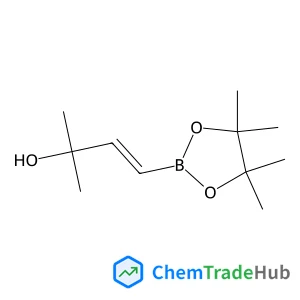
(E)-2-methyl-4-(4,4,5,5-tetramethyl-1,3,2-dioxaborolan-2-yl)but-3-en-2-ol
CAS Number:
581802-26-8
Molecular Formula:
C11H21BO3
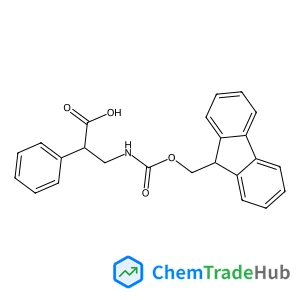
(S)-3-((((9H-Fluoren-9-yl)methoxy)carbonyl)amino)-2-phenylpropanoic acid
CAS Number:
1217663-60-9
Molecular Formula:
C24H21NO4
Recommended Suppliers



Disclaimer
This page provides academic journal information for reference and research purposes only. We are not affiliated with any journal publishers and do not handle publication submissions. For publication-related inquiries, please contact the respective journal publishers directly.
If you notice any inaccuracies in the information displayed, please contact us at support@chemtradehub.com. We will promptly review and address your concerns.