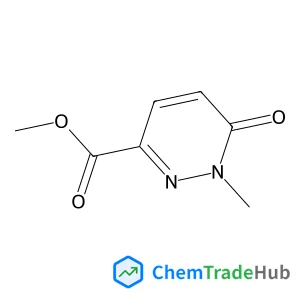
Methyl 1-methyl-6-oxo-1,6-dihydro-3-pyridazinecarboxylate
CAS Number:
74173-58-3
Molecular Formula:
C7H8N2O3
Basit Yameen, Wolfgang Knoll
The present work describes our studies of the influence of the electrostatic microenvironment on the observed oxidation–reduction potential of redox-labeled supramolecular bioconjugates. Our experimental results show that the charge of the protein (streptavidin), determined by the pH, strongly influences the redox potential of the incorporated ferrocene centers. This is due to the electrostatic contributions from the fixed charges in the protein that affect the relative stability of the redox species involved in the electroactive label. In addition, the ionic strength plays a central role in screening the stabilizing or repulsive interactions, thus further influencing the magnitude of the apparent redox potential. This dependence of the redox potential on pH and ionic strength was described in quantitative terms by following a similar approach to that previously used for interpreting the behaviour of electron transfer proteins. This work provides a framework to understand, rationalize and predict variations in redox potentials of electroactive centers incorporated into different soft matter-based complex environments, like supramolecular bio-architectures. The potential of the approach was demonstrated through creation of a pH-tunable bioelectrochemical interface with switchable behavior based entirely on redox-active supramolecular bioconjugates.
Xiuxian Yang, Zhenhong Dai, Yinchang Zhao, Wenchao Niu, Jianye Liu
DOI: 10.1039/C8CP04301A
Petar M. Radjenovic, Laurence J. Hardwick
DOI: 10.1039/C8CP04652B
Subha Pratihar, Maria Carolina Nicola Barbosa Muniz, Xinyou Ma, Itamar Borges, Jr., William L. Hase
DOI: 10.1039/C8CP06198J
Itziar Zubieta, Pablo Llombart, Carlos Vega, Eva G. Noya
DOI: 10.1039/C8CP04964E
Pierre Bräuer, Carmine D’Agostino
DOI: 10.1039/C8CP05001E
Najebah M. Alsaleh, Elvis Shoko, Udo Schwingenschlögl
DOI: 10.1039/C8CP05818K
DOI: 10.1039/C8CP04448A
Firas Faisal, Corinna Stumm, Manon Bertram, Tobias Wähler, Ralf Schuster, Feifei Xiang, Ole Lytken, Ioannis Katsounaros, Karl J. J. Mayrhofer, M. Alexander Schneider, Olaf Brummel
DOI: 10.1039/C8CP03770A
Bianka M. D. Puscher, Ali Asghar Katbab, Ievgen Levchuk, Negar Kazerouni, Nicola Gasparini, Nadia Camaioni, Andres Osvet, Miroslaw Batentschuk, Rainer H. Fink, Dirk M. Guldi
DOI: 10.1039/C8CP03743D
Ilhan Yavuz, Janice B. Lin
DOI: 10.1039/C8CP06982D
3-(2-Bromoimidazo[2,1-b]thiazol-6-yl)propanoic acid hydrochloride is typically s...
2-Isopropyl-1,3-dioxane-5-carboxylic acid is typically synthesized by the carbox...
Alisporivir (CAS: 254435-95-5) is an antiviral medication used in the treatment ...
[1,2,4]triazolo[3,4-a]phthalazine (CAS: 234-80-0) is a crystalline compound with...
Regulatory guidelines for (2S)-5-Hydroxy-2-(4-hydroxyphenyl)-4-oxo-3,4-dihydro-2...
2,2-Difluorocyclohexanamine hydrochloride is generally safe when handled under p...
3-Nitro-2-phenylthiophene is primarily used in the synthesis of other organic co...
1-(Trifluoroacetyl)-4-piperidinecarbonitrile (CAS: 77940-79-5) is a colorless to...
Research and market trends for 1,3,6,8-Tetranitro-9H-carbazole (CAS: 4543-33-3) ...
Waste containing Dibenzo[b,d]thiophen-1-ylboronic acid (CAS: 1245943-60-5) shoul...

Physical Chemistry Chemical Physics (PCCP) is an international journal co-owned by 19 physical chemistry and physics societies from around the world. This journal publishes original, cutting-edge research in physical chemistry, chemical physics and biophysical chemistry. To be suitable for publication in PCCP, articles must include significant innovation and/or insight into physical chemistry; this is the most important criterion that reviewers and Editors will judge against when evaluating submissions. The journal has a broad scope and welcomes contributions spanning experiment, theory, computation and data science. Topical coverage includes spectroscopy, dynamics, kinetics, statistical mechanics, thermodynamics, electrochemistry, catalysis, surface science, quantum mechanics, quantum computing and machine learning. Interdisciplinary research areas such as polymers and soft matter, materials, nanoscience, energy, surfaces/interfaces, and biophysical chemistry are welcomed if they demonstrate significant innovation and/or insight into physical chemistry. Joined experimental/theoretical studies are particularly appreciated when complementary and based on up-to-date approaches.
![[3-Fluoro-5-(2,2,2-trifluoroethoxy)phenyl]boronic acid structure](https://static.chemtradehub.com/structs/850/850589-55-8-a8ed.webp "[3-Fluoro-5-(2,2,2-trifluoroethoxy)phenyl]boronic acid structure")